

Reviewed · NATIONAL ARCHAEOLOGICAL MUSEUM TOURS
Athens: National Archaeological Museum Private Guided Tour
Greek history starts with one museum. Step inside Athens National Archaeological Museum and a private guide helps you connect objects to the bigger story of ancient Greece.
I especially like the licensed archaeologist guide and the way the tour turns a huge building into a clear route. I also love the Antikythera mechanism moment, framed in a way that makes ancient science feel real.
One thing to plan for: the museum is enormous, so the 2-hour visit stays focused and brisk. You will also need to budget the 10 euro entry ticket, since it is not included.
In This Review
- Key highlights to expect
- Why the National Archaeological Museum is such a strong Athens anchor
- The 2-hour private format that keeps you from burning out
- Getting oriented at the main entrance with Christos Theodoropoulos
- The collections tour: from prehistoric Aegean to late antiquity
- Prehistoric Antiquities
- Sculptures Collection
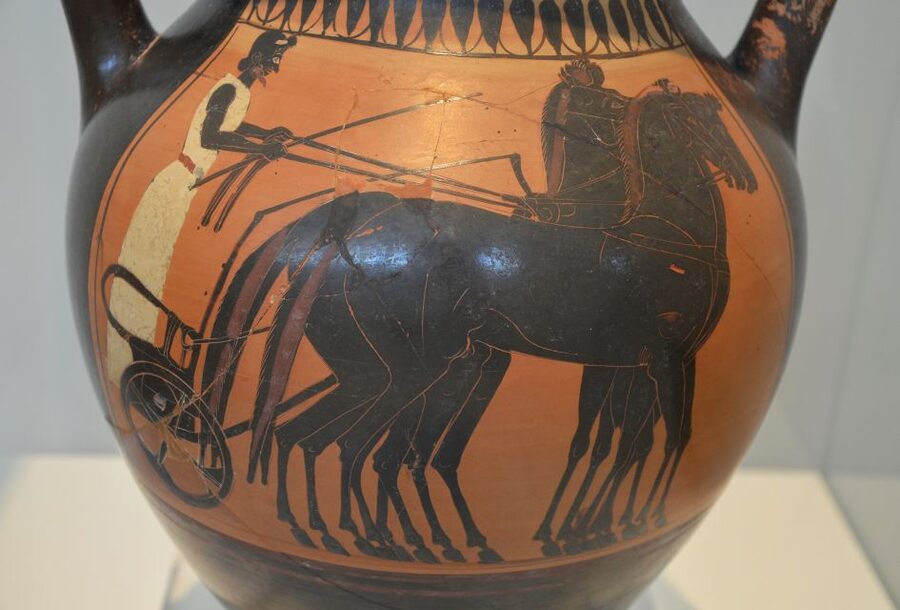
- Vase and Minor Objects Collection
- Bronze Collection
- Egyptian and Near Eastern Antiquities
- The Antikythera mechanism stop, and why one object can change everything
- How the guide handles questions, pacing, and special interests
- Price and value: $400 per group up to 6, plus the 10 euro ticket
- Practical tips so the 2 hours actually feel worth it
- Should you book this Athens National Archaeological Museum tour?
- FAQ
- How long is the private guided tour?
- Is the museum entry ticket included in the price?
- What is the price for the private tour?
- Where do we meet the guide?
- What languages are available for the live guide?
- Is free cancellation available?
Key highlights to expect
- A guided route through Greece’s top museum without feeling lost in thousands of exhibits
- Antikythera mechanism, often described as the world’s oldest analogue computer
- Christos Theodoropoulos leading the experience, with a style that keeps people engaged and moving
- Five major permanent collections that give you a panorama from prehistory through late antiquity
- Up to 6 people, so you get private-group attention without a huge crowd feeling
Why the National Archaeological Museum is such a strong Athens anchor
Athens can feel like three different cities at once: modern streets, classical ruins, and museum time. This is one of the best ways to set your brain for what you are about to see, because the National Archaeological Museum covers a wide sweep of ancient Greek life in one place.
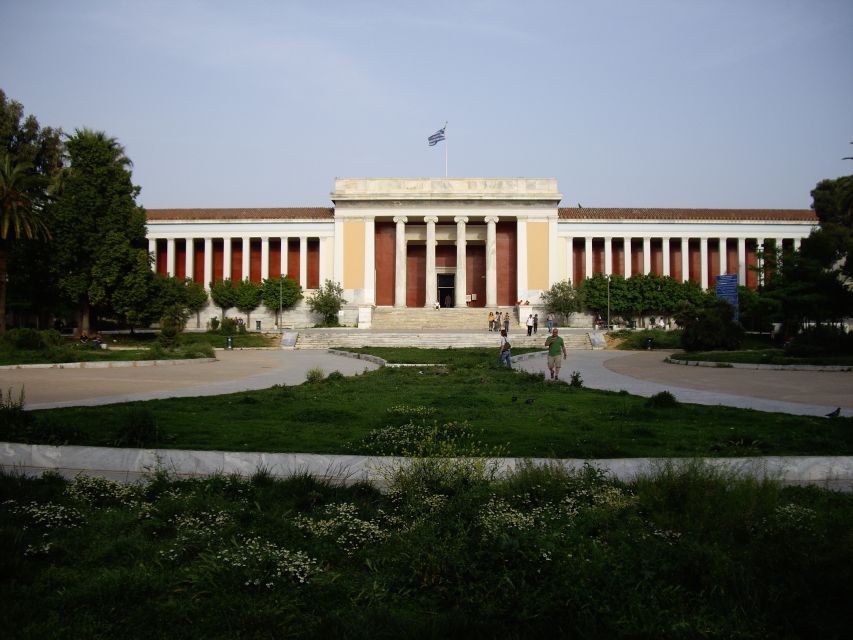
The museum sits in a grand neoclassical building from the late 1800s, designed by L. Lange and later remodeled by Ernst Ziller. Inside, you get a lot of space to breathe, not just a cramped “look and run” stop. It is one of those rare museums where the building itself helps you slow down and respect what you are looking at.
You also get an easy-to-understand payoff: the collections together paint a panorama of Greek civilization, from the beginnings of prehistory through late antiquity. With more than 11,000 exhibits on site (and about 8,000 square meters of exhibition space), you could spend days here. This tour does not try to replace that, it helps you hit the big ideas and the most meaningful objects.
Other visits to the National Archaeological Museum:
- Athens: National Archaeological Museum Ticket w/ Opt. Audio
★ 4.4 · 713 reviews - Athens National Archaeological Museum E-Ticket with Audio Guide
★ 3.0 · 57 reviews - National Archaeological Museum Private Tour with Licensed Expert Guide
★ 5.0 · 53 reviews - National Archeological Museum Private Tour with Admission
★ 4.9 · 44 reviews
The 2-hour private format that keeps you from burning out
A museum with this much material can overwhelm you fast. That is why the private-group setup matters. You book for a small group, up to 6 people, and the tour is scheduled for 2 hours.
The value here is not just “a guide.” It is a guide who can steer you through the most important rooms and objects so your time becomes usable. One reason this tour earns such strong feedback is that the tour style is energetic, with quick pacing, because there is simply too much to see if you try to go slow.
So what should you expect? You should expect a curated route through the highlights, with time to ask questions. You should also expect that some galleries will be visible only briefly, which is normal. I would treat the tour as an orientation plus a smart taste, then give yourself a little extra time on your own after, if you want more depth.
If you are the type who gets restless in long museum sessions, this 2-hour plan is a relief. If you are the type who likes to read every label, you might find the speed a little intense, but you can still extend your visit right after the guided portion.
Getting oriented at the main entrance with Christos Theodoropoulos
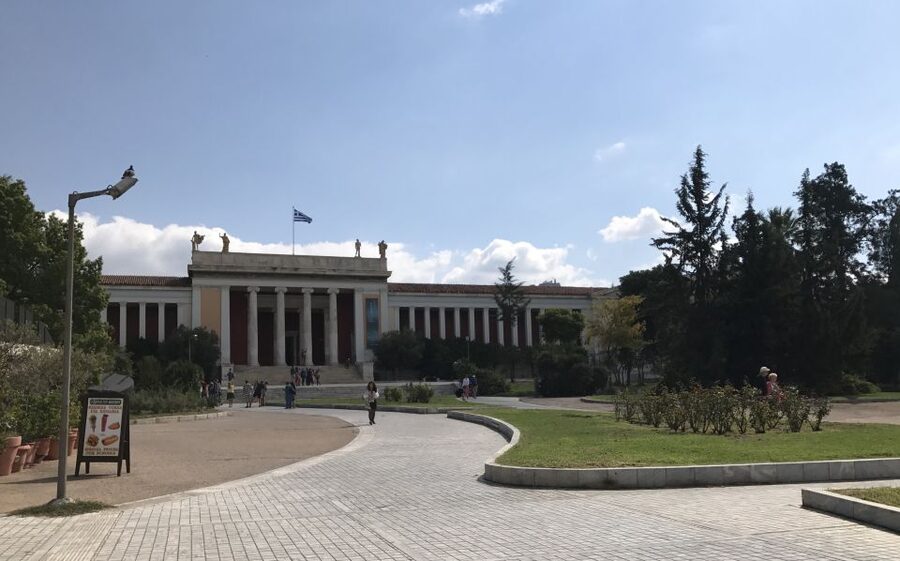
You meet at the Athens National Archaeological Museum, at the steps in front of the main entrance. The address is 44 Patission Street, 10682. The experience is led by Christos Theodoropoulos, a licensed guide and archaeologist, with live interpretation offered in Turkish, English, German, and Greek.
This meeting point is important because the museum can feel intimidating at first glance. Having someone help you get your bearings early changes the whole visit. Instead of wandering room to room, you start with a plan. You also avoid the common problem of missing the rooms that hold the strongest “aha” moments.
In practice, what you get is a guided walk that builds context while you are looking. That matters in a museum like this, where a vase, a sculpture fragment, or a bronze figurine can make sense only when you know what period and what cultural shift you are seeing.
A small but meaningful extra: the guide can handle different group dynamics, including multi-generational groups. If your party includes kids or teens, the guide’s pace and explanations are designed to keep attention moving.
The collections tour: from prehistoric Aegean to late antiquity
The museum’s permanent collections are organized in a way that helps you understand ancient Greece as a long timeline, not one fixed “classical” moment. This tour experience focuses you on the most important collections so you see the progression in a logical flow.
Here is what you should look for as the tour moves through the building:
Prehistoric Antiquities
This collection tracks the Aegean world from the 6th millennium B.C. to about 1050 B.C., covering Neolithic, Cycladic, and Mycenaean art. You will also find finds connected to the prehistoric settlement at Thera. The effect is that you stop treating ancient Greece as something that just suddenly appears. You see it as a chain of cultures that developed over time.
If you like the “how did we get here?” side of history, this is the part that will click for you. It sets up why later Mycenaean and classical achievements did not come out of nowhere.
Other Athenian collections out of the heat:
- Athens: Acropolis, Parthenon & Acropolis Museum Guided Tour★ 4.8 · 9,316 reviews
- The Acropolis, Parthenon & Acropolis Museum Guided Tour★ 4.7 · 8,493 reviews
- Athens: Mythology of Delphi, Museum and Arachova Guided Tour★ 4.7 · 5,102 reviews
- Athens: Acropolis, Parthenon & Acropolis Museum Guided Tour★ 4.8 · 3,579 reviews
Sculptures Collection
This is where the museum shows you the development of ancient Greek sculpture, from the 7th to the 5th centuries B.C. Seeing that progression in one museum helps you understand how ideas about form and style evolved. Even if you are not a sculpture person, this collection gives you visual markers for shifting tastes and techniques.
Vase and Minor Objects Collection
Vases are a big deal here, because they are not just art. They help you track everyday culture, beliefs, and myth themes across centuries. This collection spans pottery from the 11th century B.C. into the Roman period.
You also get the Stathatos Collection within this broader section, described as a corpus of minor objects from all periods. Minor objects are often the pieces you remember later, because they show up as “small details” that carry real meaning.
Bronze Collection
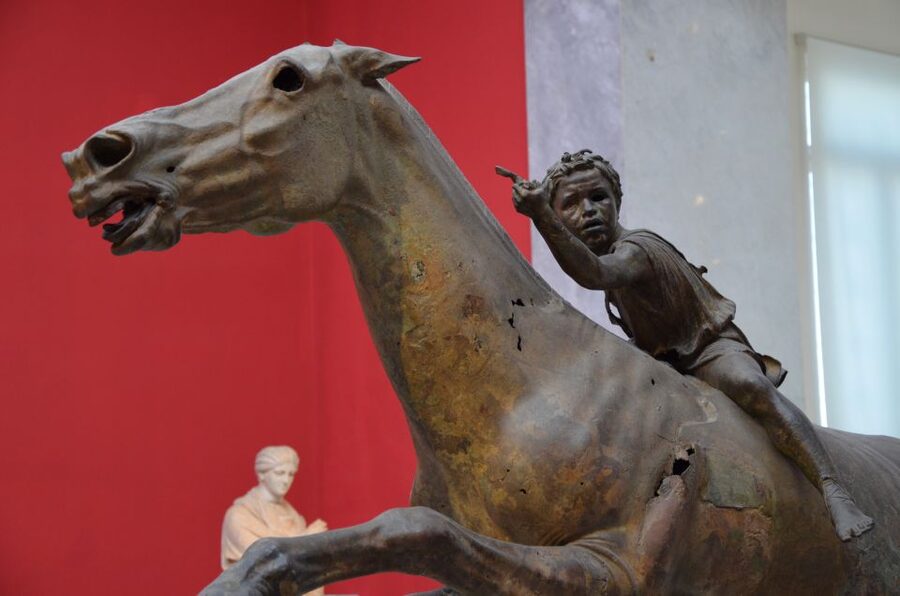
Bronze objects include fundamental statues, figurines, and smaller items. Bronze is a different material to look at than stone or pottery, and it changes how you think about craft and status.
Egyptian and Near Eastern Antiquities
This is a unique angle in Greece: the museum houses the only Egyptian and Near Eastern Antiquities collection in Greece. Dating ranges from pre-dynastic periods around 5000 B.C. up to the Roman conquest. This room can be a reality check, because it shows that the ancient Greek world was not isolated.
If you want your understanding of ancient Greece to include the bigger Mediterranean context, do not skip this angle, even if you only get a highlight view during the guided time.
The Antikythera mechanism stop, and why one object can change everything
The headline moment is the Antikythera mechanism, often described as the world’s oldest analogue computer. Even if you have heard the basic claim before, seeing how it is presented inside a museum like this can feel different.
Why? Because the mechanism is not just a “cool artifact.” It is a bridge between art, technology, measurement, and the way people organized knowledge in the ancient world. It helps you shake off the idea that scientific thinking arrived later, fully formed.
During the guided tour, the mechanism is treated like a turning point object, one that lets you connect the dots from earlier civilizations and into the sophistication of later Greek life. It is a highlight that works for both adults and teens, because it is easy to grasp and hard to forget.
If you like history through objects, this is the one you will likely talk about after.
How the guide handles questions, pacing, and special interests
One of the best things about booking a private guided tour is that you can steer the visit slightly. The guide is flexible with how the group moves through the museum highlights, and you are not locked into a rigid script for every participant.
A standout detail that came up in real bookings: if you have a professional or deep personal interest in ancient jewelry, it can be worth asking the guide. Christos has been able to arrange a private showing of the jewelry room that is usually locked during some times of the year. There is no guarantee for every visit, but asking is practical, and it signals what kind of time you want the guide to spend with you.
Also, if you are traveling with kids, do not expect a “dumbed down” tour. The approach is designed to keep young people engaged. The explanations use context and momentum rather than long lectures.
The one caution I would give you: because there is so much to cover, the guide keeps the pace moving. If you want to linger at a specific sculpture or read every label in one room, plan to add time after the 2-hour guided portion. The tour is a fast education, not a slow museum marathon.
Price and value: $400 per group up to 6, plus the 10 euro ticket
The price is $400 per group up to 6 people for a 2-hour private guided tour. The museum entry ticket is 10 euro, and it is not included. Hotel transfer is also not included.
So what does that mean for value?
- If you book with a full group of 6, the guided portion works out to about $66 per person, before you add the museum ticket.
- If you book with fewer people, the per-person cost rises, but you still get the benefit of a guide-led route that saves time in a museum this large.
I think the best value is when you have 3 to 6 people traveling together, especially if you are splitting the cost across a family or a small group of friends. It is also good value if you care about context and want a licensed archaeologist guide, not just a general interpreter.
If you are traveling solo or as a couple and you enjoy museums at your own pace, a guided tour may feel like less of a bargain. In that case, you might still book for the Antikythera mechanism focus and the orientation, then spend your extra time exploring on your own.
Practical tips so the 2 hours actually feel worth it
This tour is timed. Your job is to show up ready.
- Wear comfortable shoes. You will be walking through multiple galleries, and the museum is spread out.
- Go in with one or two questions ready. Examples: What period should I pay attention to first, or how do vases reflect everyday life?
- If you are especially interested in a topic, tell the guide early. Jewelry, for example, is a request worth mentioning, since the guide has experience working around viewing limits in some cases.
- Plan to arrive at the meeting point at the museum steps in front of the main entrance, not down the block. Easy meets reduce stress.
- If you have time after the tour, give yourself a chance to circle back to whatever grabbed you. The guided piece sets the hook, then your extra time makes it stick.
If you do just one thing, do this: treat the guided time as your orientation plus highlights, then add unhurried viewing after.
Should you book this Athens National Archaeological Museum tour?
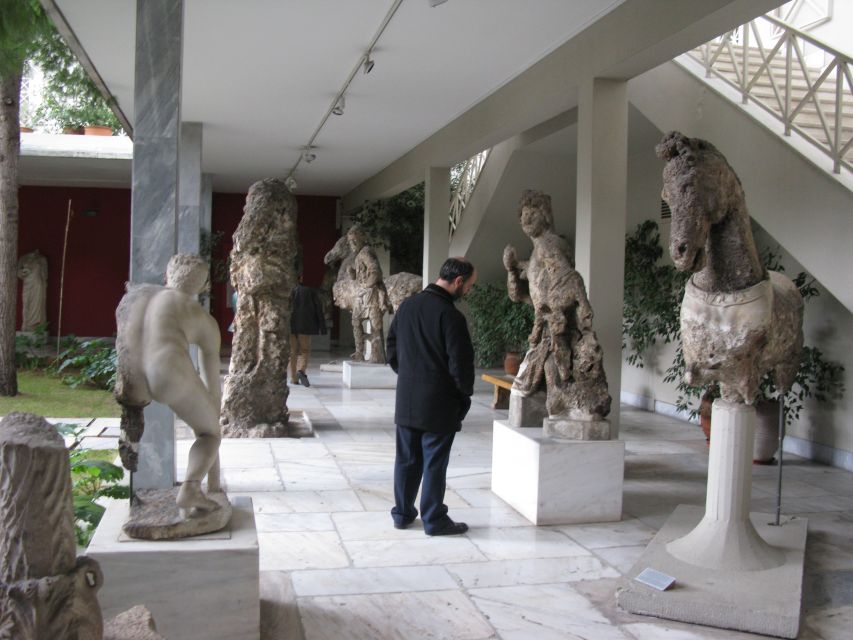
I would book it if you want a tight, smart route through one of the most important museums in Greece, with an archaeologist guide who can explain what you are seeing in real time. It is especially attractive for families, mixed-age groups, or anyone who finds big museums intimidating.
You might skip it or consider a lighter approach if you already know the museum well and you prefer long self-guided wandering. This tour is intentionally focused, and it will not replace a full day of slow gallery time.
For most visitors, though, the combination is strong: a licensed archaeologist, a small private group, and big anchor moments like the Antikythera mechanism plus the museum’s main collections from prehistory through late antiquity. If your goal is to leave with a clear mental map of ancient Greek culture, this is a high-payoff choice.
FAQ
How long is the private guided tour?
The tour lasts 2 hours.
Is the museum entry ticket included in the price?
No. The museum entry ticket costs 10 euro and is not included.
What is the price for the private tour?
It costs $400 per group, for up to 6 people.
Where do we meet the guide?
You meet at the Athens National Archaeological Museum, at the steps in front of the main entrance, 44 Patission Street, 10682.
What languages are available for the live guide?
The live guide is available in Turkish, English, German, and Greek.
Is free cancellation available?
Yes. You can cancel up to 24 hours in advance for a full refund.
Latest from under the Acropolis






National Archaeological Museum Tours, compared.
National Archaeological Museum Ticket w/ Opt. Audio
Read our review →
Athens National Archaeological Museum E-Ticket with Audio Guide
Read our review →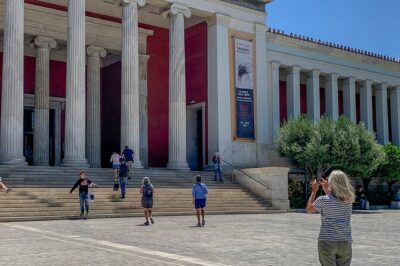
National Archaeological Museum Private Tour with Licensed Expert Guide
Read our review →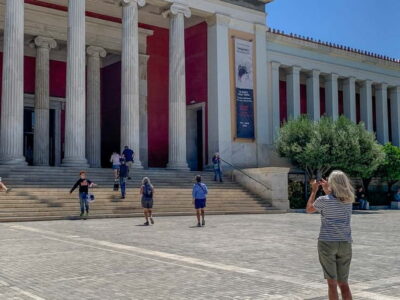
National Archeological Museum Private Tour with Admission
Read our review →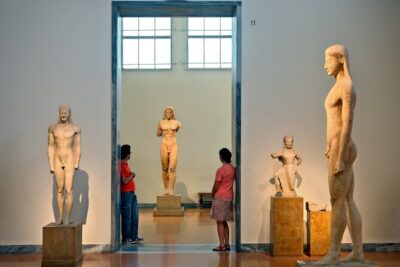
Acropolis Museum & National Archaeological Museum Ticket
Read our review →
Private Athens National Archaeological Museum Tour
Read our review →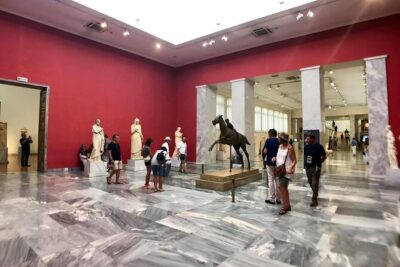
Skip The Line National Archaeological Museum Private Guided Tour In Athens
Read our review →Browse the lists this tour appears in