
Reviewed · METEORA MONASTERY DAY TRIPS
Athens: Meteora Daytrip by train with optional lunch
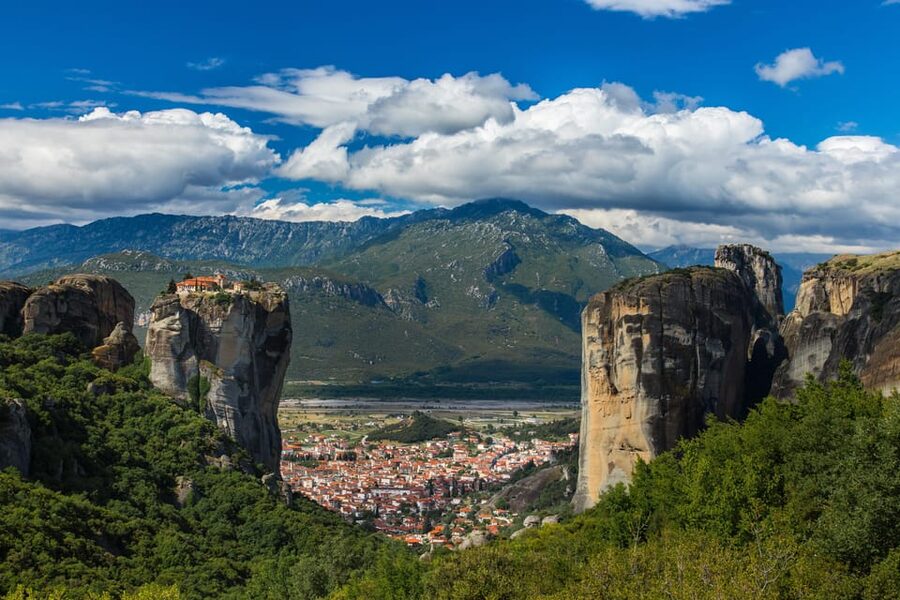
Meteora daytrips are the ultimate Greece speed-run. This one gets you from Athens to Kalabaka with organized stops, then into two working UNESCO monasteries for real-life Eastern Orthodox atmosphere. You also get a guide plus an 8-language audio setup, so you can track the story even if you miss a spoken detail.
I especially like the mix of viewpoints and structure. You get planned photostops on the rock formations, then time to walk inside monasteries built on those pillar-like cliffs. The audio guide options are strong too, with English live guidance and audio in Chinese, Portuguese, German, French, Italian, Spanish, Russian, and English, plus Portuguese commentary tied to the history.
One thing to consider is timing. While the trip is listed as 14 hours, the day can run closer to 15, and the Athens-to-Kalabaka train segment may switch to a bus route when rail services are disrupted.
In This Review
- Key highlights to watch for
- Price and logistics: what $80 really buys you
- Getting out of Athens: pickup points and the early start
- Train to Kalabaka, or bus when rail acts up
- Kalabaka timing: use the break wisely
- Inside Meteora: what you learn and what you see
- Entrance fees: plan for them
- The monastery visits: how to choose what matters
- Photo stops that do not waste your time
- Lunch option: when it helps and when it does not
- What the guides and audio do well
- Comfort and vehicles: mostly fine, but not guaranteed luxury
- Who this tour fits best
- Practical tips before you go
- Should you book this Meteora daytrip?
- FAQ
- What is the price and total duration?
- Where do the pickups happen in Athens?
- Is lunch included?
- Do we enter monasteries or just see them from outside?
- Are monastery entrance fees included?
- What language support is available?
- Does the tour use a train from Athens?
- Is there a security line to skip?
Key highlights to watch for
- Two monastery entrances included: you visit two monasteries out of the six, but entrance fees are not included.
- Photo stops built into the day: you get multiple chances to shoot the rocks and monasteries from key viewpoints.
- Audio guides in many languages: English live guide plus recorded narration in 8 languages.
- Flexible lunch option: seasonal salad and one main with water are included if you choose lunch.
- Central Athens pickup: meeting points near Plaka, Syntagma, Omonoia, and Karaiskaki start early.
- The day can run long: plan for about a full day, not a neat 14-hour slot.
Price and logistics: what $80 really buys you
At $80 per person, this daytrip is priced for a full transportation package plus guided interpretation. You are paying for the big moving parts that make Meteora hard on a DIY schedule: early central pickup, coordinated travel to Kalabaka, a local guiding component on arrival, and monastery touring time that fits into the limited opening schedules.
Here is what you do get, in practical terms:
- Round-trip transport from Athens, with air-conditioned minibus and coach connections.
- A guided experience that includes the storyline of the rocks and the monastery complex.
- Visits inside two monasteries, with the important caveat that monastery entrance fees are not included.
- Photo stops where it is actually worth getting out your camera.
And here is what you should not assume:
- You should budget extra for monastery entrance tickets once you reach the sites.
- You should treat the published schedule as a best-case plan. The day can run longer, and rail timing can change.
If you hate rushing and you do not want to organize buses, tickets, and timing across two different towns, this is good value. If you want total freedom, you may prefer renting a car or building your own route. Meteora is not hard to reach, but it is hard to do casually without losing time.
More journeys up to the Meteora rocks:
- Athens: Meteora Monasteries Day Trip with Caves and Lunch
★ 4.7 · 4,670 reviews - Athens to Meteora: Monasteries, Caves & Seaside Stopovers
★ 4.7 · 2,958 reviews - Athens: Full-Day Meteora Tour with Local Guide & Greek Lunch
★ 4.8 · 2,101 reviews - Athens: Meteora Monasteries, Caves & Coastal Stopovers with Lunch
★ 4.5 · 1,432 reviews
Getting out of Athens: pickup points and the early start
The trip begins with pickup from four central locations:
- Melina Mercouri Monument at 7:00 am
- Greek Parliament at 7:05 am
- Omonoia Square at 7:15 am
- Karaiskaki Square at 7:20 am
This matters because Meteora daytrips live and die by morning logistics. If you stay in central Athens, the pickup saves you from hunting for transfers. If you are farther out, factor in the time to get to one of those points.
I also like that you get a quick routine for getting organized. You arrive at the pickup spot, board the air-conditioned vehicle, and get moving. It is the kind of trip where you can actually focus on the day instead of your next step.
Train to Kalabaka, or bus when rail acts up
The core plan is transport by coach to the train station, then a scenic ride by train to Kalabaka, followed by local guidance at arrival. In real-world departures, that train leg has not always been reliable due to works, and some days shift into an all-bus route.
So here is the practical advice: assume the journey might be quicker or slower than you expect, and be mentally ready for buses if the train section is disrupted. Either way, you still get the countryside views on the way in, plus the overall structure stays the same: arrive in Kalabaka around midday, then transition into the Meteora touring block.
Also note the duration. Even when everything runs smoothly, you are away from Athens most of the day. Some schedules creep later than planned because you need time for transfers, photo stops, and monastery time windows.
Kalabaka timing: use the break wisely
You generally arrive in Kalabaka by noon, and the local guide joins you there. This is the town at the foot of the Meteora rocks, so it is also a good place to orient yourself without running straight into cliff staircases.
What you do next depends on the lunch option you choose:
- If you selected lunch: you get a seasonal salad plus one main, plus water, with vegan and vegetarian options available.
- If you did not select lunch: you can use the time to explore Kalabaka on your own, grab snacks, and rest before Meteora.
That break is not just free time. It can protect your energy. Meteora visits involve stairs, uneven stone paths, and a lot of standing around for photos. If you go in hungry or tired, the experience gets less enjoyable.
Inside Meteora: what you learn and what you see
After lunch or your break, the Meteora portion starts. This is where the tour earns its reputation. You get the story of how these rocks formed over millions of years, and how they became spiritual homes.
The key timeline you hear is:
- Monks returned to the rocks in the 9th century
- The first monasteries were built in the 14th century
- Today Meteora is one of the most important complexes of Eastern Orthodox monasteries
Then you move through the real day plan: you will see six monasteries from the outside, but enter two. The number of monasteries open can vary day to day, and the tour is built around that reality. If you are hoping to see everything inside every monastery, this will not be your tour. But for most people, entering two monasteries is plenty to feel the place without burning the entire day.
Other midday tables built into the route:
- All Day Cruise -3 Islands to Agistri,Moni, Aegina with lunch and drinks included★ 5.0 · 4,958 reviews
- From Athens: Hydra, Poros, and Aegina Day Cruise with Lunch★ 4.1 · 4,305 reviews
- Athens: Islands Swimming Day Cruise. DJ, Lunch & Drinks inc.★ 4.6 · 1,887 reviews
- Athens cruise: Agistri, Moni/Metopi, Aegina with lunch & drinks★ 5.0 · 1,783 reviews
Entrance fees: plan for them
Entrance fees are not included, and that is common for working religious sites. Before you reach the monasteries, it is smart to set aside cash or a card for tickets so you are not scrambling mid-visit.
Also, expect the interior experience to be quiet and respectful. You are inside living history, not a theme park.
The monastery visits: how to choose what matters
Because you only enter two monasteries, you want to make those entrances count. The tour includes a guide, but the text you hear while walking the grounds is just as important as what you see.
Here is how I’d think about the two visits:
- The first entry often sets the tone. You start to understand the architecture choices that helped monks survive and worship on these cliffs.
- The second entry confirms what you learned, and gives you a chance to compare styles, views, and how the complex feels at a different viewpoint.
You also get photo opportunities from panoramic spots on the rock formations. This matters because Meteora is visual storytelling. Even if you only catch a few angles, you leave with images that actually explain why the place matters.
Photo stops that do not waste your time
One of the most praised parts of the day is how often you get photo stops and how they tie into the views you want. If you like taking pictures, this kind of pacing helps. You get moments where stopping makes sense, rather than the bus rolling forward while you are still trying to frame your shot.
A smart move for Meteora photos: treat the bus windows as a bonus, not your plan. The best photos usually come when you can stand at proper viewpoints.
Lunch option: when it helps and when it does not
The lunch option is simple: seasonal salad, one main course, plus water. Vegan and vegetarian options are available.
If you choose lunch, you trade a bit of freedom for less hassle. You do not need to hunt for food right away after arriving in Kalabaka. That is a big plus when the day is packed and your energy is the limiting factor.
If you do not choose lunch, you still have time to eat in Kalabaka and reset. Just don’t underestimate how long monastery walking takes. Easy snacks can be perfect if you pace yourself.
What the guides and audio do well
This tour has a mix:
- A live tour guide in English
- Audio guide in multiple languages, including English and Portuguese (with Portuguese unique commentary)
This combination is useful. Live narration gives you context and you can ask questions, while audio helps if you want detail or you are standing slightly away from the guide.
If you are French, Spanish, German, Italian, Russian, or Chinese speaking, the audio language list is a strong point. In practice, it means you can stay oriented without relying on perfect listening from your seat.
Comfort and vehicles: mostly fine, but not guaranteed luxury
The tour uses air-conditioned vehicles, and it is set up to feel like a managed day, not chaos. That said, not every bus is equally comfortable. Some days you might get a vehicle that feels worn, with seating not as pristine as you’d hope.
Still, you are not spending most of the day in the bus. You are in Kalabaka and on Meteora paths. So if you can handle basic comfort, you should be fine.
Who this tour fits best
This Meteora daytrip suits:
- You want a stress-free plan with pickup and a guided storyline.
- You want to enter two monasteries without dealing with logistics.
- You like photo stops and structured timing.
- You prefer audio support in your language while the guide speaks English.
It might not be ideal if:
- You want to spend hours inside multiple monasteries, at your pace.
- You really dislike long day schedules. This is a full-day outing.
- You are very sensitive to vehicle comfort and timing changes.
Practical tips before you go
- Bring layers. Morning in Athens can be cool, and Meteora can feel different as you move between viewpoints.
- Plan for extra time at the monasteries. Even with a schedule, walking paths and photo stops add up.
- Budget for entrance fees at the monasteries.
- For photos, charge your phone fully and bring a small power bank if you can.
Should you book this Meteora daytrip?
If your goal is to see Meteora efficiently, with guidance, and leave with both the story and the views, I think this is a strong booking. The value is in the organized pickup, the audio support, and the fact you enter two monasteries without having to plan every step.
But if you are expecting a neat 14-hour day, train-only travel, or entrance fees included, adjust your expectations first. The tour is built around real-world operations, monastery opening limits, and travel timing that can shift. If you go in with that mindset, you will get exactly what Meteora days are supposed to deliver, big views and a memorable religious site you can actually understand.
FAQ
What is the price and total duration?
The price is $80 per person, and the duration is listed as 14 hours.
Where do the pickups happen in Athens?
Pickups are at four central points: Melina Mercouri Monument (7:00 am), Greek Parliament (7:05 am), Omonoia Square (7:15 am), and Karaiskaki Square (7:20 am). Drop-off is back at your selected meeting point.
Is lunch included?
Lunch is included only if you choose the lunch option. The lunch includes a seasonal salad, one main course, and water, with vegan and vegetarian options available.
Do we enter monasteries or just see them from outside?
You enter 2 monasteries during the tour. You will also see 6 monasteries from the outside, but only 2 or 3 are typically open on a given day.
Are monastery entrance fees included?
No. Entrance in the monasteries is not included, so you will need to pay the monastery entry fees separately.
What language support is available?
The live tour guide is English. The audio guide is available in Chinese, Portuguese, German, French, Italian, Spanish, Russian, and English.
Does the tour use a train from Athens?
The plan includes a train segment from the station to Kalabaka after an initial coach transfer. If rail services are disrupted, the route may shift, so you should be ready for bus travel if needed.
Is there a security line to skip?
The activity includes an express security check, which means you can skip the standard line during that step.
More Train Experiences in Athens
- From Athens: Meteora Caves & Monasteries Day Trip by Train
★ 4.8 · 468 reviews - Corinth, Cave of Lakes, Odontotos Railway Private Tour with Greek Lunch Included
★ 5.0 · 141 reviews - Mount Olympus And Dion Full-Day Tour From Athens By Train
★ 4.5 · 59 reviews - From Athens: Meteora Train Trip with Overnight Stay
★ 4.8 · 40 reviews
Latest from under the Acropolis



Meteora Monastery Day Trips, compared.
Meteora Monasteries Day Trip with Caves and Lunch
Read our review →
Athens to Meteora: Monasteries, Caves & Seaside Stopovers
Read our review →
Full-Day Meteora Tour with Local Guide & Greek Lunch
Read our review →
Meteora Monasteries, Caves & Coastal Stopovers with Lunch
Read our review →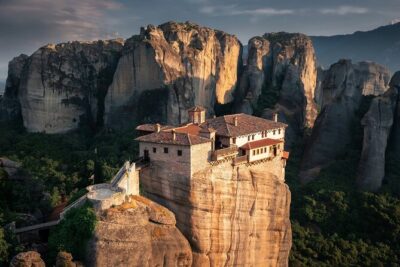
Meteora Monasteries & Caves DayTrip from Athens with Greek Lunch
Read our review →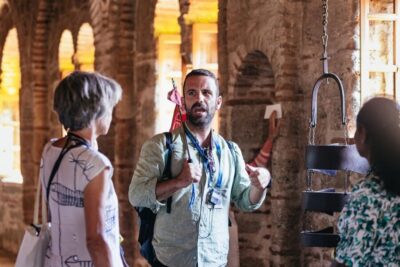
4-Day Classical Greece Tour: Epidaurus, Mycenae, Olympia, Delphi, Meteora
Read our review →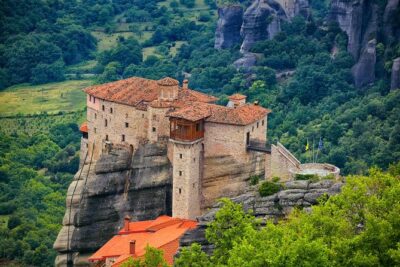
Meteora Monasteries, Hermit Caves Tour with Pickup
Read our review →Browse the lists this tour appears in