
Reviewed · ACROPOLIS HILL TOURS
Athens Half-Day Tour: Acropolis, Parthenon & All Major Landmarks
Athens in half a day is no joke. This private 5-hour tour strings together the big ancient sights and the smart modern Athens stops, with a cool vehicle and a driver who sets you up for what you are about to see. I love the hotel pickup and drop-off because you lose less time wrangling transit, and I love the front-door car access plus freedom to explore at each site. The main drawback to plan for is cost creep, because the big-name attractions have separate entrance fees and Acropolis lines can eat into your visit time.
You get a tight route without feeling like you are sprinting in a crowd. In particular, the driver stops at strategic points for photos, explains the context before you head inside on your own, and even helps you time the day around heat. Just note you are not getting a licensed inside-guide at the museum and temples, so if you want someone walking beside you through every wall and artifact, you may prefer a different format.
In This Review
- Key highlights I’d plan around
- How this 5-hour Athens route actually works
- Acropolis and Parthenon, what to look for before you even enter
- Plaka, plus the Athens stories you pick up while you move
- Roman Athens in minutes: Hadrian’s Arch and the Zeus ruins
- Syntagma Square for democracy and remembrance
- Panathenaic Stadium and the “Athenian Trilogy” education buildings
- Mount Lycabettus for views, and why 10 minutes can be enough
- Dromeas, The Runner, and the modern link to the Marathon
- Optional upgrades: Acropolis Museum and Ancient Agora, when spending extra makes sense
- Acropolis Museum, 60 minutes (ticket not included)
- Ancient Agora, 60 minutes (ticket not included)
- Price and what extra entrance fees really mean
- Who this tour fits best, and who should skip it
- Should you book this Athens Half-Day Tour?
Key highlights I’d plan around
- Skip-stress logistics, with hotel pickup and drop-off right where you need to start and end.
- Acropolis to Parthenon context first, so the stones make sense before you start looking.
- Roman and classical mix, including Hadrian’s Arch and the Temple of Olympian Zeus ruins.
- Syntagma Square in real life, with the Tomb of the Unknown Soldier and the Evzone guard setup.
- Athenian classics, not just temples, with the Panathenaic Stadium and the “Athenian Trilogy” education buildings.
- Optional add-ons that actually change your day, the Acropolis Museum and the Ancient Agora.
How this 5-hour Athens route actually works
This is a private tour in an air-conditioned vehicle, designed for maximum seeing with minimal friction. Your driver meets you at your location, arrives about 5 minutes early, and handles the driving between neighborhoods. You also get bottled water and WiFi on board, which sounds small until you are in the Athens sun with a clock ticking.
A key detail: the driver has deep historical knowledge and will give you context before each stop, but they are not licensed to accompany you inside the archaeological sites and museums. That is why the format feels like a smart combo of guided storytelling and self-paced exploring. You spend less time waiting in lines with a group, but you still get enough interpretation to avoid feeling lost.
If you have limited time, this “driver sets the stage, then you explore” style is ideal. If you want an all-day museum lecture delivered inside each venue, you may feel shorted.
Other routes up the hill and around the Parthenon:
- Athens: Acropolis & up to 5 Archaeological Sites Combo Pass
★ 4.2 · 13,904 reviews - Athens: Acropolis, Parthenon & Acropolis Museum Guided Tour
★ 4.8 · 9,316 reviews - The Acropolis, Parthenon & Acropolis Museum Guided Tour
★ 4.7 · 8,493 reviews - Acropolis: Premium Acropolis and Parthenon Guided Tour
★ 4.8 · 5,208 reviews
Acropolis and Parthenon, what to look for before you even enter
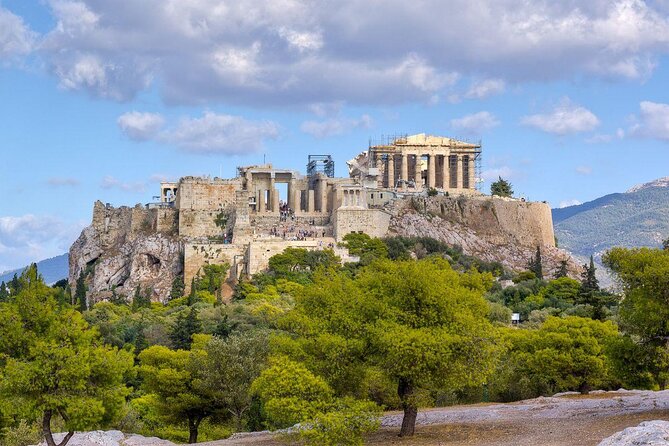
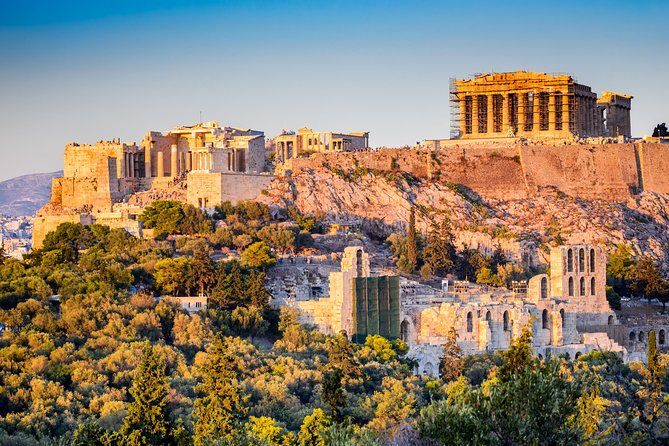
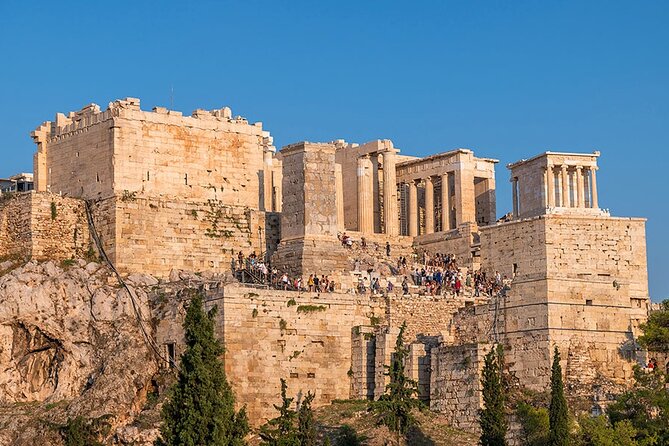
The Acropolis is the headline, and your tour starts there. Plan on around 30 minutes at the Acropolis area, and remember the big paid entry is not included in the tour price. Yes, there are lines, and yes, you will notice other tour groups. But with the setup of a private pickup and an on-your-own walk inside, you usually spend more of your time looking than relocating.
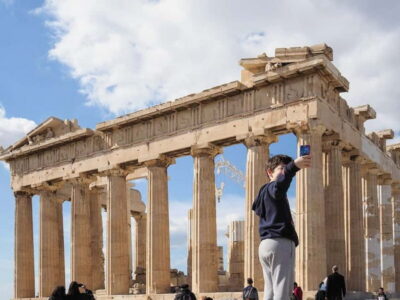
What I love about seeing the Acropolis this way is how much the place changes once you know what you are looking at. The Acropolis includes the Propylaea, the Erechtheion, and the Temple of Athena Nike, all packed into a compact, high-visibility complex. Your driver’s pre-stop explanations help you clock the architectural language, like Doric columns and the idea of symmetry, so it feels less like random ruins.
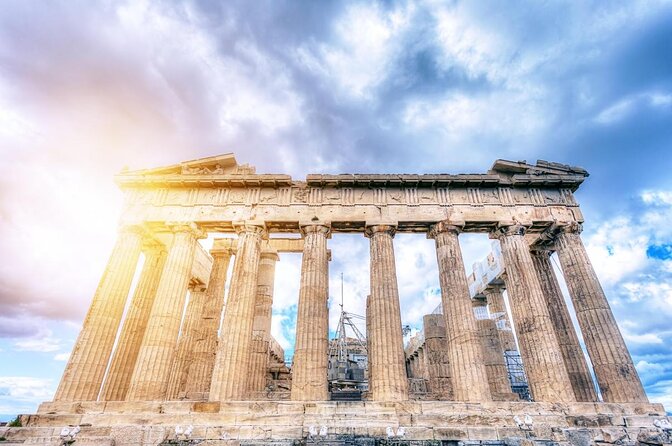
Then you move to the Parthenon, also about a 30-minute window. You are there for the essentials:
- The Parthenon dedicated to Athena
- Classical construction from the mid 400s BCE
- The famous Doric column rhythm, with 46 outer columns
- The Pentelic marble look, and the role of the frieze in telling myth scenes
Even if much is damaged or reconstructed, the Parthenon still communicates scale and intent. If you only visit one ancient monument on your trip, this is the one.
Practical tip: wear comfortable shoes and bring a hat. Also, keep your museum ticket purchase plan tight, because if you show up without tickets, queue time can balloon. Pre-order is available through hhticket.gr, which is listed as the place to do it.
Plaka, plus the Athens stories you pick up while you move
Under the Acropolis, Plaka is the old-meets-new Athens zone you want after the stones. The “Neighborhood of the Gods” nickname fits, with winding lanes, neoclassical façades, and tavernas, cafes, and shops. Many visitors treat Plaka as a photo stop. I treat it as a reset, because once you come off the hill you can switch from temples to street-level Athens.
This tour includes time for Plaka, plus a stop connected to Alexander the Great. The Alexander portion is not just trivia. It helps you connect Athens to the wider shift after the classical city-state era, when Greek culture spread through conquest and cultural blending across Egypt and Persia. Even if you are only stopping briefly, it gives the day a narrative spine: Athens the city of ideas, Athens the city that becomes part of something larger.
If you like browsing, Plaka is where you will enjoy slowing down, even if the tour schedule keeps you on a pace. If you want shopping, bring small euros for snacks, drinks, and a quick bite.
Roman Athens in minutes: Hadrian’s Arch and the Zeus ruins
After the classical centerpiece, the tour turns to Roman-era Athens with Hadrian’s Arch. It is free to visit, about a 10-minute stop, and a great palate cleanser after the monumental Greek temples. Hadrian’s Arch was built in 131 AD and it marks the boundary between the old city associated with Theseus and the newer city linked to Hadrian.
The best way to use this stop is to look at the inscriptions concept, one side crediting Theseus and the other crediting Hadrian. That little detail makes the arch feel like more than a pretty gateway. It is a political statement carved into marble.
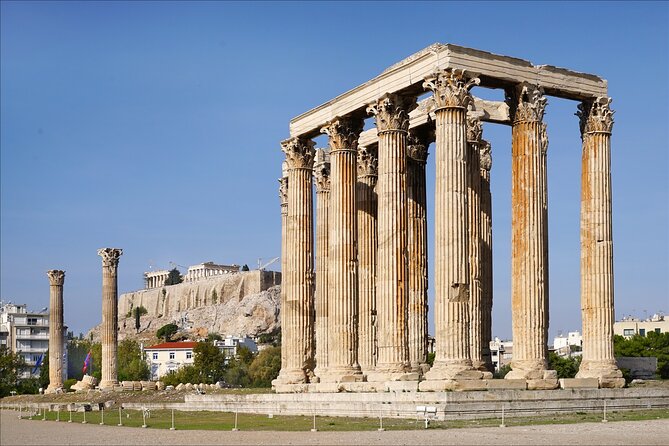
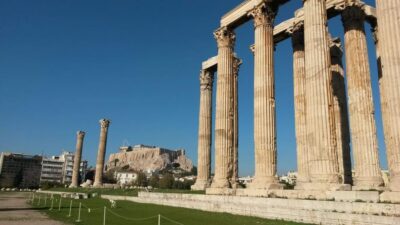
Next up is the Temple of Olympian Zeus. This is also free, and it is one of those places that makes you appreciate ambition more than perfection. Construction stretched from the 6th century BCE under Athenian tyrants into the 2nd century CE. In its prime it held a massive chryselephantine statue of Zeus, though today you mostly see ruins and a few columns.
Even in partial form, the scale hits. Corinthian columns reach about 17 meters, and the surviving fragments still show how far the builders pushed. If you are a visual learner, you will enjoy standing back and trying to imagine what the full temple looked like.
Syntagma Square for democracy and remembrance

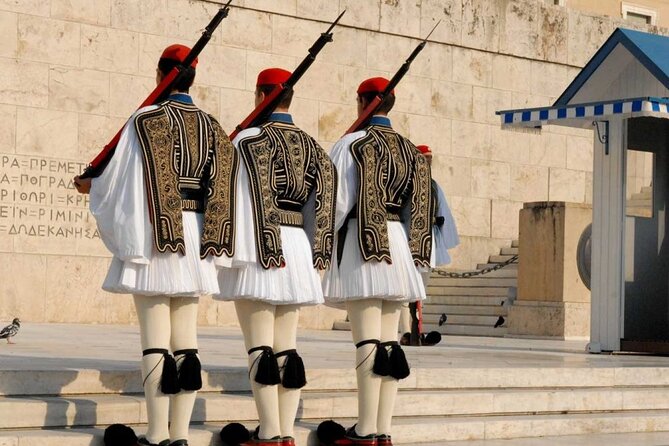
Syntagma Square is where modern Athens shows its spine. The tour includes the Hellenic Parliament, plus the Tomb of the Unknown Soldier in the same area, both free.
At the Parliament building, you get a neoclassical royal-palace origin story and the modern role as Greece’s unicameral legislature since 1934. Outside, the Tomb of the Unknown Soldier is the more emotional stop. It was erected in 1932, with an eternal flame at the center and a marble structure with sculpted reliefs of battle and mourning.
The key practical detail is the Evzones guard presence and the regular changing ceremony. The ceremony attracts attention for a reason. If your day includes a moment to watch, it adds a live, human layer to an otherwise ancient-focused itinerary.
If you plan your route for comfort, this is also a good area to regroup. You can step out, stand still for a few minutes, take photos, and grab water if you need it.
A handful more Athens outings to compare
- Athens: Cape Sounion & Poseidon Temple Sunset Half-Day Trip★ 4.8 · 8,241 reviews
- Cape Sounion and Temple of Poseidon Half-Day Small-Group Tour from Athens★ 4.5 · 3,205 reviews
- Athens Half-Day Sightseeing Tour with Tickets of Acropolis★ 4.0 · 1,402 reviews
- From Athens: Temple of Poseidon & Cape Sounion Half-Day Tour★ 4.3 · 1,082 reviews
Panathenaic Stadium and the “Athenian Trilogy” education buildings
The Panathenaic Stadium, also called Kallimarmaro, is next, with about 15 minutes on the schedule. It is famous because it is built entirely of white marble and hosts ancient athletic tradition, the Panathenaic Games. The stadium also ties directly to the modern Olympics revival in 1896.
Admission is noted as not included, so you will want to decide ahead of time if you want inside time or if you are okay with viewing from the accessible areas.
After that, the tour includes three classic neoclassical education institutions that many visitors miss:
- The Academy of Athens, founded in 1926
- The National and Kapodistrian University of Athens, established in 1837
- The National Library of Greece, founded in 1832
All three are part of the “Athenian Trilogy” in this part of town. These stops are not temples, but they matter because they show how Greece keeps honoring its intellectual identity. If you like architecture, the statuary on the Academy grounds, and the impressive façades on the University and Library, give your eyes a break after the hard stone of archaeological sites.
Mount Lycabettus for views, and why 10 minutes can be enough
Mount Lycabettus is a quick but rewarding stop, about 10 minutes, and free. The big win here is the perspective. Lycabettus sits around 300 meters above Athens, with a view that can stretch toward the Aegean Sea and surrounding mountains, plus a chapel at the top dedicated to St. George.
Even if you only reach the main viewpoint areas, it can change your mental map of the city. You see how the neighborhoods stack and how the Acropolis sits within the urban grid.
Timing matters. If you are doing this in late afternoon, the hill is popular around sunset for the light on the city. If you are going earlier, you still get the layout and scale, which is useful for the rest of your trip.
Dromeas, The Runner, and the modern link to the Marathon
This tour includes Dromeas, also called The Runner, a modern sculpture by Costas Varotsos from 1994. It is made of layered glass and iron and depicts motion through its materials and form, about 12 meters tall.
The thoughtful part is how it connects to Marathon Run. The Marathon Run is rooted in the story of Pheidippides running from Marathon to Athens in 490 BCE to announce victory over the Persians. That story helped shape the modern marathon race, first included in the 1896 Olympics held in Athens.
This stop is quick, but it helps you see how ancient events still show up in modern Athens, not only in museums and plaques.
Optional upgrades: Acropolis Museum and Ancient Agora, when spending extra makes sense
This tour offers two optional add-ons that can turn it from “best of” into “best of plus meaning.”
Acropolis Museum, 60 minutes (ticket not included)
If you want the artifacts explained properly, the Acropolis Museum is the one. It is a modern building opened in 2009, built at the foot of the hill so you get that direct sightline to the Parthenon. The museum holds over 4,000 artifacts across five floors, covering Archaic, Classical, and Roman periods.
The highlight you will likely care about most is the Parthenon Gallery with glass walls aimed to show the Parthenon relationship. You can also see Caryatids, the original statues from the Erechtheion. If you are only doing one paid museum upgrade, I would pick this.
Ancient Agora, 60 minutes (ticket not included)
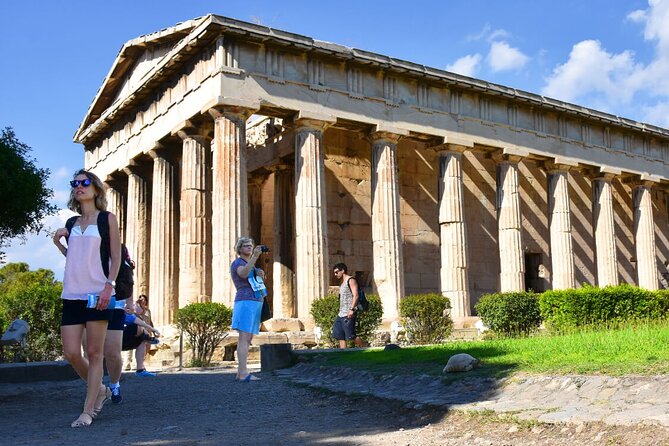
The Ancient Agora is for a different kind of interest. This is where social, political, and commercial life happened, starting in the 6th century BCE and evolving over centuries.
You also get key structures tied to daily civic life:
- Stoa of Attalos as a long colonnade used for gatherings and shopping
- Bouleuterion, where the council met
- Temples and the Altar of the Twelve Gods
- The Temple of Hephaestus area
Philosophers like Socrates are part of the Agora story too, so if you like the idea of Athens as a place where thought happened in public spaces, this stop helps.
When should you add one, not both? If your main goal is the Acropolis, do the museum and skip the Agora if you are short on energy. If you want Athens beyond temples, pick the Agora. Doing both can work if you enjoy walking and you plan around heat.
Price and what extra entrance fees really mean
At $145.12 per person, you are paying for the private vehicle experience, hotel pickup/drop-off, WiFi on board, bottled water, and a driver who gives history context. That is a solid value for a city where getting from point to point can eat time.
But the big archaeological and museum sites have separate entrance fees, and those fees are not small:
- Acropolis Hill entry listed at €30.00 per person
- Acropolis Museum entry listed at €20.00 per person
- Ancient Agora entry listed at €20.00 per person
- Parthenon and other major sites also require their own entries once you are there, as noted by the tour marking admissions as not included for key stops
So your real budget depends on what you choose. If you do only the core sites like Acropolis and Parthenon, you still pay the Acropolis Hill entry. If you add the museum or Agora, your total grows quickly.
My advice is simple: decide your “must see” list before you go, then add up the entrances so the day stays fun and not stressful.
Who this tour fits best, and who should skip it
This tour fits best if you:
- Have one half-day in Athens and want the highlights without bouncing on buses
- Like learning context from a local perspective, then exploring at your own pace
- Prefer private transport, so you can keep moving even when crowds build
You might skip it if you:
- Want a licensed guide walking you inside every site, because the driver cannot accompany you into the museums and archaeological spaces
- Plan to spend long hours inside multiple paid venues, since the schedule is built for short, efficient visits
Should you book this Athens Half-Day Tour?
I think it is a good choice if your priority is getting oriented fast and seeing the core Athens highlights in one tight run. The strongest part is the practical pacing: air-conditioned vehicle, hotel pickup, short stops that keep you moving, plus context delivered before you walk into the important places. If you are the type who wants the stones to make sense, you will like this format.
Book it especially if you can add the Acropolis Museum. That upgrade turns the day from impressive photos into understanding. If you are budget-sensitive, skip one optional add-on, but still plan for the Acropolis entry fee, because that is where most of your “big Athens moment” happens.
Latest from under the Acropolis






Acropolis Hill Tours, compared.
Acropolis & up to 5 Archaeological Sites Combo Pass
Read our review →
Acropolis, Parthenon & Acropolis Museum Guided Tour
Read our review →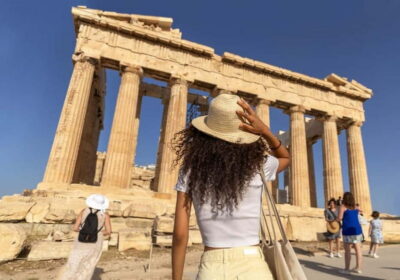
The Acropolis, Parthenon & Acropolis Museum Guided Tour
Read our review →
Acropolis: Premium Acropolis and Parthenon Guided Tour
Read our review →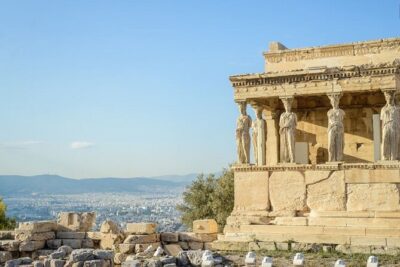
Acropolis and Parthenon Guided Walking Tour
Read our review →Acropolis, Parthenon & Acropolis Museum Guided Tour
Read our review →

Athens Scenic Electric Bike Tour with optional Acropolis visit
Read our review →Browse the lists this tour appears in