
Reviewed · AUDIO TOURS
Athens: Hadrian’s Library Entry Ticket and Audio Guide
One courtyard, two religions, no quiet ruins. Hadrian’s Library is one of those places where a simple walk turns into a story, thanks to an audio guide that explains what you’re looking at and how the building kept changing. I like the real, physical theater of the monumental Propylon entrance, and you’ll feel the size and intention instantly as you step into Roman Athens. I also like how the audio focuses on the human side of the site, making the library’s past feel less like cold facts and more like lived conversations.
Your one possible snag: this is a digital self-guided tour, and the web app does not work offline. You also need to bring your own headphones. If your phone battery is shaky or your data is unreliable, plan ahead or you’ll be stuck staring at stone with nothing to hear.
That said, if you want a compact visit that moves from the library’s Roman purpose to its Christian worship life, this is a smart way to spend about an hour near Monastiraki.
In This Review
- Quick hits worth knowing
- Propylon at Monastiraki: the first moment you should slow down
- Central Courtyard: where the building felt alive, not silent
- The Christian courtyard layers: churches built over a library life
- Library Halls in the Eastern Wing: storage, study, and serious noise
- Peristyle and side chambers: the walk that turns ruins into rooms
- Audio guide setup: how to avoid the usual self-guided headaches
- Price and value: what you’re really paying for
- Who should book this, and who might prefer another style
- Should you book Hadrian’s Library entry with the audio guide?
- FAQ
- How long is the Hadrian’s Library audio guide experience?
- Is there a meeting point for this tour?
- Where is Hadrian’s Library, and how do I get there by metro?
- What languages are included in the audio guide?
- Do I need headphones?
- Can I use the tour app offline?
Quick hits worth knowing
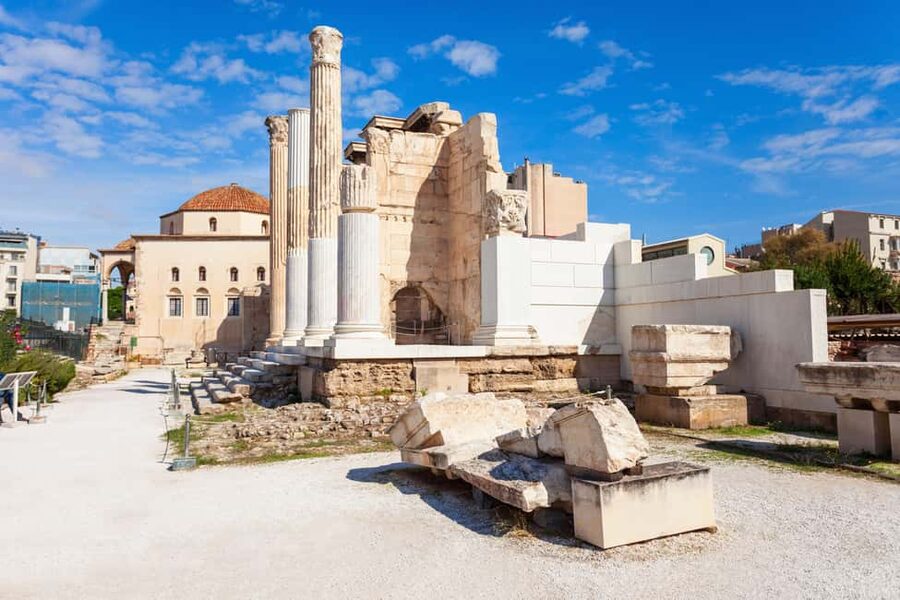
- Propylon entrance colors and columns: expect a striking first impression before you even reach the courtyard.
- Central courtyard as the “heart of the complex”: marble, colonnades, statues, and a cooling pool.
- Christian layers inside the same courtyard: the site later hosted churches, including the Tetraconch Church and Church of the Megali Panagia.
- Library Halls in the Eastern Wing: papyrus scroll and parchment storage, plus teaching and lecture spaces.
- Peristyle walk with 100 columns: a shaded, column-lined circuit that makes the ruins feel walkable.
Propylon at Monastiraki: the first moment you should slow down
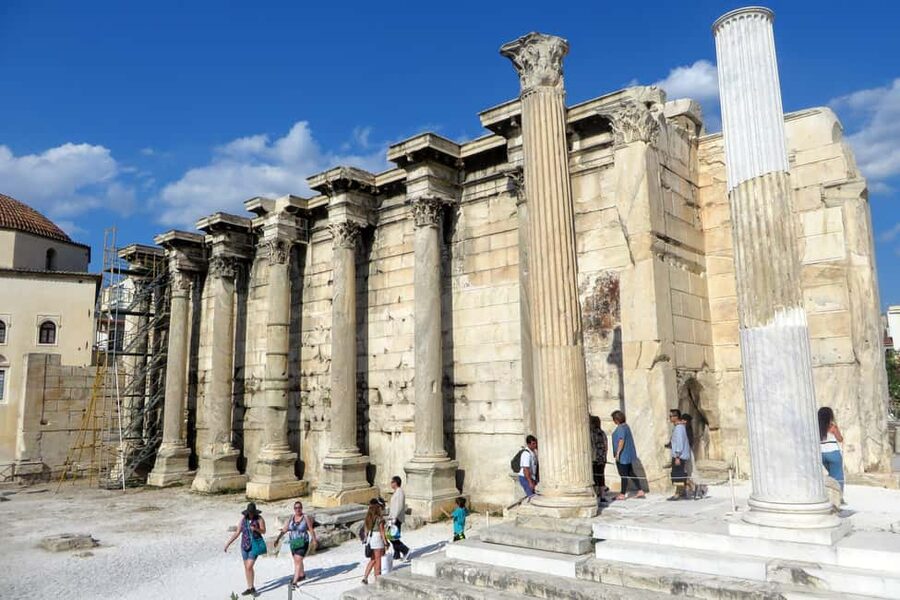
Hadrian’s Library starts with the Monumental Entrance, called the Propylon. Even before you reach the main courtyard, you get the message Roman Athens wanted to send: this wasn’t some side room for scholars. It was a showpiece for culture and learning.
As you approach, the audio guide helps you notice the design choices that made the entrance feel bright and important. In ancient times, the contrast was dramatic: purple marble columns paired with white Pentelic marble in the sunlight. The entrance also features impressive Corinthian columns, which is your clue that this place was meant to feel grand, not quiet or hidden.
Practical tip: take 2 minutes here and look back toward the direction you came from. The entrance faced the Roman Agora, so historically you weren’t stepping into isolation right away. You were moving from the city’s movement into a calmer space that still belonged to everyday civic life. That transition is part of what makes the building interesting.
More Athenian routes narrated as you walk:
- Athens: Cape Sounio & Poseidon Temple Trip with Audio Guide
★ 4.4 · 4,521 reviews - Athens: Acropolis Ticket with Audio Guide
★ 4.0 · 3,575 reviews - From Athens: Delphi Full Day V.R. Audio Guided Tour
★ 4.6 · 3,028 reviews - Athens: Acropolis Museum Ticket with optional Audio Guide
★ 4.4 · 2,652 reviews
Central Courtyard: where the building felt alive, not silent
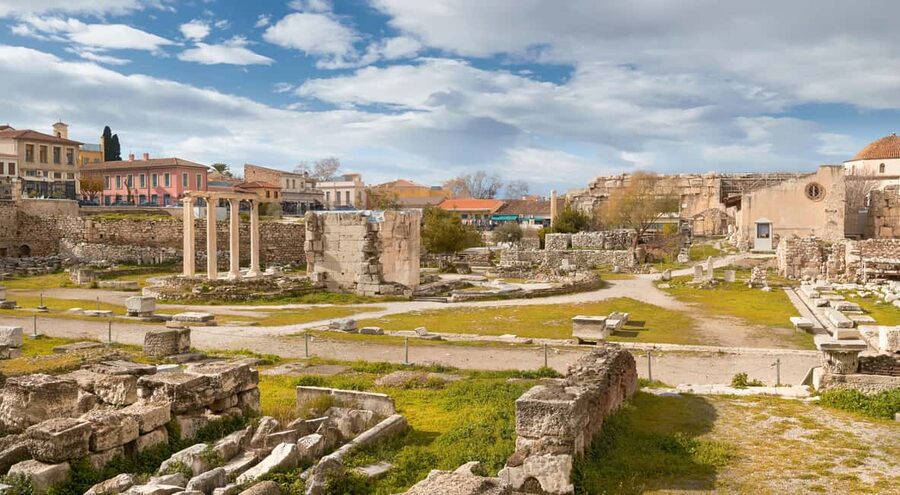
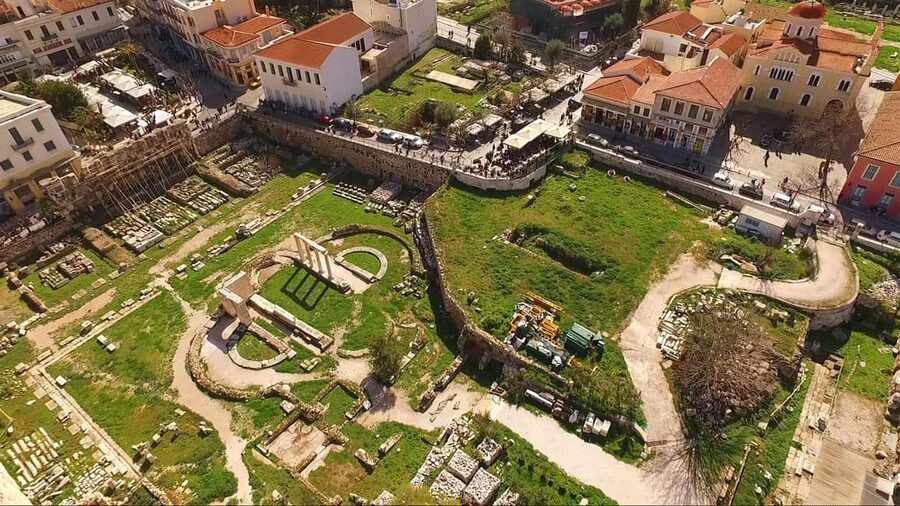
Once you pass into the complex, you reach the Central Courtyard, a huge open space with marble coverage and a long ring of columns. This courtyard is where the audio guide really earns its keep. It helps you picture a daily rhythm: students reading, teachers walking with pupils, and philosophers discussing ideas.
Along the sides, you’re meant to imagine statues of gods, heroes, and philosophers. That matters because it changes how you read the architecture. You’re not only looking at empty ruins. You’re seeing a setting built to keep ideas in front of people, day after day.
In the middle, there was a long pool with gardens. The point was practical and atmospheric at the same time. Water and plants cooled the air and softened the space, which is why the courtyard feels like a calm pause inside a busy city. Even if it’s not doing the same cooling today, the layout still suggests why people would want to linger.
What I’d watch for: in a self-guided visit, it’s easy to speed through courtyards because there’s “nothing to do.” The audio guide turns “nothing” into meaning by explaining what typically happened around you. So give the courtyard time. If you spend only a minute, you’ll miss the best part of the experience.
The Christian courtyard layers: churches built over a library life
Hadrian’s Library has a second act, and the tour takes you there through the courtyard area. In the 5th century AD, the library stopped being a place for storing books and shifted into a Christian worship space.
Here’s one of the most compelling details of the visit: the courtyard didn’t just get abandoned or erased. It kept functioning. Over time, there were three churches at different periods, including the Tetraconch Church, a larger basilica, and later the Church of the Megali Panagia. Even if you can’t see everything clearly on the ground at once, the audio guide helps you sort out which phase you’re looking at as you move through the area.
This is where the site feels especially human. You’re not only studying Roman architecture. You’re watching a community repurpose a space while keeping it central to public life. If you like Athens layered through time, this section is where Hadrian’s Library becomes more than a Roman stop between big-ticket monuments.
Library Halls in the Eastern Wing: storage, study, and serious noise
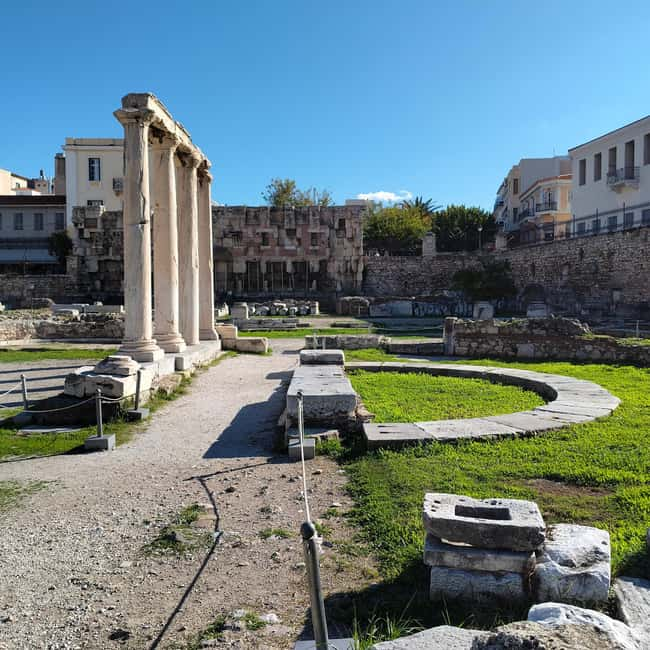
After the courtyard, you go to the Library Halls in the Eastern Wing. This is the part of the experience that corrects one common museum mindset: you might expect a library to be silent. This one wasn’t.
The hall spaces were used for storing and accessing manuscripts, including papyrus scrolls and parchment books. Books were kept in wooden cupboards inside wall niches, which is a specific detail you should pay attention to because it tells you how people actually used the building. It wasn’t a single room of shelves, like a modern library. It was architecture designed for storage plus learning.
The site may have held 17,000 to 20,000 works, which is a scale most people don’t connect to a set of columns and walls. Again, the audio guide helps you connect size to meaning. You also learn that the halls were active with reading rooms, lecture rooms, and teaching areas where students, philosophers, and officials debated.
If you want the building to make sense quickly, listen closely here. The tour’s idea is not just to point out stones. It’s to make you imagine what filled the space with voices and movement.
Peristyle and side chambers: the walk that turns ruins into rooms
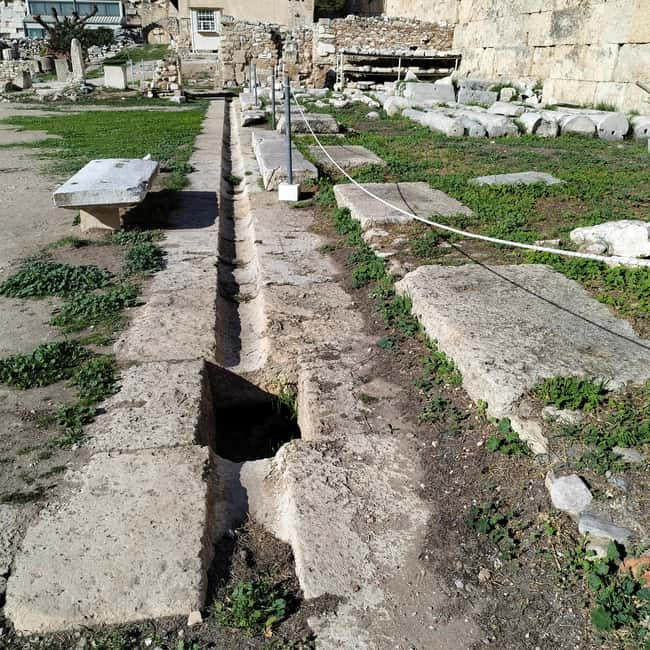
The tour continues around the Peristyle, a covered walkway lined with 100 marble columns. This section is one of my favorite “value for time” parts of the visit. In many ruins, you see a thing and move on. Here, the peristyle lets you experience the complex as a circuit.
The roofed colonnade helped protect visitors from sun and rain. That’s more than a comfort detail. It explains why people would come back here repeatedly to study, talk, and learn. The side chambers behind the columns were used for lectures, small meetings, reading, and official work.
In other words, this wasn’t one big hall where everyone did one thing. It was a network of spaces that supported different kinds of activity. The audio guide makes that clear by describing how the peristyle acted like a sheltered spine through the building.
Practical tip: in hot weather, this is where you’ll want to slow down. Covered walking helps you keep your energy for the rest of the hour, especially if you’re touring in the middle of the day.
Other Athens visits run on your own clock:
- Athens: Acropolis Museum Ticket with Audio Guide★ 4.1 · 835 reviews
- Athens: National Archaeological Museum Ticket w/ Opt. Audio★ 4.4 · 713 reviews
- Acropolis & Parthenon Entrance Ticket w/optional SG Audio Tours★ 3.5 · 606 reviews
- Athens: Acropolis & Acropolis Museum Ticket with Audio Guide★ 4.1 · 556 reviews
Audio guide setup: how to avoid the usual self-guided headaches
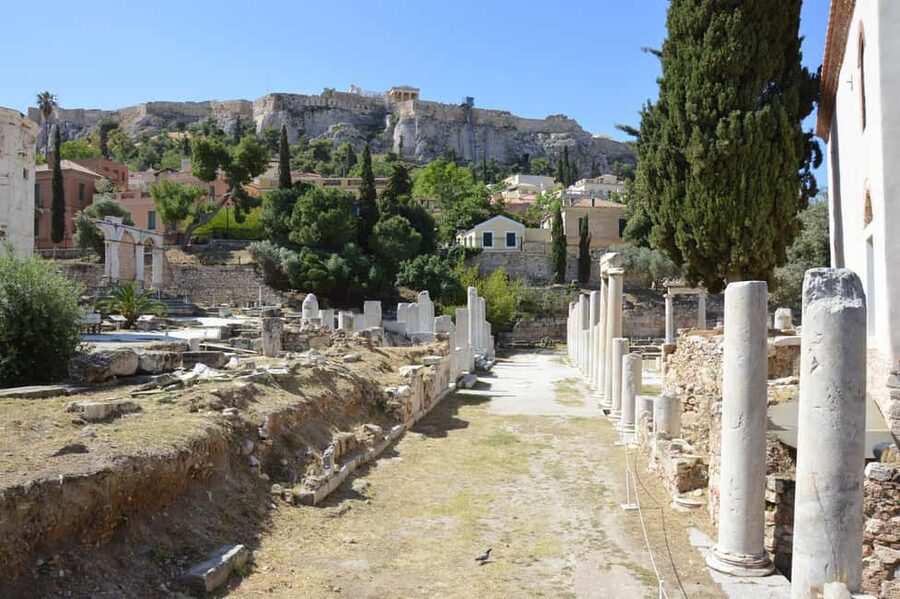
This experience includes an audio guide in 7 languages: English, French, German, Italian, Chinese, Dutch, and Spanish. It also includes your entry ticket, plus the specific areas of the visit like the Monumental Entrance (Propylon), the central courtyard, the Christian churches, the library halls in the Eastern Wing, and the peristyle and side chambers.
But the success of a self-guided audio tour depends on preparation.
A few things to plan:
- Your ticket is handled by Athenian Tours and is sent separately by mail. You may also receive an email with download instructions, so check your spam folder.
- The web app does not work offline. You need internet access on site.
- Headphones are not included, so bring your own.
- Make sure your smartphone or tablet is fully charged before you arrive.
If you’re thinking, I can just wing it, I get it. Athens has plenty of Wi-Fi sometimes. But Hadrian’s Library is one of those places where you really benefit from hearing the explanation as you stand in each specific area. When the audio cuts out, the site can turn from story to scattered stone. The fix is simple: charge your phone, bring earphones, and be sure you’ll have internet.
Also: the tour lasts 1 hour. That’s a good match for a self-guided format. If you try to stretch it, you’ll either rush your listening later or you’ll miss chances to re-read what you’re looking at.
Price and value: what you’re really paying for

At $28 per person, this option is priced like a smart hybrid: you get the ticket plus a structured audio experience. You’re not paying for a live guide, but you are paying for a plan that tells you what to look at and why it matters in each corner of the complex.
The value shows up in two ways:
First, the audio guide adds context to spaces that might otherwise feel like “Roman columns and courtyard.” Second, the included route covers the major areas you’d want anyway, from the Propylon to the eastern library halls and the peristyle circuit.
Is it worth it if you already have a detailed guidebook? Maybe. But most people don’t want to stop mid-walk and read translations. An audio guide keeps the pacing natural and lets you keep your attention on the architecture.
One more thought: because this is non-refundable, treat it like a commitment to doing the prep steps. If you arrive without downloading or without headphones, you’ll feel the gap more than you would with a live guide.
Who should book this, and who might prefer another style
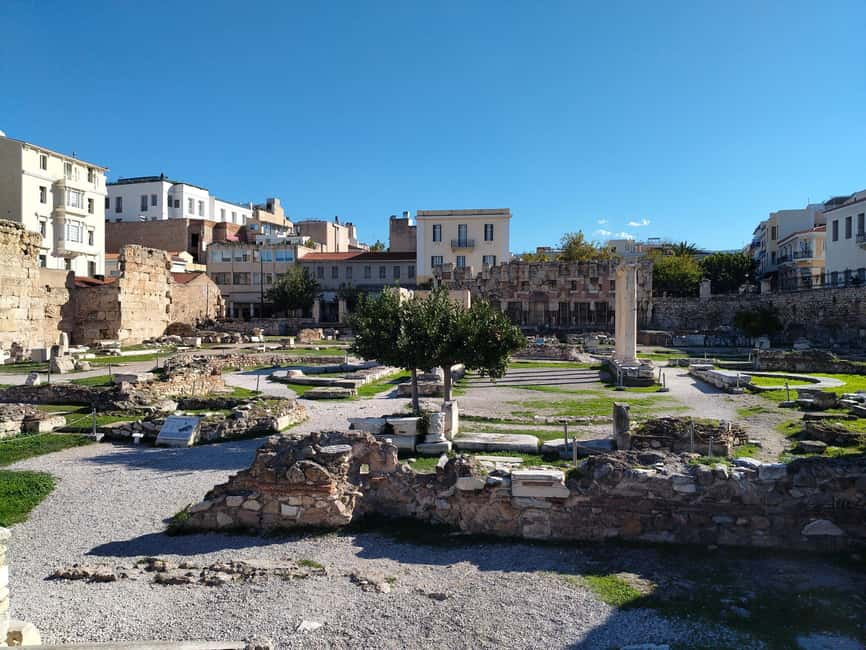
I’d point you toward this if you like layered history, and especially if you enjoy watching how one place keeps serving people even after centuries change what it was used for. The transition from Roman library life to Christian worship space, including churches such as the Tetraconch Church and the Church of the Megali Panagia, is exactly the kind of story that makes you see ruins differently.
You’ll also appreciate it if you want control over your pace. You can linger in the courtyard, slow down under the peristyle, and revisit areas where the audio prompts you to look more closely.
It may be less ideal if you:
- Hate relying on a phone and internet connection
- Plan to go without headphones
- Prefer a live guide to answer questions in real time
This tour is built for self-guided listening. When you treat it that way, it works well.
Should you book Hadrian’s Library entry with the audio guide?
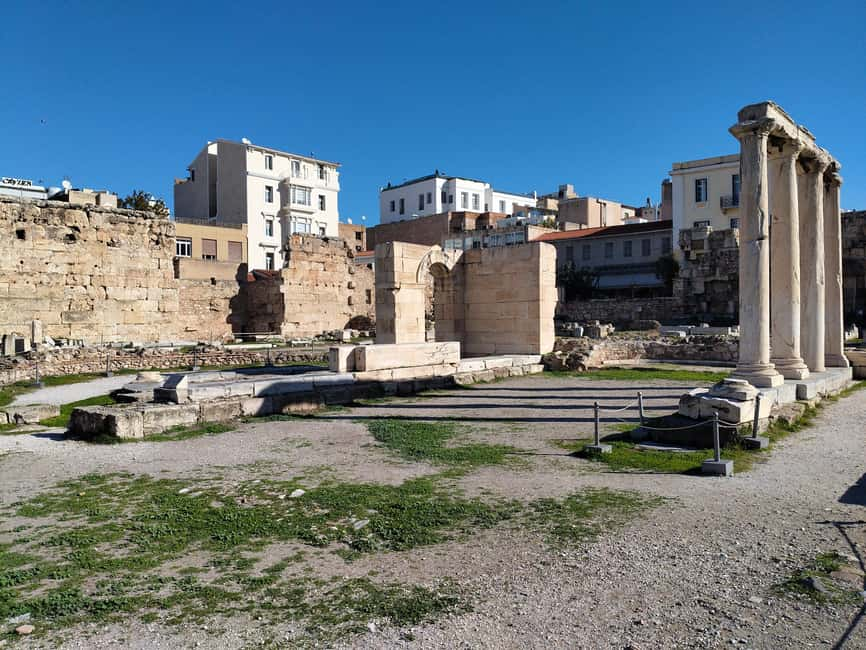
Book it if you want a focused, high-value hour near Monastiraki, and you like the idea of hearing what the building was for, not just what it looks like now. The audio guide storytelling is the main strength, because it helps you go beyond the ruins and imagine the voices and routines that once filled the courtyard and halls.
Skip it or plan a backup if you’re worried about phone battery, you can’t guarantee internet access on site, or you simply want someone talking to you rather than listening to prompts through your own device.
FAQ
How long is the Hadrian’s Library audio guide experience?
It runs for about 1 hour. Check availability to see starting times.
Is there a meeting point for this tour?
No. This is a self-guided visit with no meeting point.
Where is Hadrian’s Library, and how do I get there by metro?
Take the BLUE line to Monastiraki station. From there, it is about a 2-minute walk to the entrance by Monastiraki Square.
What languages are included in the audio guide?
The audio guide is available in English, French, German, Italian, Chinese, Dutch, and Spanish.
Do I need headphones?
Yes. Headphones are not included. You’ll need to bring your own.
Can I use the tour app offline?
No. The web app does not work offline, so you will need internet access on site.
Latest from under the Acropolis





Audio Tours, compared.

Cape Sounio & Poseidon Temple Trip with Audio Guide
Read our review →


Acropolis Museum Ticket with optional Audio Guide
Read our review →
National Archaeological Museum Ticket w/ Opt. Audio
Read our review →
Acropolis & Parthenon Entrance Ticket w/optional SG Audio Tours
Read our review →
Acropolis & Acropolis Museum Ticket with Audio Guide
Read our review →Browse the lists this tour appears in