Reviewed · CITY TOURS
Athens: City of Rebellion
Protests start here, even in ancient stones. This private 150-minute walk connects Ottoman-era resistance to today’s protest culture, with Monastiraki to Syntagma acting like a timeline you can feel under your feet. I like how the route ties specific places to real social movements, and I like that it keeps Athens connected to the present instead of freezing it in the ancient past.
It is mostly walking and standing, so plan for 2 to 3 hours on your feet. If you have mobility impairments, this one is not listed as suitable, so you’ll want to choose another format.
In This Review
- Key highlights you should care about
- Why Athens City of Rebellion feels different
- The timeline map in your head: Monastiraki to Syntagma
- Syntagma Square and Parliament: why protests cluster here
- Kolonaki and the Academy of Athens: the city’s “serious” face
- Exarchia: where resistance has a neighborhood address
- The extra stops that turn “facts” into a real picture
- How the guide style shapes the experience
- What you’ll walk past, and what you might miss if you go alone
- Price and time: is $88 good value for this format?
- What to bring, and how to pace your day
- Who should book, and who should skip it
- Should you book Athens City of Rebellion?
- FAQ
- Where is the meeting point?
- How long is the tour?
- How much does it cost?
- Is this a private tour?
- What languages are available?
- What should I bring?
- Where does the tour end?
- Is it suitable for people with mobility impairments?
- What is the cancellation policy?
Key highlights you should care about
- A rebellion-focused route that links Ottoman rule, the Greek Revolution, and modern activism
- Syntagma Square and Parliament-area context for why protests matter in Athens today
- Exarchia as a living case study of resistance, art, and social justice
- A private group feel where you can ask questions without crowd noise
- Small “bonus” stops that help the story make sense, not just pass time
Why Athens City of Rebellion feels different
Athens can be sold to you in two ways. Option one is marble and myths. Option two is street life, politics, and the messier stuff that keeps a city moving.
This tour picks the second option, but it does it with structure. You start in the Monastiraki area, then move toward Syntagma, and finish in Exarchia. That route matters because it mirrors how power and resistance show up in everyday Athens. It’s a short walk, but it’s built like a guided argument: past to present, place to theme, stone to story.
If you like your history with consequences, this tour will land. The talk does not stay in 19th century dates. It connects resistance under Ottoman rule to later fights and, crucially, to today’s social struggles.
The biggest win is the guide-led pace. You are not speed-walking for photo ops. You’re stopping often enough to understand what you’re seeing and why it earned a place in the city’s memory.
A handful more Athens outings to compare
- Athens: City Sightseeing Hop-On Hop-Off Bus Tour
★ 4.3 · 4,520 reviews - City Sightseeing Athens, Piraeus & Beach Riviera Hop-On Hop-Off Bus Tours
★ 4.0 · 1,887 reviews - Athens: City Electric Bike Tour with Acropolis Visit Option
★ 4.9 · 1,017 reviews - Acropolis, Parthenon & Athens Old City Heritage Walking Tour
★ 4.5 · 876 reviews
The timeline map in your head: Monastiraki to Syntagma
The tour begins in Monastiraki Square, in front of Pantanassa Church, with a guide holding a sign that says Athens City of Rebellion. From there, the early stretch is about getting your bearings and resetting what you think Athens history is.
Monastiraki itself is your starting point, and it is a smart choice. It’s a real neighborhood hub, not a museum. The guide sets the tone by taking you back to Ottoman rule and explaining how resistance energy shaped the Greek Revolution about 200 years ago. The point is not to memorize dates. It’s to understand the mindset: how people organized, how communities held onto hope, and how rebellion can become a local tradition.
From Monastiraki you pass by the Metropolitan Church of Athens. That short pass-by stop works like a mental hinge. The guide uses it to connect faith, public space, and the kind of visibility that political movements need. You’re walking through the city while learning how Greeks have used public areas to make messages impossible to ignore.
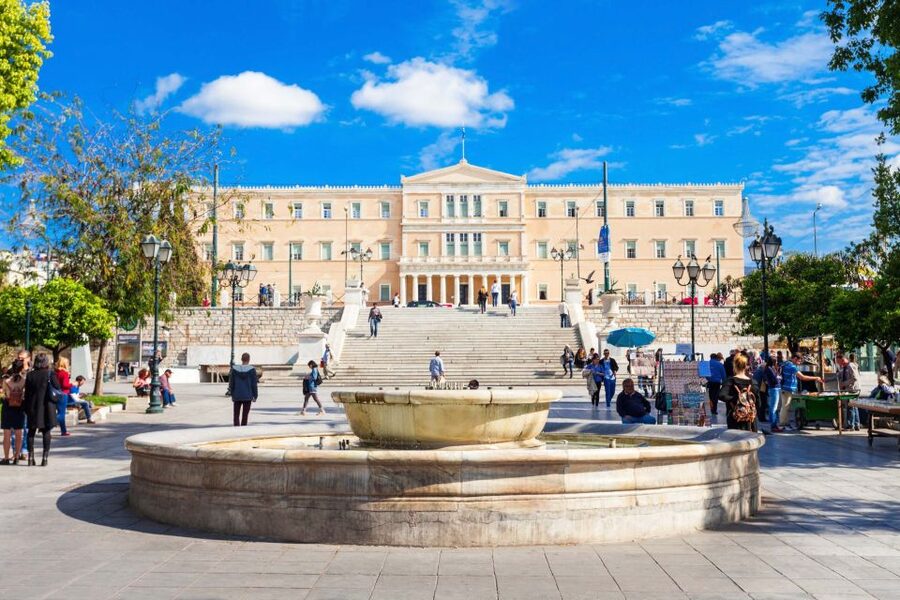
Then the route pushes you forward toward the center of modern political life. Syntagma Square is next, and the tour spends real time there, about 10 minutes with guiding. This is where the theme turns from historical resistance to living protest geography. Even if you’ve visited Syntagma before, you likely saw it as a landmark. On this tour, you see it as a stage where modern Athens keeps arguing with power.
Syntagma Square and Parliament: why protests cluster here
Syntagma is not just a pretty plaza. It’s where national attention lands fast. That’s why the tour gives it time and context.
You’ll spend time around the Hellenic Parliament area. The guide connects the physical layout to political behavior: where people gather, how visibility works, and why symbolism matters. This is the part of the tour that often feels most practical. You leave understanding how public space functions as communication, not just scenery.
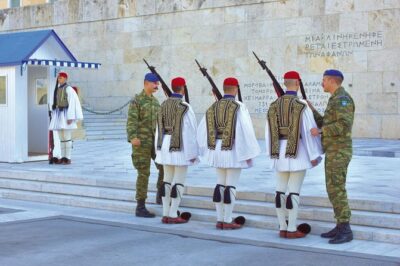
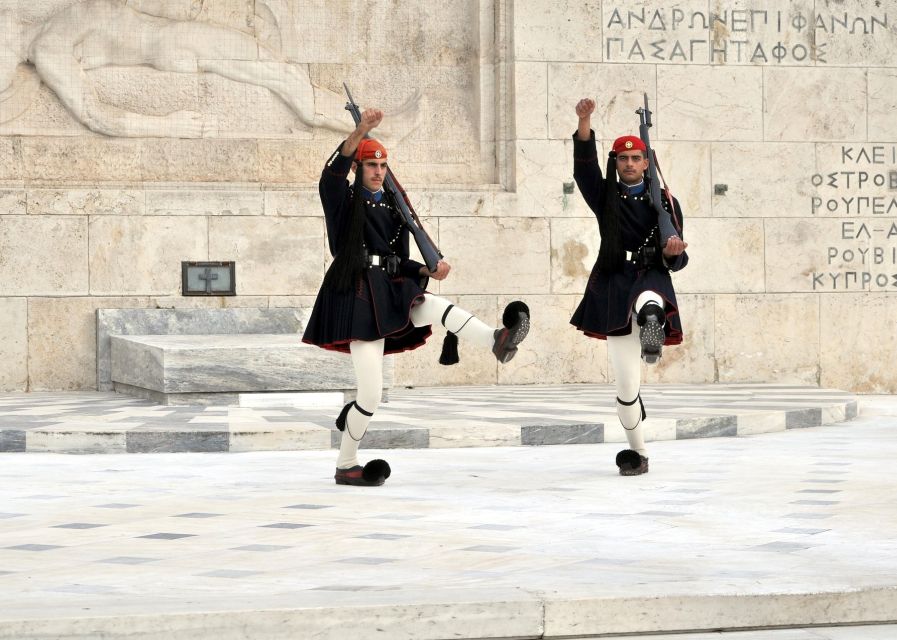
Next comes the Tomb of the Unknown Soldier. It’s a short guided stop, and it adds a different emotional angle to the day. You’re still in the rebellion theme, but it’s rebellion reframed as sacrifice, identity, and national memory. Even if you do not agree with every political interpretation the guide presents, you’ll likely appreciate how thoughtfully the stop is chosen.
A quick note on vibe: this portion is about national history and public politics. If you want a light, joke-heavy tour with zero tension topics, this might feel intense. But if you want Athens that explains why protests are a normal part of city life, you’ll get exactly that.
Kolonaki and the Academy of Athens: the city’s “serious” face
After the Parliament area, the route passes through Kolonaki. It’s a quick pass-by, about 5 minutes, and it works as a contrast. Kolonaki is often associated with elegance and visibility. The guide uses that contrast to remind you that Athens contains different worlds next to each other, and those worlds influence politics, class, and public storytelling.
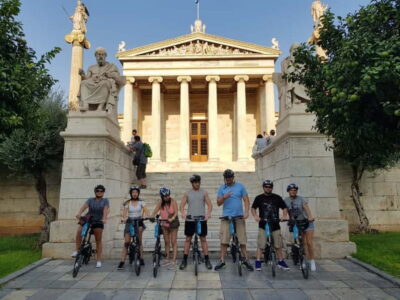
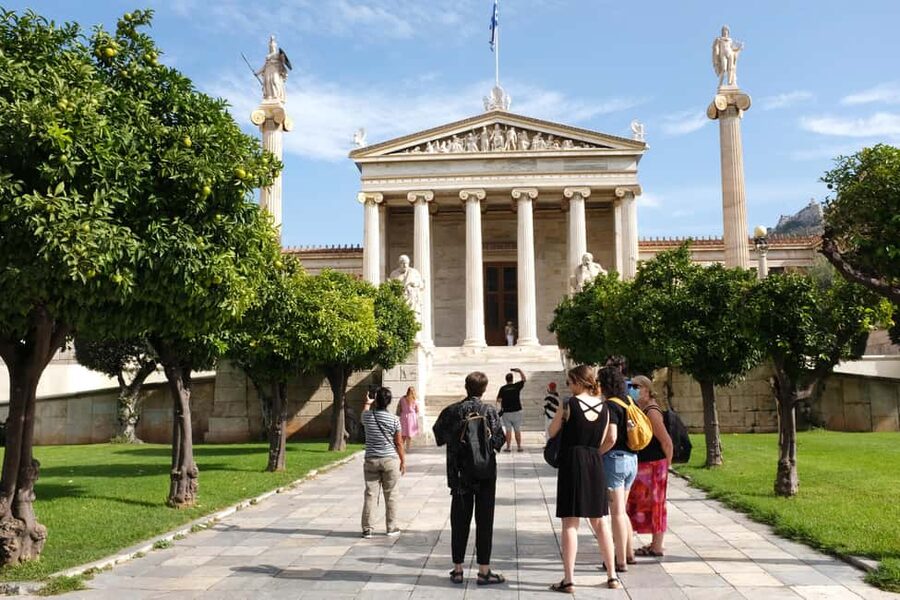
Then you reach the Academy of Athens. This guided stop is about 10 minutes. Here the tour leans into the idea that culture and institutions can also be part of the rebellion story. Athens built its modern identity with education and formal institutions, but those structures did not appear in a vacuum. They grew alongside struggle, conflict, and competing visions for what Greece should become.
This segment is where the tour can help you connect the dots between ancient Athens as a myth of democracy and modern Athens as a real, complicated democracy. You start seeing public institutions not as neutral buildings, but as places tied to civic values and civic conflict.
Exarchia: where resistance has a neighborhood address
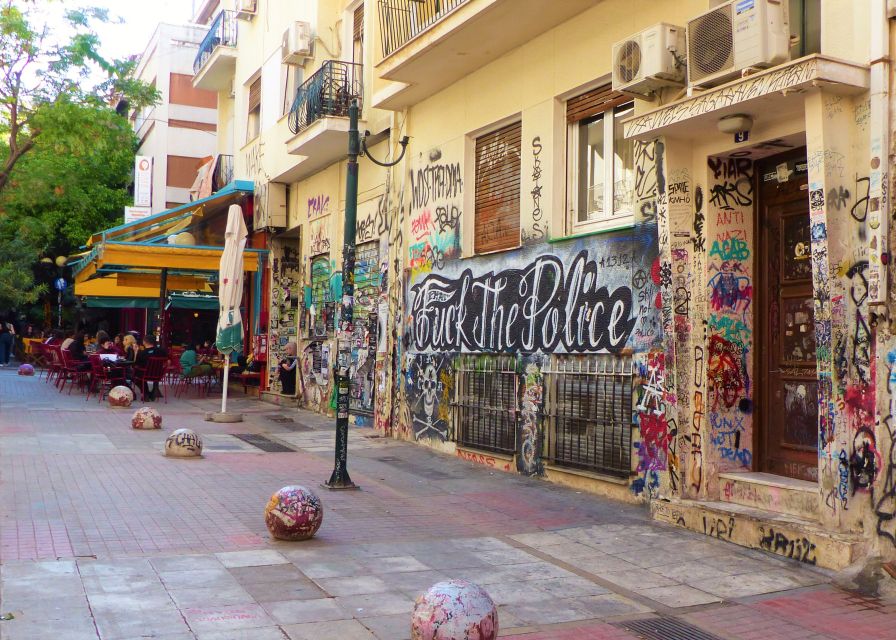
The tour’s heart is Exarchia. You arrive there in the late part of the walk, and the guide gives it time, about 10 minutes with guiding, then keeps going through Exarchia with additional stops, including Exarchion Square and the final finish at Plateia Exarcheion.
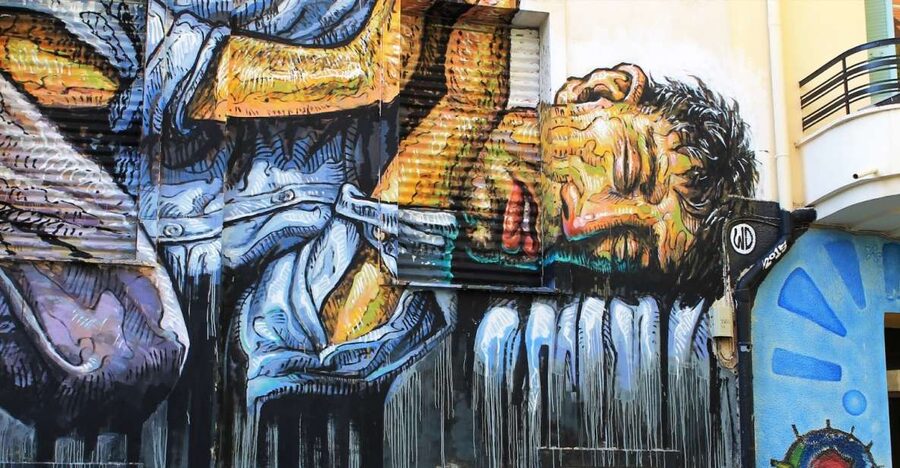
Exarchia is presented as a current hotbed of resistance and activism. And the tour does something important here: it connects that reputation to the kinds of communities that live there and the kinds of values those communities organize around. You’ll hear how Exarchia welcomes anarchists, refugees, the LGBT+ community, and artists. You’ll also hear about why art and activism often share space there.
This section is a good example of why the tour works for people who have already seen the “top” Athens sights. Ancient Athens can feel like a finished product. Exarchia feels like a process. The message is that social justice does not happen only in speeches. It happens in neighborhoods, in daily interactions, and in the way people defend each other when systems push back.
A highlight for many guests is the ending in Exarchia. You’re not rushed out. You end on a square, Exarchion Square, and finish at Plateia Exarcheion. That gives you time to look around and feel the place rather than just collect information.
Same hours, spent a different way in Athens:
- Athens: Acropolis & up to 5 Archaeological Sites Combo Pass★ 4.2 · 13,904 reviews
- Athens: Acropolis, Parthenon & Acropolis Museum Guided Tour★ 4.8 · 9,316 reviews
- The Acropolis, Parthenon & Acropolis Museum Guided Tour★ 4.7 · 8,493 reviews
- Athens: Cape Sounion & Poseidon Temple Sunset Half-Day Trip★ 4.8 · 8,241 reviews
The extra stops that turn “facts” into a real picture

You have several short guided stops labeled as lesser-seen or secret stops, plus additional short “hidden” corners. The itinerary includes:
- a 10-minute lesser-known stop early in the route
- a 10-minute secret stop once you’re in the Exarchia area
- a 5-minute additional lesser-seen stop near the end
You don’t get just landmarks. You get micro-lessons. These stops are where the guide usually ties the broader theme back to something visible in the street: signage, murals, the shape of public space, and small clues about who uses the neighborhood and how.
From the way guests talk about the tour style, the guide is good at turning these moments into discussion starters. You’ll likely ask questions yourself by the time you hit Exarchia, because the tour keeps inviting you to connect what you see with what you’ve learned about history and resistance.
How the guide style shapes the experience
In the reviews, the guide Maelle is repeatedly praised for being engaging, inclusive, and willing to adjust to the group. That matters because a tour about rebellion and politics can go either way. It can become a lecture. Or it can stay human and thoughtful.
Here, the emphasis seems to be on clarity and conversation, not one-way storytelling. People also mention that the group stays small and allows for back-and-forth questions. That’s a big deal on a walking tour. The best guides don’t just speak. They respond.
There’s also a social awareness piece that shows up in how the tour handles real neighborhoods. One recurring theme is that the guide is careful about not treating Exarchia like a spectacle. You get education without turning lived space into a photo set.
For you, that translates into a tour that feels respectful, and often more personal than the usual “walk, point, move on” format.
What you’ll walk past, and what you might miss if you go alone
If you walk Athens on your own, you’ll see the famous stuff. You’ll also miss the story threads that connect it.
This route helps you notice the political geography of the city:
- how public squares function as rally points
- how national institutions shape what crowds do
- how neighborhoods carry ideology in street life, art, and community makeup
You’ll also get help making sense of a topic that can feel overwhelming on your own. Resistance history can turn into random facts fast. With a guide, it becomes a framework. Ottoman rule, then revolution-era resistance, then later struggles, then today’s activism. It’s the same theme across time, but each era is explained in its own context.
One practical thing: since this is a walking tour, you’ll be learning while moving. That can be easier than sitting in a museum. You keep your attention because the city keeps changing in front of you.
Price and time: is $88 good value for this format?
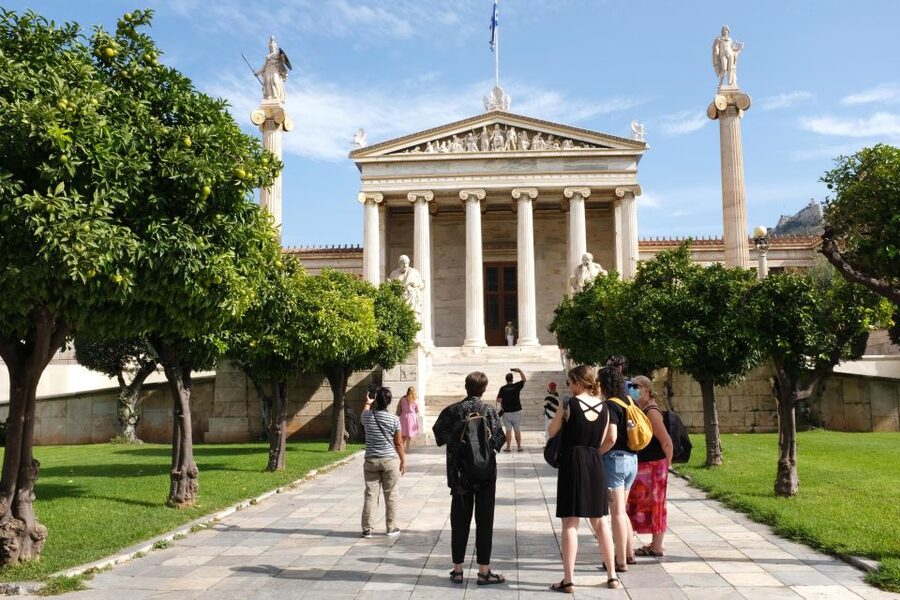
At $88 per person for 150 minutes, this is not a bargain-basement tour. But it also isn’t priced like a big bus tour. The private group format is the value engine here.
You’re paying for:
- a guide who can explain political history and modern activism with context
- a route that links multiple key areas in one go, Monastiraki to Syntagma to Exarchia
- extra guided stops that would be hard to find and interpret on your own
If you’re the type of traveler who enjoys asking questions, this kind of private setup can feel like a fair deal. If you just want photos and simple facts, you might not get your money’s worth compared to cheaper, shorter tours.
My practical advice: match this tour to your travel style. If modern Greece and its social struggles matter to you, the pricing makes sense. If your Athens priority is only ancient sites and nothing political, you may feel like you paid to go somewhere you didn’t plan to think about.
What to bring, and how to pace your day
The tour asks you to bring comfortable shoes, plus a sun hat, sunscreen, and water. That tells you the main reality: you will be out walking in open air, for about 2.5 hours.
Also plan your energy. Even when the tour is well-paced, it can still feel like a lot because you’re standing at stops and paying attention.
If you’re combining this with other Athens highlights, consider doing it on a day when you’re not also trying to cram in a long museum marathon. This is a concentrated, thematic walk, not a quick “in and out” stroll.
Who should book, and who should skip it
This tour is best for you if you:
- want Athens beyond the ancient ruins
- enjoy modern history and the way it explains today
- are curious about Exarchia and how activism shapes a neighborhood
- like guided discussion more than passive sightseeing
It’s probably not the best fit if you:
- need a mostly seated or wheelchair-friendly tour (this one is not listed as suitable for mobility impairments)
- strongly prefer apolitical tourism
- expect a light, family-friendly stroll with no tough topics
A nice bonus is that the guide often provides recommendations for what to do next in Athens. If you’re the type who likes to build a day plan based on local advice, that can stretch the value of your ticket.
Should you book Athens City of Rebellion?
Book it if you want Athens to make sense as a living city, not just a past you’ve read about. The route links Monastiraki, Syntagma, and Exarchia in a way that helps you understand how resistance becomes part of a city’s identity. For many people, the Exarchia ending is the moment when the whole theme clicks.
Skip or reconsider it if you want only ancient highlights, or if long walking and standing will be a problem. Also, if political context makes you uncomfortable, this tour will not hide it.
If you fit the first group, this is one of the more memorable ways to see Athens because it teaches you how to look at the city with a sharper lens.
FAQ
Where is the meeting point?
You meet in Monastiraki Square, in front of Pantanassa Church. Your guide will have a sign that says Athens City of Rebellion.
How long is the tour?
The duration is 150 minutes, about 2.5 hours.
How much does it cost?
The price is $88 per person.
Is this a private tour?
Yes. This is a private experience and private group.
What languages are available?
The live tour guide is available in English and French.
What should I bring?
Bring comfortable shoes, a sun hat, sunscreen, and water.
Where does the tour end?
The finish is at Plateia Exarcheion.
Is it suitable for people with mobility impairments?
No, it is not suitable for people with mobility impairments.
What is the cancellation policy?
You can cancel up to 24 hours in advance for a full refund.
Latest from under the Acropolis





City Tours, compared.

City Sightseeing Athens, Piraeus & Beach Riviera Hop-On Hop-Off Bus Tours
Read our review →
City Electric Bike Tour with Acropolis Visit Option
Read our review →
Acropolis, Parthenon & Athens Old City Heritage Walking Tour
Read our review →
City Pass with Acropolis, Museums, HoHo & Transport
Read our review →