

Reviewed · METEORA MONASTERY DAY TRIPS
Athens: 3-Day Trip to Meteora with Guided Tours, Museum & Hotel
Monasteries on cliff rocks, timed for real sightseeing. This 3-day Meteora trip is set up to get you from Athens to the UNESCO monasteries efficiently, then keep you moving with guided tours, a hotel base in Kalambaka, and the right timing for views. I really like the smooth, on-time logistics from Athens to Kalambaka, and the fact that you do more than just drive by the sites.
What makes Meteora click is the way the experience is guided. With English-speaking local guides like Maria and Kosta, you get clear context and good pacing, plus two different guided looks at the monasteries (morning and sunset), so you see Meteora in more than one light. I also like the small group size, listed as max 15 travelers, which helps the schedule feel less chaotic.
One consideration: you will pay extra once you are there. Monastery entrances are not included (cash only, listed as €5 per person per monastery), and some sites involve steps and steep paths, including a monastery with 145 rock-cut steps.
In This Review
- Key highlights you should know
- Meteora in 3 days, without the usual chaos
- Athens pickup and the early start near Stathmos Larisis
- Kalambaka hotel base: two nights that let you breathe
- The guided monastery circuit, from Saint Nicholas to Great Meteoron
- Saint Nicholas Monastery: a first look on the way in
- Holy Trinity (Agia Triada): the steep-and-step challenge
- St. Stephen’s: easier access, same spectacular views
- Byzantine Church of the Assumption of the Virgin Mary
- Roussanou, Varlaam, and Great Meteoron: the big names of the rocks
- Dress code and cash-only entry fees, the two things that can trip you up
- The Natural History and Mushroom Museum stop on your last day
- Group size, guides, and why the tour feels organized
- Value check: is $313 per person a good deal?
- Who this trip suits best
- Should you book this Athens to Meteora 3-day trip?
- FAQ
- Where is the meeting point in Athens, and what time does the tour start?
- How many nights do I stay in Kalambaka?
- What monastery entrance fees are not included?
- Is the Natural History Museum of Meteora and Mushroom Museum included?
- What dress code do I need for the Meteora monasteries?
- What happens if the weather is poor, or I need to cancel?
Key highlights you should know
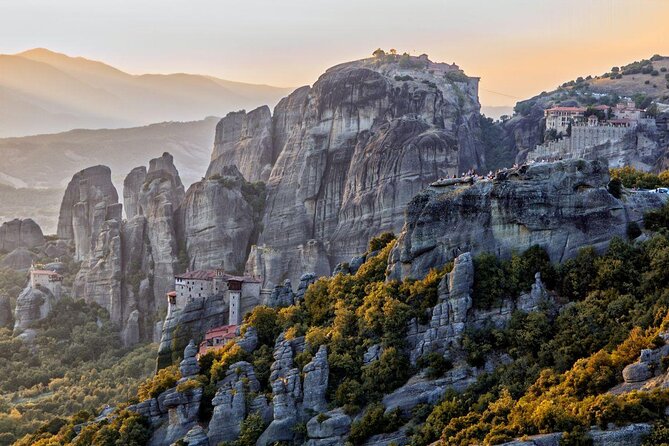
- On-time bus rhythm between Athens and Meteora, with a clear meeting point near Stathmos Larisis
- Two nights in Kalambaka so you are not rushing back and forth all day
- Guides Maria and Kosta bring humor and real local knowledge to the monastery stops
- Morning and sunset monastery tours that change the feel of the views
- Cash-only entrance fees and strict dress code rules, so come prepared
- Natural History and Mushroom Museum ticket included on your last morning
Meteora in 3 days, without the usual chaos
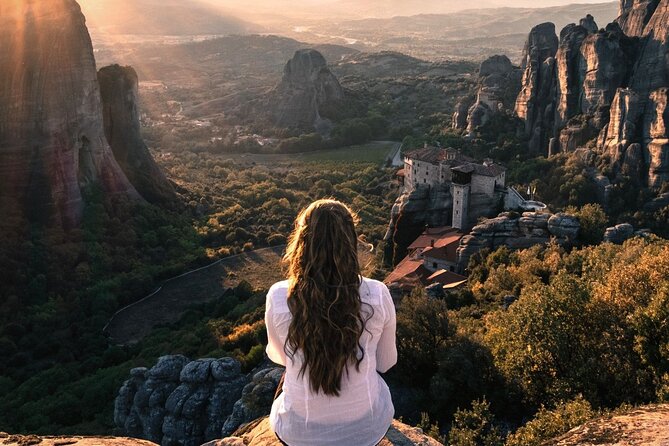
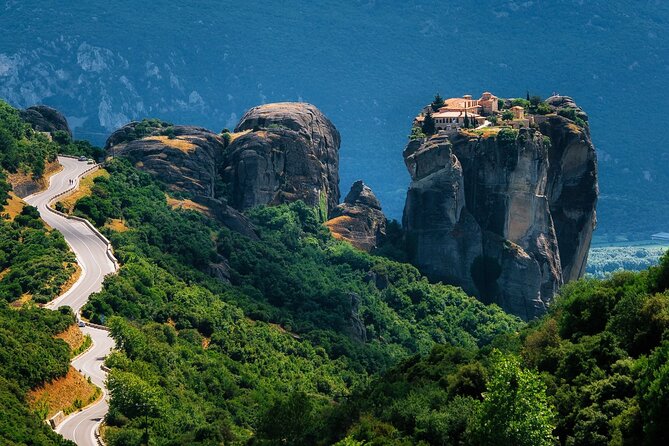
Meteora is one of those places that feels like it was built for postcards, then you arrive and realize it is also built for patience. The monasteries sit on towering rock pillars, and getting from viewpoint to viewpoint takes time, stairs, and a bit of route planning. This trip is designed to handle that planning for you, so you can focus on the main event, those monasteries perched above the plain.
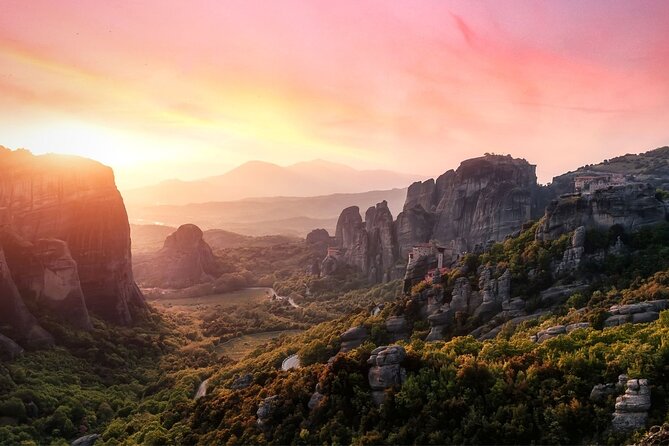
The best part for me is the pacing. You do not just hop on a bus and hope for the best. Instead, you start in Athens early, settle into Kalambaka with time to breathe, then join guided monastery visits that are timed across the day. The inclusion of a morning and a sunset tour matters because Meteora looks different as the light shifts, and sunset is often when your photos stop looking like generic sightseeing.
Another thing I appreciate is that the tour is built around a realistic base. Kalambaka is where you stay, and you start from there to reach the monasteries around the rock formations. That means less time thinking about local transport and more time watching how the view opens as you climb closer to the cliff-top buildings.
More journeys up to the Meteora rocks:
- Athens: Meteora Monasteries Day Trip with Caves and Lunch
★ 4.7 · 4,670 reviews - Athens to Meteora: Monasteries, Caves & Seaside Stopovers
★ 4.7 · 2,958 reviews - Athens: Full-Day Meteora Tour with Local Guide & Greek Lunch
★ 4.8 · 2,101 reviews - Athens: Meteora Monasteries, Caves & Coastal Stopovers with Lunch
★ 4.5 · 1,432 reviews
Athens pickup and the early start near Stathmos Larisis
Your trip begins in Athens at Στ. Λαρισης (St. Larisis), near the Central Railway Station area. The tour information lists a start time of 8:00 am, and the itinerary also notes boarding the private air-conditioned bus at 07:45 am. Either way, you should plan to be ready a bit early, especially if you are coming from another part of Athens by metro or on foot.
The bus ride is part of the value. It takes the hardest logistical part out of the trip, getting you from Athens to Kalambaka and back. It is also air-conditioned, which is a lifesaver in warm months. And you do not have to worry about coordinating two separate transfers, because the roundtrip transport is included in the package.
If you are the kind of traveler who hates waiting around, this matters. One of the standout points from the experience feedback is that the bus stays on time, and that the overall schedule is smooth. When a trip is built around monastery visits, small delays can quickly snowball into missed viewpoints. Here, you are working with a plan that tries to keep things steady.
Kalambaka hotel base: two nights that let you breathe
After arrival in Kalambaka (listed arrival time is 12:45), your guide meets you with a name signboard and transfers you to your hotel. That midday arrival is smart. You are not checking in late at night, and you get a buffer to rest before the monastery afternoon.
You stay two nights at a three or four star hotel, with the option of breakfast listed as optional for two days. Having that overnight in Kalambaka is one of the biggest practical upgrades. It means you can handle the stairs and the viewpoints without feeling like you are doing a full-day day trip with constant backtracking.
Also, Kalambaka is the right kind of small-town base. It gives you access to the monastery trail network, and it keeps the experience from turning into a long line of buses and schedules. In the itinerary, there is even a point where you have free time in Kalambaka on your final day before the return pickup.
The guided monastery circuit, from Saint Nicholas to Great Meteoron
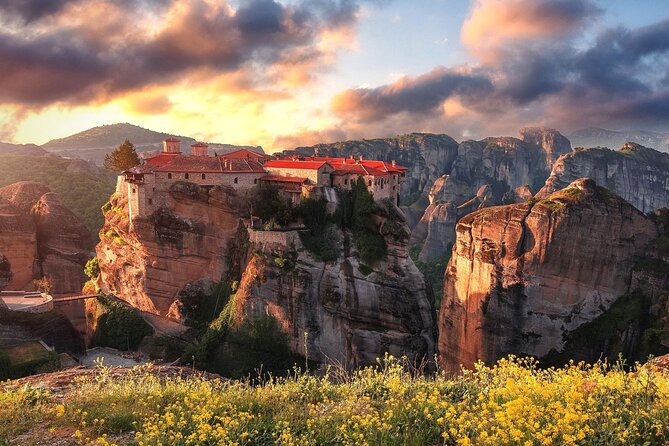
Meteora is not one single viewpoint. It is a whole cluster of monasteries, each with its own approach and feel. The tour builds a route across multiple monasteries, so you see more of the complex than a single-stop visit.
Saint Nicholas Monastery: a first look on the way in
The Monastery of Saint Nicholas of Anapafsas is described as literally suspended on a rock, and it is the first monastery you encounter on the route from Kastraki village toward the stone forest of Holy Meteora. It is scheduled for about 1 hour. Entrance fees are not included, and you should expect to add that to your budget.
Why it is worth your time: it sets the scene. You get your bearings quickly for how the monasteries relate to the cliffs and the stone formations around them. It is also a helpful start point because it eases you into the walking and climbing you will do later.
Other Athenian collections out of the heat:
- Athens: Acropolis, Parthenon & Acropolis Museum Guided Tour★ 4.8 · 9,316 reviews
- The Acropolis, Parthenon & Acropolis Museum Guided Tour★ 4.7 · 8,493 reviews
- Athens: Mythology of Delphi, Museum and Arachova Guided Tour★ 4.7 · 5,102 reviews
- Athens: Acropolis, Parthenon & Acropolis Museum Guided Tour★ 4.8 · 3,579 reviews
Holy Trinity (Agia Triada): the steep-and-step challenge
The Holy Trinity Monastery (Agia Triada) is highlighted as one of the more difficult ones to reach. The route involves crossing a downhill path and then climbing 145 steps carved into the rock. It is listed as a stop for the afternoon circuit, and entrance is not included.
If you want an honest way to think about it, treat this as your workout portion of the trip. If you struggle with steep stair climbs, plan to take your time, and bring a steady pace mindset. If you are comfortable on stairs, this stop tends to feel like the reward you earned, because you feel the effort in the best way.
St. Stephen’s: easier access, same spectacular views
St. Stephen’s Monastery is described as the most accessible, specifically because there are no steps to reach the entrance. That detail makes a big difference when you are touring several monasteries in a short window. Entrance is not included, and it is scheduled for about 1 hour.
For many people, this is the monastery stop that balances out the stair-heavy ones. It lets you keep your energy for viewpoints and photos, and it gives you time to actually take in the architecture without feeling rushed by fatigue.
Byzantine Church of the Assumption of the Virgin Mary
The Byzantine Church of the Assumption of the Virgin Mary is in the old district of Kalambaka and is described as the oldest preserved monument in the whole region of Meteora. It is listed for 1 hour, and entrance fees are not included.
This stop is a good reminder that Meteora is not only about the cliff monasteries. The region also preserves religious art and architecture in town, and it can add variety to a day full of rock-top buildings.
Roussanou, Varlaam, and Great Meteoron: the big names of the rocks
The core monastery trio you should plan around is Roussanou, Varlaam, and Great Meteoron.
- Roussanou Monastery is listed on top of a steep vertical cliff between Saint Nicholas of Anapafsas and Varlaam. (About 1 hour, entrance not included.)
- Varlaam Monastery is described as the second largest monastery, located opposite Great Meteoron. (About 1 hour, entrance not included.)
- Great Meteoron Monastery is described as the oldest and most important monastery, and it is the main highlight for many first-timers. (About 1 hour, entrance not included.)
The value of seeing these together is the way they frame each other. Varlaam and Great Meteoron are positioned opposite one another, so you can understand the layout rather than seeing random buildings on random rocks. And Roussanou sits between the other two, giving you an overall sense of the monastery geography.
This is also where the morning and sunset timing helps. Even if you are not chasing perfect photos, light affects how steep the cliffs feel and how readable the monastery details are.
Dress code and cash-only entry fees, the two things that can trip you up
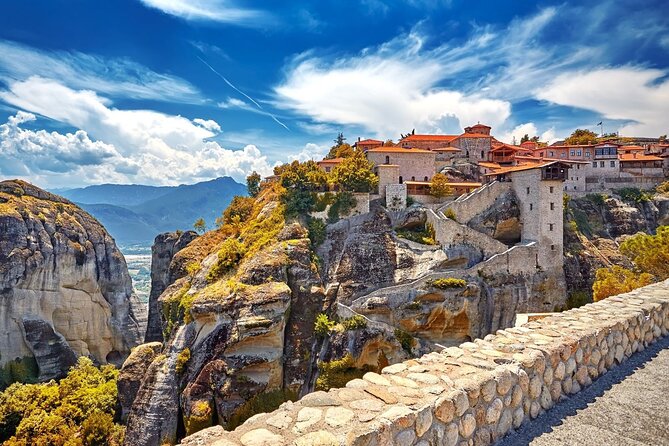
Meteora monasteries have dress code rules, and the tour notes them clearly, so you should treat them as non-negotiable. Men are required to wear long trousers and shirts with sleeves. Women must wear skirts that fall below the knee and must cover their shoulders. Trousers are not permitted for women under the stated rules. A long scarf wrapped around the waist can be used as an alternative way to meet requirements.
I recommend you plan clothing for monasteries first, then build your sightseeing outfit around it. It is easier to travel prepared than to scramble for last-minute fixes.
The other practical issue is payment. The monasteries accept cash only for entrance fees, listed as €5 per person per monastery. The Byzantine church entrance is listed separately at €2 per person. If you expect to pay by card and you do not have cash, you will lose time. Bring euros and try to have the right amount per person.
The Natural History and Mushroom Museum stop on your last day
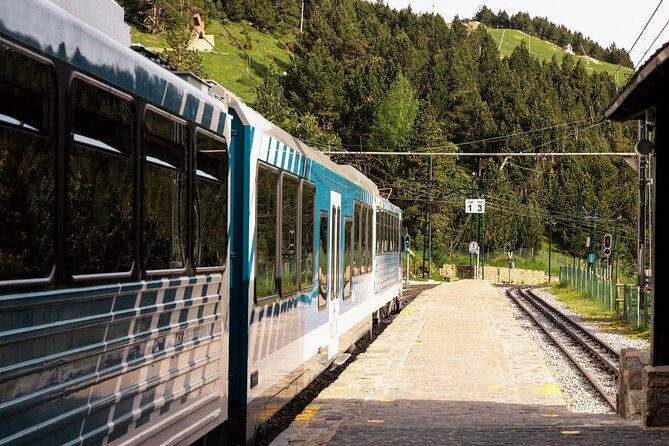
On the final day, you get a break from monastery climbs with a museum visit. The Natural History Museum of Meteora and Mushroom Museum is included, and the tour notes it as part of a morning walk on your own. That is your chance to slow down and look at something different than rock churches.
Why this is a smart addition: it gives your legs a lighter activity while still keeping you in Meteora. It also rounds out the trip so your day is not only stairs, stone steps, and view hunting.
Even with a museum day, do not expect a huge rest. You are still on a tight schedule because you need to be ready for the pickup back to Athens at 17:30, arriving Athens at 22:15.
Group size, guides, and why the tour feels organized
This experience is run for up to 15 travelers. In practice, that matters because you can move as a group without becoming stuck behind other tour buses. It also makes it more likely you can hear your guide and keep up with the route.
The tour information emphasizes an English-speaking local tour guide, and the experience feedback highlights two guide names, Maria and Kosta, as funny and knowledgeable, with a smooth, friendly vibe. When you get guides who can explain what you are seeing without turning it into a lecture, Meteora becomes easier to enjoy, even when you are climbing.
One other small but important detail: you get clear pickup and handoff points. In Kalambaka, your guide meets you holding a signboard with your name, which helps reduce the stress of arriving in a new place in the afternoon.
Value check: is $313 per person a good deal?
At $313 per person for about 3 days, this trip can be good value if you want Meteora with minimal self-planning. You are paying for several big-ticket items in one package: roundtrip Athens-Kalambaka transport on an air-conditioned bus, two nights in a three or four star hotel, and guided touring. You also get the included 4-hour sunset tour and 4-hour morning sightseeing tour, plus the mushroom museum ticket.
The extra costs to remember are the monastery entrances, not included (cash only, €5 per person per monastery), and the Byzantine church entrance (listed at €2). If you only budget for the headline price, you might feel surprised at the checkout stage. If you budget for those fees ahead of time, the pricing starts to feel fair.
Also, the tour notes that you should book around a month in advance on average. That makes sense because this is a popular route, and limited spots plus small group size mean fewer easy last-minute openings.
Who this trip suits best
This is a great fit if you:
- Want a guided Meteora itinerary instead of figuring out monastery routes on your own
- Prefer an organized bus schedule from Athens and a hotel base in Kalambaka
- Are willing to follow a dress code and bring cash for entrance fees
- Like seeing Meteora in different light, since you have morning and sunset touring
It might be less ideal if you:
- Hate stairs and steep paths, since at least one monastery stop involves 145 steps
- Do not want to handle cash-based entrance fees at multiple sites
- Want total freedom to roam without any fixed timing
Should you book this Athens to Meteora 3-day trip?
I’d book it if you want Meteora to feel efficient and well guided, not chaotic. The combination of transport from Athens, a proper overnight base in Kalambaka, and the included guided morning and sunset tours is exactly what most first-timers need. Add in the inclusion of the Natural History and Mushroom Museum, and the trip feels balanced instead of one long climb.
If you hate logistics, this one is built for you. If you know you will be fine with dress code rules and you are prepared with cash, you will glide through the key stops faster. If you are unsure about stair-heavy monasteries, plan to move slowly at Holy Trinity and focus on the monastery circuit that matches your comfort.
FAQ
Where is the meeting point in Athens, and what time does the tour start?
The tour meeting point is listed at Στ. Λαρισης, Athens 104 39, Greece. The start time is listed as 8:00 am, and the itinerary also notes boarding the bus at 07:45 am, so arrive a bit early.
How many nights do I stay in Kalambaka?
You stay for two nights in a three or four star hotel in Kalambaka. The itinerary notes arrival in Kalambaka at 12:45 and a transfer to your hotel.
What monastery entrance fees are not included?
Monastery entrance fees are not included and are listed as €5 per person per monastery. The Byzantine Church of the Assumption of Virgin Mary entrance fee is listed separately as €2 per person. The tour notes that monasteries accept cash only for these fees.
Is the Natural History Museum of Meteora and Mushroom Museum included?
Yes. The Natural History Museum of Meteora and Mushroom Museum entrance is listed as included.
What dress code do I need for the Meteora monasteries?
Men need long trousers and shirts with sleeves. Women must wear skirts that fall below the knee and cover their shoulders, and trousers are not permitted. A long scarf wrapped around the waist can be used as an alternative.
What happens if the weather is poor, or I need to cancel?
The tour requires good weather. If it is canceled due to poor weather, you are offered a different date or a full refund. Free cancellation is available up to 24 hours in advance for a full refund.
Latest from under the Acropolis


Meteora Monastery Day Trips, compared.
Meteora Monasteries Day Trip with Caves and Lunch
Read our review →
Athens to Meteora: Monasteries, Caves & Seaside Stopovers
Read our review →
Full-Day Meteora Tour with Local Guide & Greek Lunch
Read our review →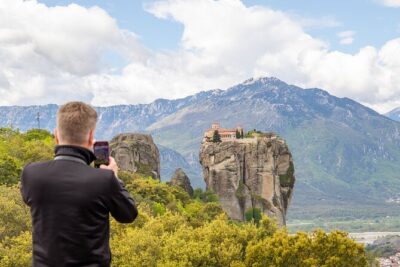
Meteora Monasteries, Caves & Coastal Stopovers with Lunch
Read our review →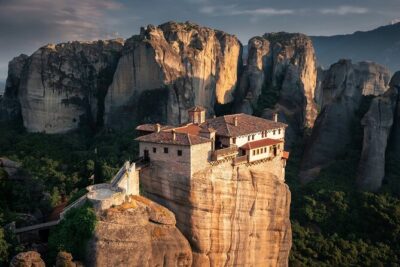
Meteora Monasteries & Caves DayTrip from Athens with Greek Lunch
Read our review →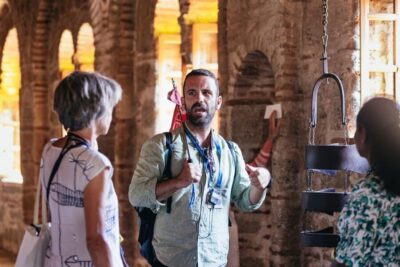
4-Day Classical Greece Tour: Epidaurus, Mycenae, Olympia, Delphi, Meteora
Read our review →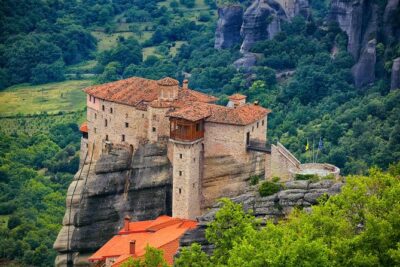
Meteora Monasteries, Hermit Caves Tour with Pickup
Read our review →Browse the lists this tour appears in