
Reviewed · METEORA MONASTERY DAY TRIPS
Ancient Greece and Meteora, 5-Days Private Tour
Five days of ancient Greece, plus sky monasteries. This private tour links Athens icons to the Peloponnese classics and ends with Meteora monasteries perched on rock. I like that your days are organized around the places that actually matter, with a professional guide showing you the big-ticket history at the sites where it counts most.
I also like the mix of stops that feel different from each other. You get the grandeur of Athens, then you trade city crowds for ruins and quiet mountain towns like Arachova, before you face the emotional punch of Thermopylae and the visual shock of Meteora.
One thing to weigh: this is a fast 5 days. You will start early (often 6:00am to 9:00am), walk on uneven ground at archaeological sites, and most admission fees are not included, so you need a separate budget for tickets and meals.
In This Review
- Quick hits you can plan around
- Athens in one packed day, Acropolis to Cape Sounion
- What Corinth Canal, Ancient Corinth, Epidaurus, and Mycenae teach you
- Nafplio’s Palamidi fortress, and why the walk feels worth it
- Olympia and the Olympic Flame story you can feel in the ruins
- Delphi, Pythia at UNESCO, then Thermopylae’s Hot Gates
- Meteora monasteries, timed for views and guided time
- Price and what you get for a 5-day private vehicle
- Who this tour fits best, and who should adjust expectations
- Should you book this Ancient Greece and Meteora private tour?
- FAQ
- What sites are included across the 5 days?
- Is this tour private?
- Are admission tickets included?
- Are meals included?
- Do you get a guide during the trip?
- What is the meeting time and start window?
- What’s the cancellation timing?
Quick hits you can plan around
- Door-to-door pickup in Athens or Piraeus (or airport) means less logistics stress before you even start sightseeing.
- Guides at the high-impact sites: Corinth, Olympia, Delphi, and two Meteora monasteries are led with a professional English-speaking guide.
- Meteora time with at least three monasteries means you are not just “passing through” the rock towers.
- A full Athens day plus a coastal Sounion stop gives you both city icons and sea-cliff views.
- A real private vehicle for your group (sedan for 1 to 3, minivan on request up to 8) keeps pacing flexible.
- 4 hotel breakfasts included helps you keep mornings moving without searching.
Athens in one packed day, Acropolis to Cape Sounion
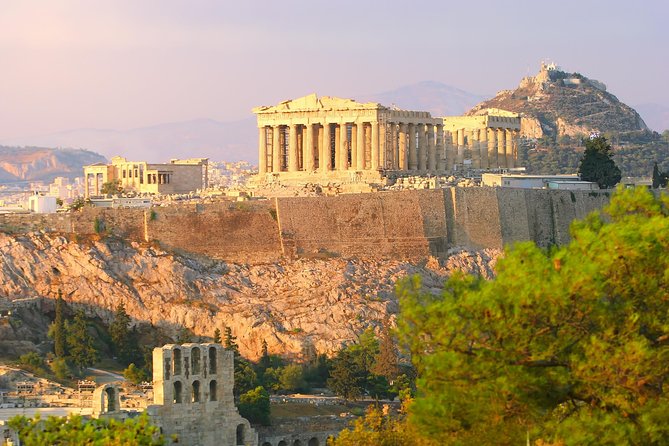
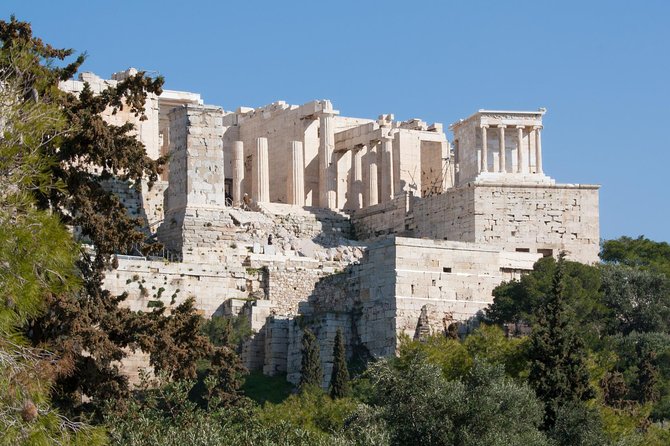
Your first day is the classic Athens power move. You begin at the Acropolis, with its proud centerpiece, the Parthenon on top of Acropolis Hill. This is one of those places where a guide makes the difference. Even if you know the names, the sightlines and layout help your brain connect the dots, instead of just taking photos and moving on.
From there, you stop briefly at Hadrian’s Arch, a Roman structure tied to Theseus and Hadrian. It is short, but the value is context. Rome changed Greece’s political scene, and small stops like this show up that layered story without turning the day into a museum marathon.
Next comes the Temple of Olympian Zeus. Here you see the scale even with only a few of the original columns still standing. It is a good reminder that “ruins” do not mean small. They often mean enormous ambition, cut down by time.
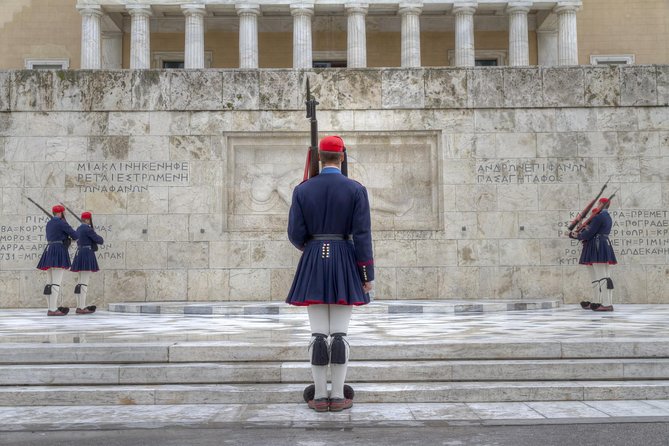
Then you head into central Athens for the Changing of the Guard at Parliament in front of the Tomb of the Unknown Soldier. The Evzones put on a ceremonial performance that feels more grounded than tourists expect, and their uniform traces back to traditional mountain clothing and resistance imagery from Ottoman times. If you time it right, this is one of the few parts of Athens that reliably feels like theater.
You also get the Panathenaic Stadium, the venue for the first modern Olympics in 1896. If you are the kind of person who likes sports history, this stop adds a nice emotional bridge between ancient games and the modern revival.
The day keeps rolling south along the coast to Cape Sounion, where the Temple of Poseidon sits high above the Aegean. The payoff is the view. Even without perfect weather, you feel how exposed and dramatic the cliff setting is. And this place carries a tragic legend about Aegeus, who saw the black sails and believed his son had died, only to later learn the sails were not changed in time.
Practical note: the schedule is full, so wear comfortable shoes. Also plan for a lot of “standing and walking” time. You are not doing one site per hour. You are doing multiple stops packed into a single day.
More journeys up to the Meteora rocks:
- Athens: Meteora Monasteries Day Trip with Caves and Lunch
★ 4.7 · 4,670 reviews - Athens to Meteora: Monasteries, Caves & Seaside Stopovers
★ 4.7 · 2,958 reviews - Athens: Full-Day Meteora Tour with Local Guide & Greek Lunch
★ 4.8 · 2,101 reviews - Athens: Meteora Monasteries, Caves & Coastal Stopovers with Lunch
★ 4.5 · 1,432 reviews
What Corinth Canal, Ancient Corinth, Epidaurus, and Mycenae teach you
Day two is a master class in how Greece traded ideas, power, and myths across centuries. You start with the Corinth Canal, a manmade cut through the Isthmus of Corinth. It was finished in 1893, but its story reaches back to ancient plans and the idea of connecting gulfs faster. The canal is over 6 km long, with sides that reach about 78 m at their highest. There are bridges for people and cars, and it is engineered so boats can pass when the bridge sections lower underwater (up to 12 m).
Then you move into Ancient Corinth. What I like here is how location drives history. Corinth sat on a narrow strip that controlled ship traffic between the Corinthian and Saronic gulfs. That meant wealth, colonies, and competition with Athens and Thebes. This is the kind of stop where you start to see why Greek city-states cared about geography so much.
One possible drawback: the day is structured with multiple archaeological sites back-to-back. If you hate rushing through ruins, this may feel intense. The flip side is that each stop reinforces the others, and you start to recognize patterns in how ancient Greeks built cities, organized games, and told stories.
After Corinth comes Epidaurus, famous for its ancient theater and especially its acoustics. If you have ever stood in a modern theater that sounds perfect from the seats, you can imagine how impressive this must be. The key detail is that spoken words made from the stage could be heard clearly across the audience. It is a fantastic place to appreciate how engineering served performance, long before microphones.
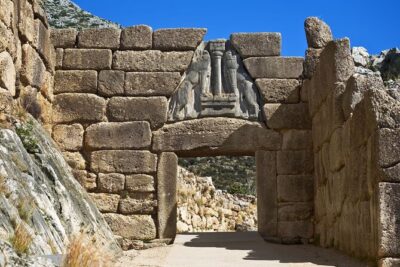
Next is Mycenae, where the ruins connect you to Homeric legends. You see the so-called Cyclopean walls, huge stonework that later Greeks claimed could only be built by Cyclops giants. At the entrance, you visit the Lion Gate. This is the kind of moment that makes you look at stone differently. You are standing in front of something built for power and permanence. You also get tomb references linked to famous names like Aegisthus and Clytemnestra.
If your group includes teens or first-time visitors, this day is especially helpful. It gives them a storyline they can track, not just isolated monuments.
Nafplio’s Palamidi fortress, and why the walk feels worth it
Nafplio is Greece’s first capital of the modern era, and it wears its history like a postcard. After the ancient stops, you get a break with a very different vibe: Venetian charm, harbor views, and a town that feels like it moves at a human pace.
Palamidi Castle adds the “workout with a view” component. It was built by the Venetians and is associated with the famous story of steps, often said to be 999. There is also a legend tied to a Greek War of Independence figure, Theodoros Kolokotronis, and how one step was allegedly crushed during celebrations against Ottoman forces.
The consideration here is physical comfort. If your legs are tired from the ruins, the fortress walk may slow your pace. The good news is that you still get the chance to see the fortress setting and enjoy the town from above, which makes the climb feel less like a chore.
Olympia and the Olympic Flame story you can feel in the ruins
Day three shifts from city-states and legends into one of Greece’s biggest unifiers: Olympia. This is not just “an archaeological site.” It is tied to the Panhellenic idea that Greeks would pause conflict every four years to compete.
You visit Olympia with a professional guide, which is the right move for this kind of place. The ruins cover multiple buildings: the Temple of Zeus, the Temple of Hera, the stadium, and the Shrine of Pelops. One detail that helps you grasp the original scale is the Temple of Zeus’s once-imagined statue, described as 13 meters tall and made of gold and ivory. That kind of statement makes the stones around you feel less random.
The stadium is another anchor. You can stand in the area and picture athletes lined up for competition. You do not need to be a sports fan to get it. It connects to the Olympic idea you recognize today, then shows you how far back the tradition goes.
Olympia also has a modern touch that feels meaningful: the Olympic Flame is lit here and then carried on relay to the city hosting the Olympic Games. It is a reminder that tradition has “legs,” it keeps traveling.
After Olympia, you stop in Arachova, a mountain resort known for winter skiing. In the warmer season, it feels like a scenic pause with cafés and coffee breaks. It is also a nice change of pace from ruins, because you can actually breathe and look at the mountains.
Delphi, Pythia at UNESCO, then Thermopylae’s Hot Gates
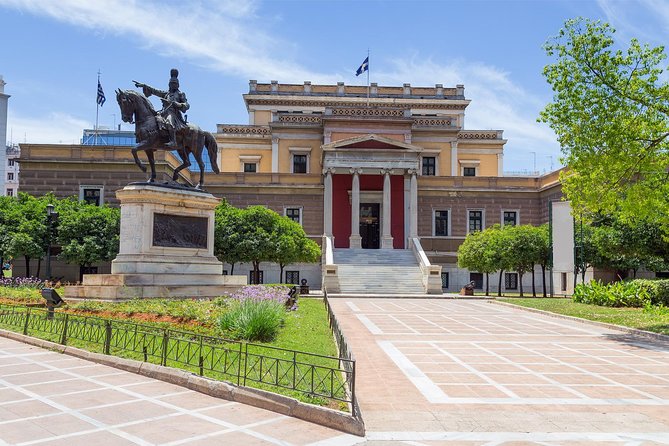
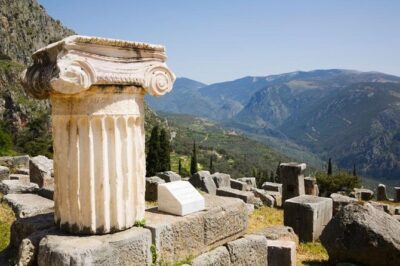
Day four brings you to Delphi, often described as the religious center of the ancient Greek world. Here you visit the Delphi Archaeological Museum and the broader sanctuary area with a professional guide. Delphi sits on the slopes of Mount Parnassus, above the Sanctuary of Apollo, and it gives you a sense of why people traveled for answers.
Delphi’s star is the oracle, Pythia. People from across Greece came to ask questions, and her responses were believed to influence major decisions. Delphi is recognized by UNESCO as a World Heritage Site, which is a useful signal: this is not just a pretty ruin, it is one of the anchor points of the ancient Greek story.
Then you head to Thermopylae and the Thermopylae Museum. The emotional core here is the story of Leonidas and the 300 Spartans making their last stand against the Persian army under Xerxes. You learn how the battle was tied to a narrow pass between cliffs and the sea, which helped the Spartans and allies slow down a larger force. Even though they were defeated, the stand bought time for other Greek city-states to mobilize and later defeat the Persians at Salamis.
This is one of the stops where I think a guide helps most. The geography matters, and the history is emotionally loaded. Without context, Thermopylae can feel like a site you walk through. With context, you feel the logic behind why this place mattered.
By late day, you reach Kalambaka (the Meteora base). You stay overnight in the Meteora area, and you get time to enjoy views of the monasteries from the village. That moment matters because Meteora can look unreal from the road. Seeing it from town first helps you understand what you are walking toward tomorrow.
A handful more Athens outings to compare
- Best of Athens Half Day Private Tour★ 5.0 · 3,714 reviews
- Athens Full Day Private Tour★ 5.0 · 2,903 reviews
- Athens Airport Private Arrival Transfer with Meet & Greet★ 4.5 · 1,495 reviews
- Athens Airport to Athens Hotels Private Arrival Transfer★ 5.0 · 947 reviews
Meteora monasteries, timed for views and guided time
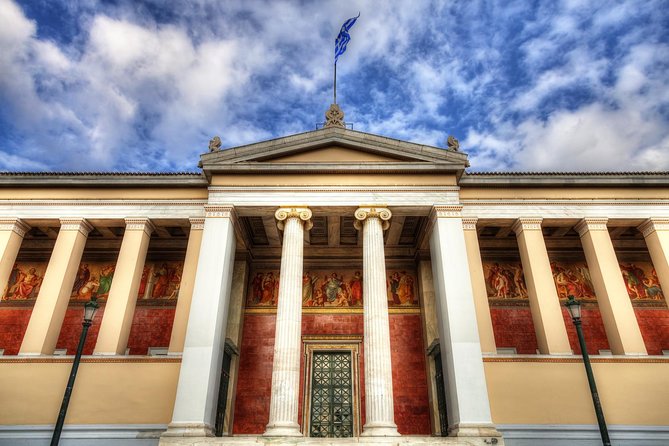
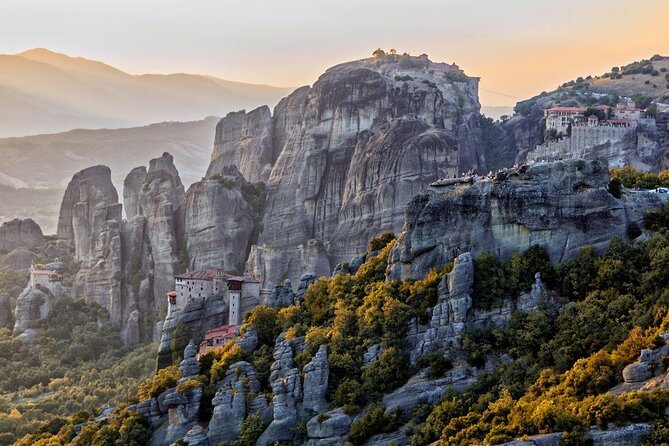
Meteora is the kind of place that forces you to look up, then look closer. Day five is about visiting monasteries, with at least three monasteries in the plan. Two are guided with a professional guide, and others are included depending on time.
You visit the Great Meteoron Monastery and the Varlaam Monastery, plus Holy Trinity Monastery (Agia Triada). If timing allows, you may also see Holy Monastery of Rousanos, also known as Saint Barbara. Each monastery sits in the same dramatic setting, but the feel changes as you move between sites.
The guided portions are a real advantage. Meteora is not only about the rocks. It is about religious life, architecture, and why monks lived where they did. Without a guide, it can turn into a photo hunt. With a guide, you pick up the “why” behind the “how.”
After the monastery visits, you have a meal and then start the scenic drive back to Athens late in the afternoon. This is a good end to the tour because it gives you a closing sense of perspective. You leave Meteora, then you return to the city that started your trip, with the ancient world still in your head.
Practical note: monastery steps and uneven paths are common. This tour expects you can walk on unpaved or uneven terrain. If your mobility is limited, talk to the operator ahead of time so the driver can do the best routing and viewpoints.
Price and what you get for a 5-day private vehicle
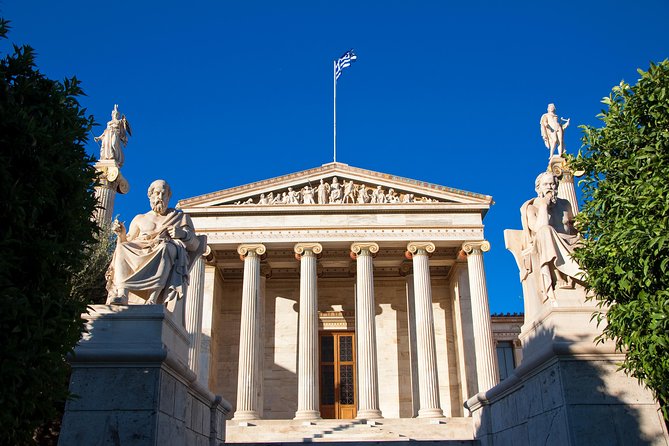
At $3,328.11 per person, this is not a budget trip. But for a private 5-day route that includes hotels, transportation, and guided time at multiple major sites, it can be good value if you want less stress and more expert context.
Here is the “value math” that matters:
- Hotels with breakfast (4 mornings) are included.
- You have a private vehicle with air conditioning and Wi-Fi in the car, plus fuel and tolls covered.
- A professional English-speaking driver provides information and tips and does not enter the sites.
- You get professional guides at Corinth, Olympia, Delphi, and two Meteora monasteries.
What is not included is also important:
- Admission fees for archaeological sites and museums are not included.
- Coffee, drinks, snacks, and meals are not included in the package list.
So yes, you need extra spending. But you are also paying to avoid the time cost of figuring out ticket logistics, transport timing, and route planning across multiple regions.
One detail I appreciate: the tour starts early, often between 6:00am and 9:00am based on your preference. That reduces wasted daylight and helps you beat some crowds and heat, especially in summer.
Finally, because it is priced per person but the vehicle is for your group, the cost feels more reasonable when you share the sedan or minivan. The operator notes seating patterns for 1 to 3 in a sedan, and larger groups by request.
Who this tour fits best, and who should adjust expectations
This tour fits best if you want a structured Greece itinerary without the headache of self-driving. It is also a strong choice for families with teens. In prior feedback tied to this operator, the guide named Terry was praised for planning ahead and being attentive to teen needs, which is a big deal on a long day-to-day route.
You should also seriously consider it if you like a “story” approach. Day two and day four both connect geography to history in ways that help first-timers and returning visitors alike.
If you are someone who likes slow travel, long lunches, and lingering in one town, this may feel like too much. The route is ambitious, and you will move often.
A practical tip: pack layers. You will be in coastal air at Sounion, then in mountain areas around Arachova and Meteora. Even when the weather is fine, wind and temperature swings can surprise you.
Should you book this Ancient Greece and Meteora private tour?
I would book it if you want a private, guided-heavy route that covers Athens, the Peloponnese, Delphi, Thermopylae, and Meteora in five days without forcing you to manage every ticket and transfer yourself.
I would think twice if you have limited mobility or you hate early starts. The tour involves walks on uneven terrain and multiple sites per day, and admission fees are extra.
If you are traveling with a group who can share the vehicle and you care about guided context at major sites, this is one of those trips where the price starts to make sense. Meteora plus Olympia plus Delphi in one run is a lot of payoff.
FAQ
What sites are included across the 5 days?
You’ll cover Athens highlights like the Acropolis and Parthenon area, Hadrian’s Arch, the Temple of Olympian Zeus, the Changing of the Guard at Parliament, the Panathenaic Stadium, and the Temple of Poseidon at Cape Sounion. You’ll also visit the Corinth Canal and Ancient Corinth, Epidaurus, Mycenae, and Palamidi Castle in Nafplio, then Olympia, Delphi, Thermopylae, and at least three Meteora monasteries.
Is this tour private?
Yes. It is a private tour/activity, meaning only your group participates, with a dedicated vehicle for your party size.
Are admission tickets included?
No. Admission fees for archaeological sites and museums are not included.
Are meals included?
Breakfast is included through hotel stays. Other meals and coffee or drinks are not listed as included.
Do you get a guide during the trip?
You’ll have a professional guide at the sites of Corinth, Olympia, Delphi, and at two Meteora monasteries. The driver provides information and tips but does not enter the sites.
What is the meeting time and start window?
Departures are usually between 6:00am and 9:00am, based on your preference.
What’s the cancellation timing?
You can cancel up to 3 days in advance of the experience for a full refund. If you cancel less than 3 full days before the start time, the amount you paid will not be refunded. The tour may also be canceled for bad weather, health issues, or site closures, with an alternate date or a full refund offered.
Latest from under the Acropolis


Meteora Monastery Day Trips, compared.
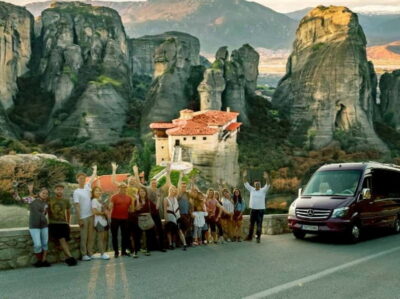
Meteora Monasteries Day Trip with Caves and Lunch
Read our review →
Athens to Meteora: Monasteries, Caves & Seaside Stopovers
Read our review →
Full-Day Meteora Tour with Local Guide & Greek Lunch
Read our review →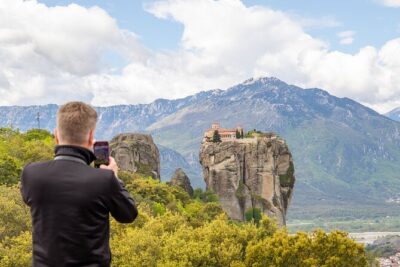
Meteora Monasteries, Caves & Coastal Stopovers with Lunch
Read our review →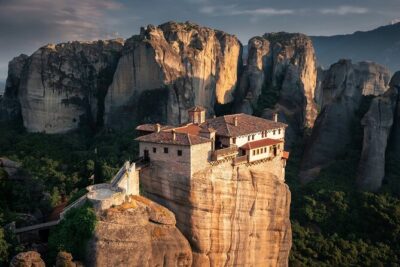
Meteora Monasteries & Caves DayTrip from Athens with Greek Lunch
Read our review →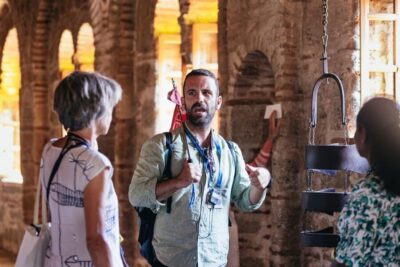
4-Day Classical Greece Tour: Epidaurus, Mycenae, Olympia, Delphi, Meteora
Read our review →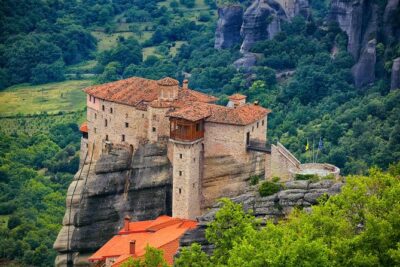
Meteora Monasteries, Hermit Caves Tour with Pickup
Read our review →Browse the lists this tour appears in