

Reviewed · HISTORICAL TOURS
Ancient Athens Tour: Philosophy, History, Politics
Athens ideas start before you reach the Acropolis. In just about 3 hours, this tour connects myth, philosophy, and power in places you can still walk today. I love how the route keeps the story moving from founder myth to courtroom courage, and I love the guide style that makes big concepts feel clear in English. The only real drawback is pacing, it is a dense, stop-heavy walk, so comfortable shoes and good attention help.
If you want a fast way to get grounded in Ancient Athens beyond the postcard stuff, this is a strong first move. You also get a nice mix of landmarks and street-level Athens, including Plaka and the Monastiraki area. Still, because it is built around key sites, you should expect a lot of information per minute, not long hangs at one spot.
In This Review
- Key highlights you should care about
- A 3-Hour Course in Athens Philosophy and Power
- Price and Pacing: Small Group, Lots of Stops
- Stop by Stop: Theseus, Pericles, Socrates, Stoics, and Plato
- Stop 1: Statue of Theseus, the Myth-Seed of Athens
- Stop 2: Kerameikos Cemetery, Trade Spaces Meet Power History
- Stop 3: Ancient Agora, Where Ethics and Politics Were Argued
- Stop 4: Roman Agora, Gate of Athena and the Stoic Names
- Stop 5: Plaka, Old District Streets Between Big Ideas
- Stop 6: Monastiraki Flea Market, Athens in the Present Tense
- Stop 7: Pnyx, Democracy on a Hill and the Best Photo Angle
- Stop 8: Prison of Socrates, Trial Choices and the Refusal to Flee
- Stop 9: Philopappos Hill and Plato, Justice and Truth in the Open Air
- Why the Guide Style Changes the Whole Experience
- Best Use of This Tour on Your Athens Trip
- What to Expect Physically and Timing-wise
- Should You Book This Ancient Athens Philosophy, History, Politics Tour?
- FAQ
- How long is the Ancient Athens Tour: Philosophy, History, Politics?
- Where does the tour start and where does it end?
- What is the meeting point description near public transport?
- Is the tour in English?
- How big is the group?
- Do I need to buy admission tickets for the stops?
- Do you get a mobile ticket?
- What is the cancellation policy?
Key highlights you should care about
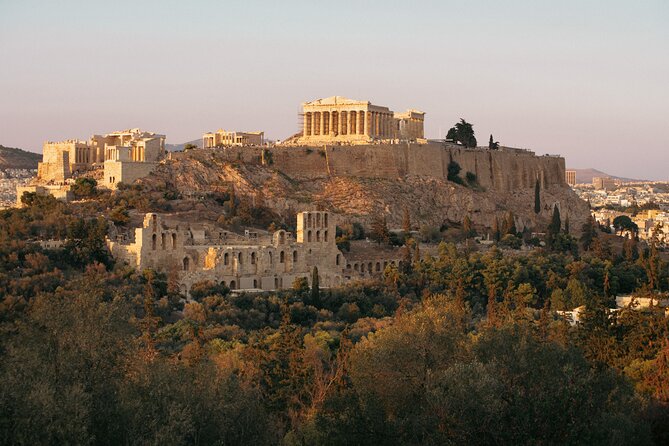
- A focused philosophy-politics route that links Socrates, Plato, and Stoicism to how Athenians actually argued and assembled
- Small group size, max 10, so the guide can keep explanations tight and understandable
- Practical context at each stop, from Pericles and the Parthenon connection to courtroom choices
- Stoics in the Roman Agora, with names like Epictetus and Marcus Aurelius brought into the conversation
- Great photo viewpoints at Pnyx and Philopappos Hill, with Acropolis views built into the walk
A 3-Hour Course in Athens Philosophy and Power
This is not a sit-and-watch history lecture. It is a walking story that tries to answer the same question people keep asking when they visit Athens, how did thoughts about justice, virtue, and good government come from real places, real conflicts, and real public life?
What I like most is the balance. You are not only seeing monuments. You are also getting the logic behind them. These ideas are placed beside the spaces where debate, trade, voting assemblies, and punishment all happened. That makes the city feel less like ruins and more like a functioning mind at work.
It helps that the tour is in English and stays readable even if you do not know much Greek antiquity going in. The pacing is quick, but the explanations are designed to follow in the moment. That matters on a first visit, when you are still mapping where everything is.
One note on tempo: this tour runs close to the 3-hour mark with short stops. If you prefer slow museum time, you may find it moving fast. If you like brisk walking plus clear storytelling, it will feel efficient.
A handful more Athens outings to compare
- Historical Delphi One Day Tour with Arachova Stop & Expert Guide
★ 4.5 · 1,247 reviews - Historic Athens: Small Group Electric Bike Tour
★ 4.9 · 966 reviews - Acropolis, Parthenon & Athens Old City Heritage Walking Tour
★ 4.5 · 876 reviews - Athens: Small Group E-Bike Tour of Historic Highlights
★ 4.9 · 154 reviews
Price and Pacing: Small Group, Lots of Stops
At $48.39 per person for about 3 hours, you are paying for a guided thread through several of Athens most idea-heavy spots. The value is not just the guide. It is also that the sites on the route are covered by free admission tickets, so you are not stacking extra costs on top of the tour price.
There is also a practical advantage: the group is capped at 10. That usually means you get fewer bottlenecks at entrances and easier listening when the guide points out details. You also get a better chance to ask questions without the tour feeling like a crowd herding exercise.
Because the itinerary is concentrated, you should plan for a lot of input quickly. Think of it as a guided primer. You can always return later for longer, slower exploration on your own.
Stop by Stop: Theseus, Pericles, Socrates, Stoics, and Plato
The tour starts at the Statue of Theseus, on the Athens side of the street opposite the Thiseion metro station. That first meeting point is smart. It gives you an immediate anchor in a city that can otherwise feel directionless.
From there, you move through a sequence of sites that each supports the bigger theme: how Greek mythology, civic life, and philosophy connect.
Stop 1: Statue of Theseus, the Myth-Seed of Athens
You meet and greet at the Statue of Theseus and get an orientation to the walk ahead. Theseus matters here because he is not only a character in a story. He is tied to how ancient Athenians imagined origins, identity, and legitimacy.
This opening is useful because it frames what you will see next. The tour is about philosophy and politics, but it begins with myth, since myth was part of how ancient people understood their world and their institutions.
You only spend about 20 minutes here, and that is plenty to set the tone without dragging.
Stop 2: Kerameikos Cemetery, Trade Spaces Meet Power History
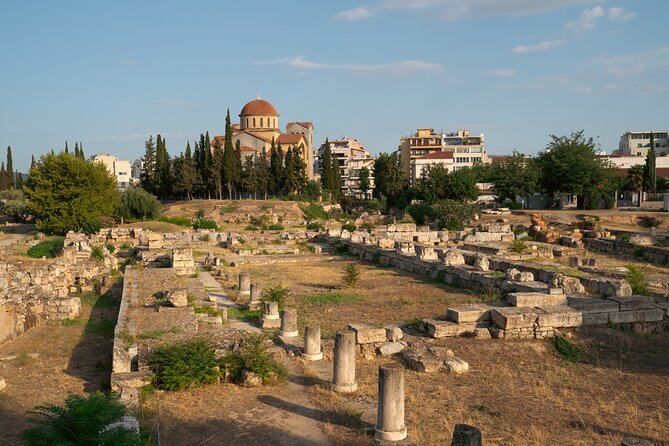
At Kerameikos, you see the potters’ quarters and the burial grounds of Athens. This is a place where you can feel the city’s everyday craft side, not just its monumental “thinkers and temples” side.
A key connection comes next: the tour links this wider civic world to Pericles, the Athenian statesman associated with the city’s major cultural period, including commissioning the Parthenon on the Acropolis. Standing in Kerameikos helps you understand why politics in Athens was not just about decrees. It was also about shaping the public landscape people lived within.
The stop is short, about 15 minutes. That is the tradeoff. You get a clear, story-driven snapshot instead of a slow, archaeological deep look.
Same hours, spent a different way in Athens:
- Athens: Acropolis & up to 5 Archaeological Sites Combo Pass★ 4.2 · 13,904 reviews
- Athens: Acropolis, Parthenon & Acropolis Museum Guided Tour★ 4.8 · 9,316 reviews
- The Acropolis, Parthenon & Acropolis Museum Guided Tour★ 4.7 · 8,493 reviews
- Athens: Cape Sounion & Poseidon Temple Sunset Half-Day Trip★ 4.8 · 8,241 reviews
Stop 3: Ancient Agora, Where Ethics and Politics Were Argued
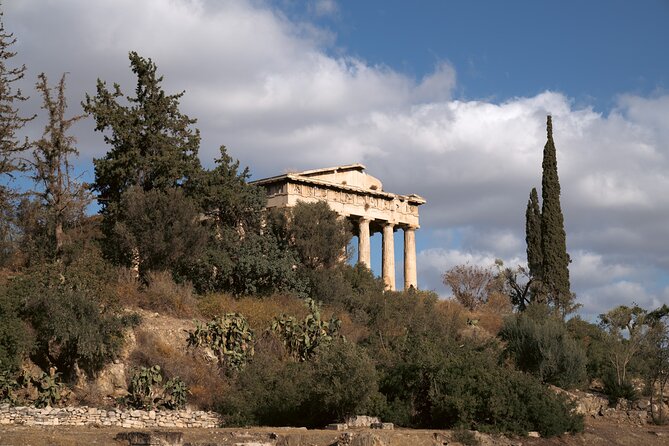
The Ancient Agora is where the tour really starts to feel like philosophy in action. You walk in the footsteps of Socrates around the area where traders sold wares and philosophers debated questions of ethics, politics, and the good life.
This stop is valuable because it makes the ideas physical. The Agora was not a private study room. It was part marketplace, part civic stage. When you see that setting, you start to understand why Athenian philosophy often has a public edge.
If you learn best by imagining conversations in place, you will enjoy this. If you prefer purely visual monuments, this stop may feel more talk-heavy, but it is still tied to real space you can stand in and picture.
Stop 4: Roman Agora, Gate of Athena and the Stoic Names
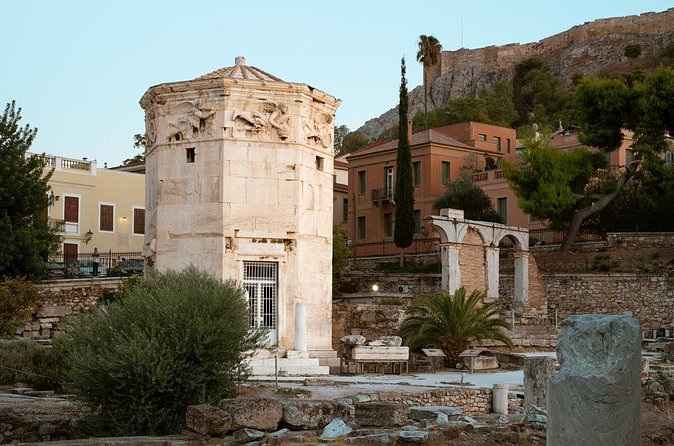
Next comes the Roman Agora area, including the Gate of Athena. This is where the tour extends the story into the Stoics, and it does so with real named figures.
You hear about Stoics who included Epictetus, described here as a slave, and Marcus Aurelius, an emperor. The message is that Stoicism spread across social ranks, and it leaned on ideas like virtue, resilience, will power, and gender equality.
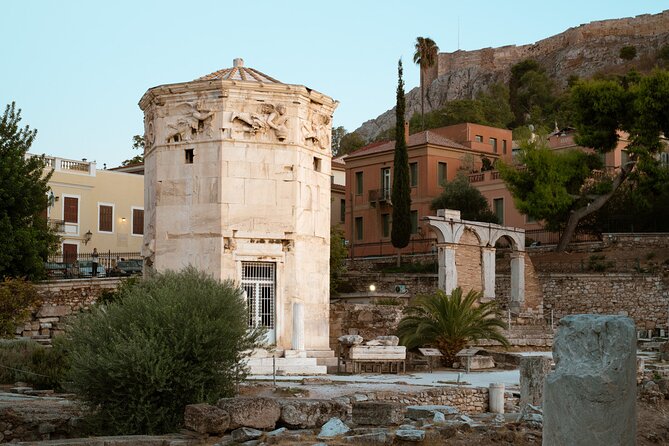
You also see the Tower of the Winds, with its architectural design and reliefs. Even if you are not a history-nerd type, this stop gives you something concrete to look at while the philosophy conversation continues.
The time here is about 15 minutes. You will not leave knowing every Roman Agora detail, but you will leave with the idea thread connected.
Stop 5: Plaka, Old District Streets Between Big Ideas
Then you shift to Plaka for about 15 minutes, walking through one of Athens older neighborhoods with labyrinth-like streets and a strong mix of tourists and locals.
This stop is more than a break. It shows how the city continues. Ancient themes may be the focus, but you still see the living Athens layer right next to it.
It is a short stroll, so do not expect a long neighborhood exploration. Use it for orientation and for getting your bearings for later wandering.
Stop 6: Monastiraki Flea Market, Athens in the Present Tense
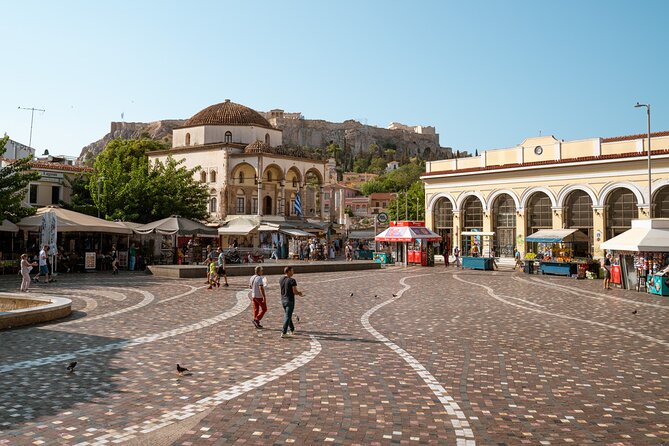
Monastiraki Flea Market is next for about 15 minutes. This part of the tour leans into the color and variety of everyday Athens commerce. You may see stalls and stores selling antiques and bric-a-brac, plus items like vinyl records and traditional Greek sandals.
I like this insertion because it keeps the tour from becoming only cerebral. It reminds you that Athens was, and is, a place where people buy, trade, bargain, and socialize. That continuity helps the earlier Agora stop feel less like an ancient theme park.
This stop is short, so you might not get deep into browsing. It is more of a quick taste and a chance to walk the streets with a guide who can point your attention in useful directions.
Stop 7: Pnyx, Democracy on a Hill and the Best Photo Angle
Now the walk climbs toward Pnyx, where popular assemblies took place. The tour frames Pnyx as a birthplace of democracy and builds in about 20 minutes here, including excellent photo opportunities of the Acropolis.
This stop matters because it ties politics to geography. In Athens, power was not only in laws. It was also in gathering spaces, in the ability to speak, vote, and persuade.
If you care about the practical meaning of democracy, this is one of the most satisfying stops. It is not abstract. It is an actual hill where people could convene and make decisions.
You also have time for photos without feeling rushed out the door immediately.
Stop 8: Prison of Socrates, Trial Choices and the Refusal to Flee
At the Prison of Socrates, you hear the reported story of where he was held. The tour covers how Socrates challenged received wisdom, faced a trial on questionable charges, and chose not to flee, preferring a dignified death over humiliation through escape.
This stop is one of the emotional anchors of the whole tour. The earlier stops set up the context of debate and ethics. Here the philosophy becomes consequences.
Spend about 20 minutes here. That is enough time to understand the narrative and to grasp why this story still matters to people who care about civic values today.
If you tend to enjoy moral and political dilemmas, this is the part you will probably remember.
Stop 9: Philopappos Hill and Plato, Justice and Truth in the Open Air
The tour ends with a visit to the top of the Muses Hill, including the Philopappos Monument. About 20 minutes here brings you to the discussion of Plato, presented here as perhaps the single most influential figure in the history of philosophy.
The tour explains Plato’s views connected to politics and the nature of justice, truth, and the good life. That is a fitting finale because Plato is part of the bridge between Socrates as a public questioner and later political thought about how societies should function.
Then you head down to the hill entrance, where you have options. You can continue walking toward the Acropolis on your own, or return to Thiseion for coffee.
This ending is smart for your planning. It gives you an organic next step rather than forcing you to reverse course immediately.
Why the Guide Style Changes the Whole Experience
The difference between a “cool sites” tour and a “you get it now” tour is how the information lands. The standout strength here is how the guide explains concepts in a clear, friendly way, while still connecting them to atmosphere and context.
I especially appreciate that the tour stays understandable even without an in-depth background in Greek antiquity. The tone leans on empathy and humor, which keeps the philosophy topics from becoming stiff.
For many people, Athens philosophy can feel like homework. This tour treats it like human conversation. It also provides tips for your stay in Athens, which is practical when you are trying to decide what to do after the tour finishes.
Small group size helps too. With only up to 10 people, the guide can keep the pace without losing the thread.
Best Use of This Tour on Your Athens Trip
This is the kind of tour that gives you a map for your later self-guided exploring. After it, you will know what to look for. You will recognize the political meaning behind assembly spaces, and you will connect philosophy to public life rather than treating it as distant theory.
If you are visiting for the first time, I recommend doing this early. It helps you understand why so many Athens landmarks feel connected, even when they are physically spread out.
If you already visited the Acropolis or other big-ticket sites, this tour works as a “why it mattered” follow-up. It turns the city into a logic puzzle with answers you can visit on foot.
What to Expect Physically and Timing-wise
This is a walking tour with multiple short stops. You should expect to move between locations and to stand and listen for brief bursts of time.
Because it requires good weather, plan for a backup date if conditions are poor. If you have flexibility in your schedule, you can give yourself a better chance to enjoy the full route as intended.
Most people can participate, and the tour allows service animals. It also runs near public transportation, so getting to the start point is usually straightforward.
Should You Book This Ancient Athens Philosophy, History, Politics Tour?
Yes, if you want a first-time, idea-forward Athens introduction that ties philosophy directly to places. This tour is a strong value at $48.39 because the time is focused, the group stays small, and the stops are not stacking extra entry costs.
Book it if you like learning through storytelling, especially about Socrates, Plato, and Stoics, and you want a route that connects democracy, ethics, and power without making you feel lost.
Skip it if you prefer slow pacing, long stays at single sites, or quiet time without much explanation. This tour gives you speed and clarity, not deep archaeological time.
If you want Athens to make sense fast, this is a very good starting point. Then you can spend the rest of your trip choosing where to linger, now that you know what matters and why.
FAQ
How long is the Ancient Athens Tour: Philosophy, History, Politics?
It runs for about 3 hours.
Where does the tour start and where does it end?
It starts at the Statue of Theseus (Athens 105 55, Greece) and ends at Pnyx (Athens 117 41, Greece).
What is the meeting point description near public transport?
You meet at the Statue of Theseus opposite the Thiseion metro station.
Is the tour in English?
Yes, it is offered in English.
How big is the group?
The tour has a maximum of 10 travelers.
Do I need to buy admission tickets for the stops?
The stops listed have free admission tickets.
Do you get a mobile ticket?
Yes, you receive a mobile ticket.
What is the cancellation policy?
You can cancel for a full refund if you do so up to 24 hours in advance. If it is canceled due to poor weather, you will be offered another date or a full refund.
Latest from under the Acropolis



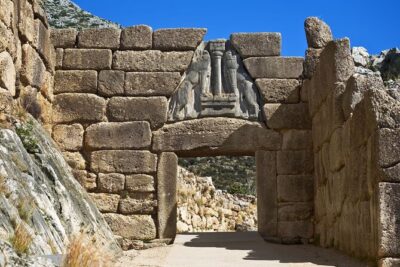

Historical Tours, compared.
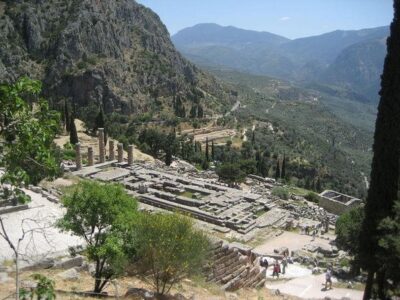
Historical Delphi One Day Tour with Arachova Stop & Expert Guide
Read our review →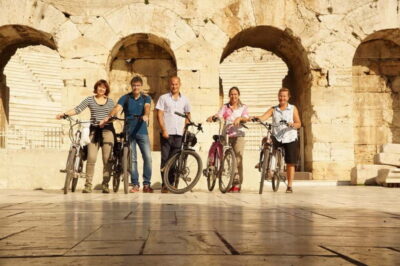
Historic Athens: Small Group Electric Bike Tour
Read our review →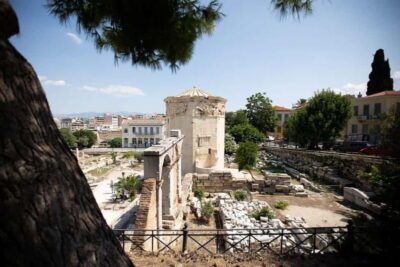
Acropolis, Parthenon & Athens Old City Heritage Walking Tour
Read our review →
The History of Athens: Greek Mythology Private Tour
Read our review →
Athens Highlights by E-Bike: Small-Group Historic Tour
Read our review →
Half day tour to Acropolis and the must-see historical sites and downtown
Read our review →
Browse the lists this tour appears in