
Reviewed · ANCIENT AGORA GUIDED TOURS
Ancient Agora of Athens – Guided Tour & Skip-the-line Ticket
Democracy feels close here, not dusty. This 2-hour Ancient Agora tour pairs a licensed guide with an entrance ticket that includes skip-the-line access, so you can spend your time learning instead of waiting. I like the way the stops are chosen for real visual impact, especially the Temple of Hephaestus, and I also like how the Stoa of Attalos leads naturally into what daily life looked like in Classical Athens.
One thing to consider: this is a compact route. Two hours moves quickly, so if you want slow strolling and long pauses for photos, you might feel a little rushed.
Still, I think the best part is the angle. You are not just looking at ruins, you are getting a guided connection between Greek philosophy, civic life in the Agora, and Saint Paul’s moment at the Areopagus, also known as Mars Hill.
In This Review
- Key things to know before you go
- Why the Ancient Agora still makes sense in real life
- Finding your starting point at Thissio Station (and why it helps)
- Temple of Hephaestus, Doric style you can actually read
- Stoa of Attalos and the Agora Museum, where artifacts do the talking
- Thiseio and the idea of Athens as a walkable brain
- Mars Hill and Saint Paul: why this tour connects faith and philosophy
- How much time you really get (and how to pace yourself)
- Price and value: is $93 worth it?
- Languages and who this guide format suits best
- Practical expectations during the 2-hour walk
- Should you book this Ancient Agora guided tour?
- FAQ
- FAQ
- How long is the Ancient Agora guided tour?
- Is the Ancient Agora entrance ticket included?
- Where do I meet the guide?
- What major sites are included in the visit?
- What languages are available for the tour?
- Is transportation, food, or drinks included?
Key things to know before you go
- Skip-the-line + official guide: the ticket and guiding are bundled, so you get context right from the first minute.
- Hephaestus Temple is a standout: one of the best-preserved Doric temples in the world, built to last and easy to study up close.
- Stoa of Attalos turns ruins into rooms: today’s Agora Museum uses artifacts to explain daily life.
- You walk the civic streets of Athens: the route helps you understand how politics, society, and commerce were tied together.
- Saint Paul at Mars Hill is part of the story: the guide links early Christianity with the Classical world’s ideas.
Why the Ancient Agora still makes sense in real life
The Ancient Agora is easy to romanticize from pictures, but in person it clicks fast. This was Athens’ meeting place, where politics, religion, markets, and everyday conversation overlapped in the same public space. When you walk through it with a licensed guide, you start recognizing the Agora as a system, not just scattered stones.
I like that the tour explains what you are seeing in plain terms: where people gathered, why buildings mattered, and how decisions actually got made. Even if you know a bit of Greek history already, this kind of guided route helps you put names and purposes onto the structures you would otherwise pass by.
Other walks through the ancient Agora:
- Athens: Agora and Hephaistos Temple Entrance Ticket
★ 4.0 · 449 reviews - Athens: Ancient Agora E-Ticket and Audio Tour
★ 3.9 · 413 reviews - Athens: Roman Agora & Ancient Agora E-ticket & 2 Audio Tours
★ 4.1 · 107 reviews - Acropolis & Ancient Agora Guided tour included all Entrances
★ 4.9 · 102 reviews
Finding your starting point at Thissio Station (and why it helps)
You meet at Thissio Station on the Green Line, at the area of Asomaton & Adrianou Street. That is a smart choice for a quick start because Thissio sits in a convenient, walkable pocket of central Athens. If your day is already organized around that area, you will lose less time getting oriented.
The tour also starts right at the Ancient Agora entrance at the appointed time. That matters because the Agora can be busy, and the architecture has a lot going on visually. Getting in with a guide early helps you build a mental map before crowds and noise start to blur everything.
Tip: plan for outdoor walking. The route is outdoors, and you will likely do better if you wear comfortable shoes and bring a hat or light layer, depending on the season.
Temple of Hephaestus, Doric style you can actually read
One stop anchors the whole experience: the Temple of Hephaestus. You get about 15 minutes of guided time here, and the payoff is that this temple is widely known for being extremely well preserved. In other words, you are not stuck trying to imagine what it once was. You can study what remains.
A Doric temple is all about proportion and rhythm, so the guide’s explanation helps you notice details that most people miss. Look for the sturdiness of the columns, the clarity of the structure, and how the building still communicates a sense of order. When you connect that to the Agora being Athens’ public heart, it becomes easier to see how religious and civic life were not separate in ancient times.
Possible drawback: because the stop is relatively short, you have to choose your priorities. If you are the kind of person who loves lingering for close-up angles and slow sketching, you may want to add extra time later on your own.
Stoa of Attalos and the Agora Museum, where artifacts do the talking
Then you move to the Stoa of Attalos, with another guided window of about 15 minutes. The Stoa matters because it was a long, covered portico, designed for people to gather and conduct daily business. In the ancient Agora, a structure like that was basically social infrastructure.
Today, the reconstructed Stoa houses the Agora Museum. That shift from open-air ruins into a museum space is where the tour becomes especially useful. Instead of treating the Agora as only an outdoor walk, you get the chance to connect buildings to the objects and evidence that explain how Athenians lived.
Even in a short visit, museum time changes the way you look at the ruins afterward. You start linking the Agora’s civic role to ordinary activities. You also get a clearer picture of the Classical period’s material culture, not just its big names and big ideas.
Thiseio and the idea of Athens as a walkable brain
The walking section around Thiseio takes about 30 minutes, and it is a key part of what makes this tour feel more like a guided city experience than a museum tour. This is where the guide helps you follow an authentic path through the classical city, tying the landmarks together as a coherent urban space.
What I like about this segment is the emphasis on connections. The Agora was the political and social heart, but it also functioned as a commercial center. As you move through the area, it gets easier to picture merchants, public announcements, and conversations happening in the same general world.
This part of Athens is also great for orientation. Even if you do not remember every detail after the tour, you leave with a better sense of where things sit relative to each other. That helps you plan where to go next without feeling lost.
A handful more Athens outings to compare
- Athens: Acropolis Ticket with Audio Guide★ 4.0 · 3,575 reviews
- Athens All Included: Acropolis and Museum Guided Tour with Ticket★ 4.5 · 2,673 reviews
- Athens: Acropolis Museum Ticket with optional Audio Guide★ 4.4 · 2,652 reviews
- Athens: Guided Tour of Acropolis & Parthenon with Tickets★ 4.7 · 2,049 reviews
Mars Hill and Saint Paul: why this tour connects faith and philosophy
Here is the angle that sets this experience apart. During the visit, the guide focuses on the historical and spiritual significance of Saint Paul’s presence in Athens. The tour centers on his famous speech at the Areopagus, also called Mars Hill, where he engaged with Athenians’ philosophical and religious ideas.
That matters because it changes how you read the Agora. You stop thinking of it as purely ancient civic architecture and start seeing it as a place where different belief systems could meet, argue, and influence each other across time. The guide explains the way early Christianity encountered the ideas of the Classical world, and it frames that moment as part of the broader story of Western civilization.
I think this is the most intellectually satisfying part for many visitors. It gives the ruins a narrative spine, and it helps you understand why a public space like the Agora would resonate beyond its original era.
One consideration: if you prefer strictly archaeology and architecture, this faith-and-philosophy storyline may feel like an extra layer. It is still grounded in location and context, but the emphasis is clearly on ideas, not only stones.
How much time you really get (and how to pace yourself)
The total duration is 2 hours, including guided stops and walking time. That is a good length for a first Agora visit because it gives you multiple major anchors without exhausting you. You also still have energy afterward to explore nearby areas on your own.
The pace is guided and structured, so you are unlikely to have long free time between stops. If that is your style, consider adding independent time before or after the tour to revisit the parts you liked most. In practical terms, it is the easiest way to turn a great guided overview into a more personal experience.
Price and value: is $93 worth it?
At $93 per person, the price sits in the midrange for a guided “major landmark” experience in central Athens. The value case is clear because three things are bundled:
- Official guiding by a licensed guide
- The Ancient Agora entrance ticket with skip-the-line access
- Guided visits to Temple of Hephaestus and Stoa of Attalos (including the Agora Museum)
If you were to self-guide, you would still pay for admission and you would spend time figuring out what matters, what you are looking at, and how the pieces relate. Here, the guide does that work for you, and it is not only about facts. It is about helping you interpret the space while you are standing in it.
So, who gets the best value? People who want context fast, people who like stories tied to real places, and people who do not want to lose time in queues. If you love independent wandering and you already know the basics of the Agora, you might feel you are paying for interpretation you can get elsewhere. But for most first-timers, the included skip-the-line ticket and focused stops make the cost easier to justify.
Languages and who this guide format suits best
This tour runs with a licensed guide and is available in Italian, English, Spanish, French, Japanese, and Greek, based on what you select when booking. The broader language list includes additional options such as German, Chinese, Russian, Hebrew, so you can often find a match even if English is not your first choice.
A multi-language offering matters more than it sounds. If the guide’s explanations are in your language, you will catch more of the connections, especially the part about Saint Paul at Mars Hill and how the guide ties ideas to the architecture and civic layout.
Who will like this most?
- First-time visitors who want structure and clarity
- People interested in democracy, philosophy, and the overlap with early Christianity
- Travelers who prefer guided interpretation over reading on your phone while walking
Practical expectations during the 2-hour walk
You should expect an active, outdoors-heavy experience with frequent “stop and explain” moments. The guided time per major site is around 15 minutes for Hephaestus and the Stoa, plus about 30 minutes walking in the Thiseio area. That means the guide has to be selective, so you will benefit most if you come with at least a light curiosity about the Agora as Athens’ political and social core.
Also, keep in mind what is not included: transportation to or from the meeting point, food and drinks, and personal expenses. The tour itself is compact, so you will probably want to plan a meal break separately.
If you want the best results, treat it as a “build the map” tour. Then go back later for longer self-paced time where you felt the strongest connection.
Should you book this Ancient Agora guided tour?
I would book it if you want your Agora visit to come with direction, context, and clear highlights. The combination of Temple of Hephaestus being exceptionally preserved, the reconstructed Stoa of Attalos connecting buildings to museum artifacts, and the Saint Paul at Mars Hill angle makes this more than a standard ruins walkthrough.
Skip booking if you already have a strong background and you prefer quiet time over guided interpretation. In that case, you might get more satisfaction building your own itinerary and spending longer at fewer sites. But if you want to leave feeling like you understood the Agora as a real civic engine, this guided format is a great fit.
FAQ
FAQ
How long is the Ancient Agora guided tour?
The tour lasts 2 hours.
Is the Ancient Agora entrance ticket included?
Yes. The entrance ticket to the Ancient Agora is included, and it includes skip-the-line access.
Where do I meet the guide?
You meet at Thissio Station (Green Line), at Asomaton & Adrianou Street.
What major sites are included in the visit?
You’ll visit the Temple of Hephaestus and the Stoa of Attalos (which houses the Agora Museum), plus a guided route through the ancient city area.
What languages are available for the tour?
The tour guide language options include English, Italian, French, Spanish, Greek, German, Chinese, Russian, Japanese, and Hebrew.
Is transportation, food, or drinks included?
No. Transportation to or from the meeting point is not included, and food and drinks are not included either.
Latest from under the Acropolis

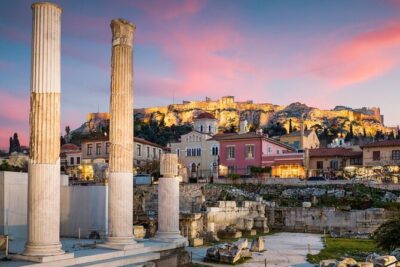



Ancient Agora Guided Tours, compared.
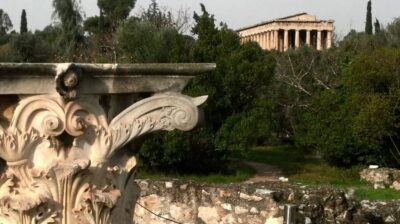
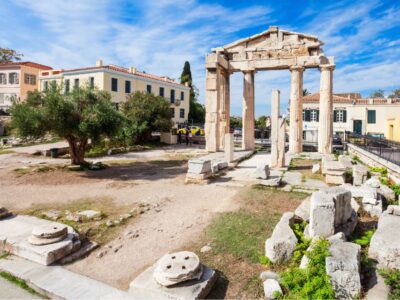
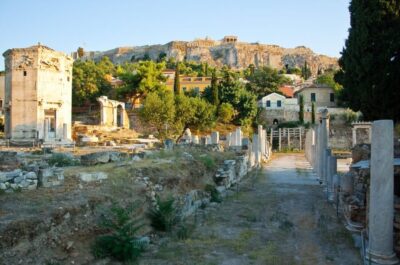
Roman Agora & Ancient Agora E-ticket & 2 Audio Tours
Read our review →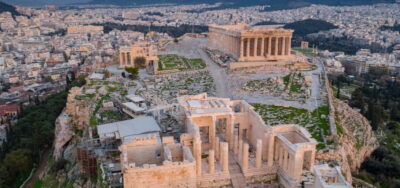
Acropolis & Ancient Agora Guided tour included all Entrances
Read our review →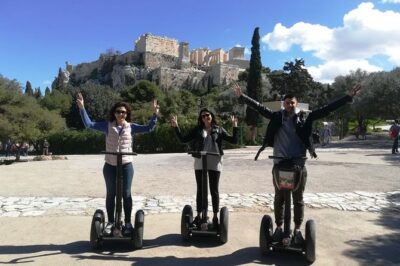
Ancient Athens Segway Tour with Agora and Kerameikos
Read our review →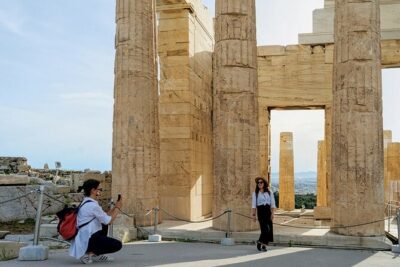
Acropolis of Athens, Ancient Agora and the Agora Museum Tour
Read our review →
Ancient Agora Self-Guided Tour with 3D & Audio (No Ticket)
Read our review →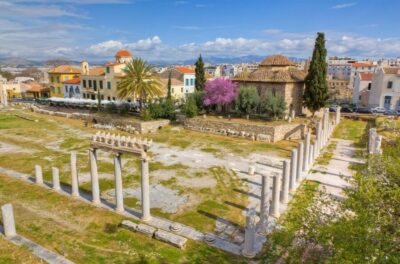
Browse the lists this tour appears in