
Reviewed · ACROPOLIS HILL TOURS
Acropolis of Athens Historical Tour For History Enthusiasts
Acropolis gets real with the right historian. This tour turns the Acropolis from a photo stop into a story about how ideas, art, and politics grew in Athens, and why they still matter. I like that the guide is a trained historian or archaeologist who explains the site in a wider human context. You also get earset receivers, which makes the commentary easy to follow even when the crowd noise rises.
A second thing I really value is how the tour moves from big themes to specific monuments without losing the thread. You are not just looking at marble, you are learning what each place was for, and how Greek thinkers and artists shaped later Western culture. One possible drawback to plan for is that admission fees depend on the option you choose, so double-check what is included before you go.
Even though it is only about 2 hours 40 minutes, this is still an uphill, on-your-feet visit with several stops. If you hate stairs or standing in the sun, consider whether this route fits your comfort level.
In This Review
- Key Things I’d Watch For on the Acropolis Tour
- Why This Acropolis Experience Feels Different Than a Quick Look
- Meeting at Dionysiou Areopagitou, Then Climbing With a Plan
- Stop One: South Slope Setup and the Big-Civilization Context
- Theatre of Dionysus: Where Drama Became a Civic Practice
- Odeon of Herodes Atticus: Memory, Philosophy, and Stone
- Temple of Athena Nike and Propylaea: Victory and the Dramatic Gate
- Erechtheion: Myths in the Center of the Sanctuary
- Parthenon: The “Jewel in the Crown” and Why It Was Tech-Level
- Guide Style: What Makes the Storytelling Land
- Value and Price: What You’re Actually Paying For
- Who Should Book This Acropolis Historical Tour
- Should You Book It? My Practical Take
- FAQ
- How long is the Acropolis of Athens Historical Tour?
- Is the tour offered in English?
- Are admission tickets included?
- Where does the tour start and end?
- How big is the group?
- What happens if the weather is poor or I need to cancel?
Key Things I’d Watch For on the Acropolis Tour
- Historian or archaeologist guide who connects Athens to the bigger sweep of human civilization
- Earset receivers that keep you in the conversation at busy viewpoints
- Time spent at major monuments like the Theatre of Dionysus, Temple of Athena Nike, Erechtheion, and the Parthenon
- Story-driven stops that link mythology, drama, and political life into one theme
- Small group size (max 25), which helps questions and keeps the pace human
Why This Acropolis Experience Feels Different Than a Quick Look
The Acropolis is usually sold as a wow-factor skyline. This tour treats it like a thinking place. I like that the start sets up the whole visit with a short lesson on how human civilization develops, then places ancient Greece, and Athens in particular, inside that timeline. That first layer changes what the monuments mean once you are standing in front of them.
You also get a guide style that leans into questions of purpose. Instead of reciting facts only, the best moments here come when the guide links what Greeks built to what they valued. That is where the tour feels more like a guided conversation than a lecture.
One practical win: with earset receivers, you do not have to keep guessing what the guide said while you are trying to look up at stone carvings or down at your footing. It makes the route more enjoyable, especially if you are traveling with family or you just want to absorb everything without straining.
Other routes up the hill and around the Parthenon:
- Athens: Acropolis & up to 5 Archaeological Sites Combo Pass
★ 4.2 · 13,904 reviews - Athens: Acropolis, Parthenon & Acropolis Museum Guided Tour
★ 4.8 · 9,316 reviews - The Acropolis, Parthenon & Acropolis Museum Guided Tour
★ 4.7 · 8,493 reviews - Acropolis: Premium Acropolis and Parthenon Guided Tour
★ 4.8 · 5,208 reviews
Meeting at Dionysiou Areopagitou, Then Climbing With a Plan
You meet at Dionysiou Areopagitou 17, Athina 117 42, Greece. From there, you work your way up toward the Acropolis, with the walk paced to fit the stops and the time on each monument. The tour ends at the Parthenon, at the top of the hill, so you should plan to handle your own return to town afterward.
This is also a good size group experience. With a maximum of 25 travelers, you still feel like a group rather than a moving crowd blob. You can usually hear the guide clearly, and you are not stuck waiting for a gap in the flow just to ask something.
There is no hotel pickup included, so think of this as a do-it-yourself arrival, then a guided education once you are on the route. Since the tour is near public transportation, it is easier than some tours that require a car ride just to start.
Stop One: South Slope Setup and the Big-Civilization Context
The first stop is the South Slope of the Acropolis of Athens. This is an underrated way to begin, because it buys you perspective before you hit the landmark buildings. The guide starts with a concise lesson on the creation of human civilization, then anchors ancient Greek development within that framework.
If you usually feel lost at heritage sites, this part helps your brain file things in the right folders. You are not just seeing Athens as a single era. You start to understand why those stones appear when they do, and what “civilization” meant to people building theater, temples, and civic identity in the classical period.
Practical detail that matters here: this portion includes admission, and it sets the tone for the rest of the route. You spend about 40 minutes in this first chapter, which is a lot of time in the best way. It is enough to get oriented, then still feel fresh as you climb.
Theatre of Dionysus: Where Drama Became a Civic Practice
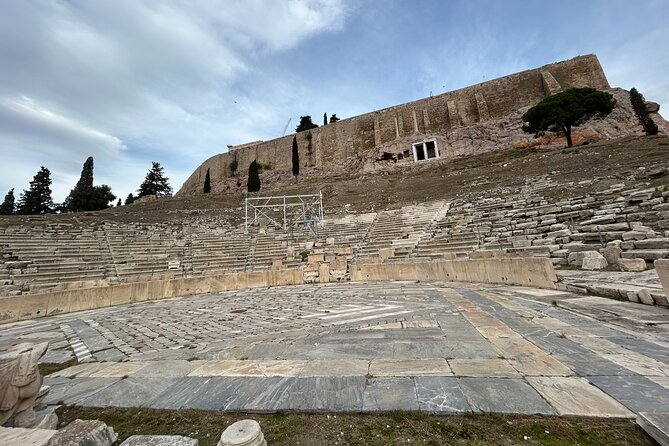
Next comes the Theatre of Dionysus, described as the first theatre in human history. Even if you know the names of Greek playwrights, it hits differently when you connect the theatre to the idea that art was public life, not private entertainment.
This is where tragedies and comedies were performed in front of the Athenian public. The guide ties the place to major writers such as Sophocles, Euripides, and Aeschylus, and you start seeing theatre as a social tool: stories shaped values, and public performances reinforced shared identity.
This stop is shorter, around 20 minutes, which is good. You get the core story without lingering too long when the rest of the Acropolis is waiting. Admission is included with the option you choose, so check your ticket type, but the structure here is designed so you do not waste time figuring out logistics mid-visit.
Odeon of Herodes Atticus: Memory, Philosophy, and Stone
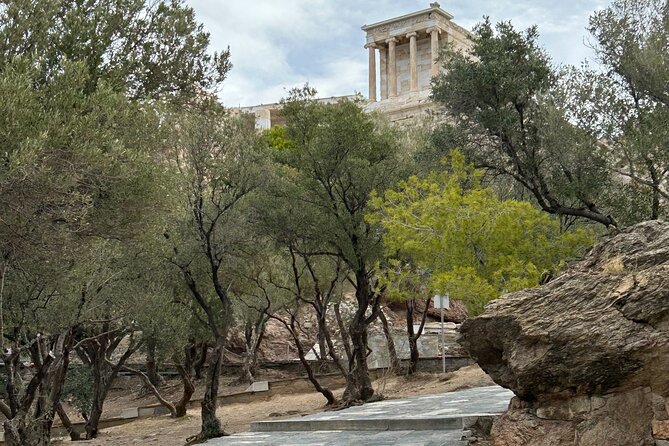
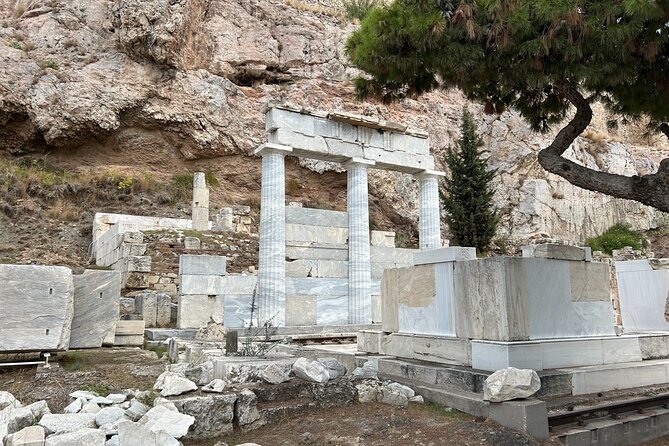
As you continue upward, you reach the Odeon of Herodes Atticus. This one is built by a benefactor and famous philosopher in the 2nd century AD, and it was constructed in memory of his deceased wife.
I like how this stop complicates the usual “ancient Greek equals one exact moment” story. Athens kept building on top of itself, and later generations kept using monuments to express power, mourning, and culture. That is a big part of what makes the Acropolis area feel alive even today.
The real value here is the link the guide makes between older Greek traditions and later Roman-era choices. You end up seeing continuity rather than just a timeline of ruins.
A handful more Athens outings to compare
- Historical Delphi One Day Tour with Arachova Stop & Expert Guide★ 4.5 · 1,247 reviews
- Historic Athens: Small Group Electric Bike Tour★ 4.9 · 966 reviews
- Acropolis, Parthenon & Athens Old City Heritage Walking Tour★ 4.5 · 876 reviews
- Athens: Small Group E-Bike Tour of Historic Highlights★ 4.9 · 154 reviews
Temple of Athena Nike and Propylaea: Victory and the Dramatic Gate

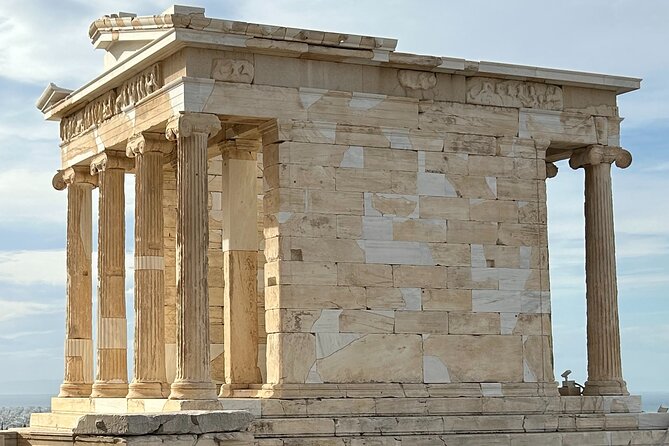
When you arrive at the main entrance of the Acropolis sanctuary, you see the Temple of Athena Nike, dedicated to the goddess of victory. This is a good moment to pause and look around. The area is built so that your eye moves between religious meaning and military symbolism.
Around 20 minutes later, you reach Propylaea, the monumental gateway. This stop includes a mix of viewing the surrounding hills and walking up the main stairway into the sanctuary. The gateway matters because it frames your arrival. It is architecture telling you, before you even step deeper, that this is a special civic and religious space.
Here is a practical tip: when you are at Propylaea, take a second to look for the “stairline” perspective. The steps and framing can make the views look instantly more dramatic than they do from street level.
Admission is included at these stops depending on the option you select, and the timing keeps you from getting stuck in a long queue while still spending enough time to absorb the atmosphere.
Erechtheion: Myths in the Center of the Sanctuary
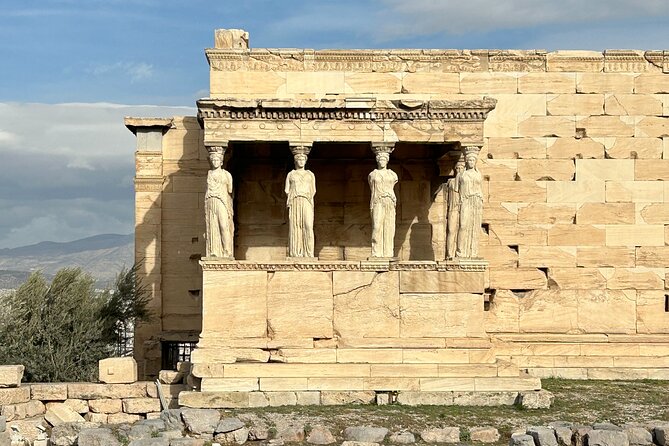
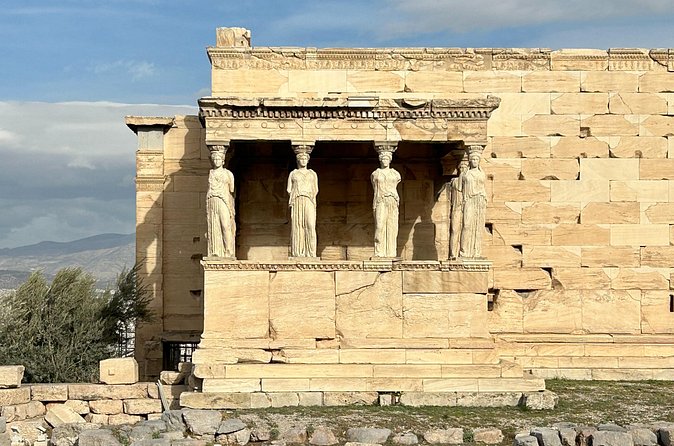
Your penultimate stop is the Erechtheion, known as a temple of myths and legends. It sits in the center of the Acropolis sanctuary and is famous for unique sculptures.
This is the stop where mythology starts to feel less like a school subject and more like the language people used to explain the world. The guide’s job is to connect those stories to the temple’s placement and the sacred meaning of the space. You should come ready to listen, because the sculptures only make full sense when you know what questions they were meant to answer for ancient worshippers.
You get about 20 minutes here. It is enough time to look closely and still keep moving, which matters because the final stop is the one people usually save their cameras for.
Parthenon: The “Jewel in the Crown” and Why It Was Tech-Level
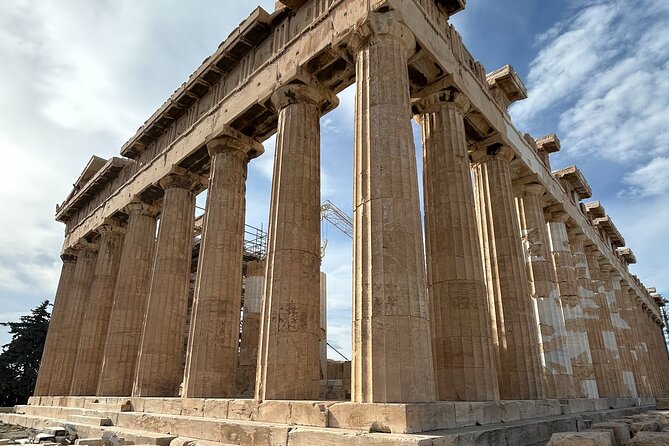
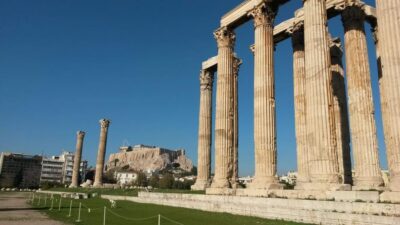
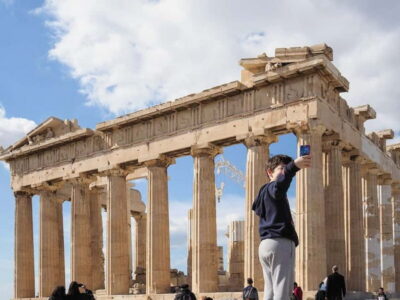
Finally, you reach the Parthenon, described as the jewel in the crown. This is the masterpiece of Classical-period ancient Greek architecture, dedicated to Athens’ patron goddess, and celebrated as a great technical achievement of the democratic state.
You are not just getting a pretty building at the top. You are getting a civic symbol. The guide helps you understand the Parthenon as political and cultural messaging, not only as temple architecture. That is where the tour earns its price if you care about how societies express ideas through stone.
The Parthenon stop is about 30 minutes, which is a solid amount of time for a site this famous. You also get the payoff views, with modern Athens stretched below the rock. Even if you have seen images before, the sightlines from up here land differently when you know what you are looking at and why it was built.
Guide Style: What Makes the Storytelling Land
A big reason this tour consistently works is the guide quality. In the names shared by visitors, you might meet Harris or Haralampos, and both are described as historian-level educators, not a rote script reader.
What I’d look for in a tour like this, and what shows up here, is the ability to teach with energy. The guide does it through humor, thoughtful discussion, and frequent context. One of the best signals is when the guide links theatre, mythology, engineering, and politics into one connected line, instead of treating each monument like a disconnected trivia card.
If you enjoy asking questions, you are also more likely to get real back-and-forth. Many guides give answers, but the best ones keep the dialogue moving, and the tour style here seems built for it.
And it is not all solemn. Some guides use playful teaching techniques, including light quiz moments and small surprises, like candy prizes mentioned for correct answers. It sounds silly until you realize it is a memory tool, and it keeps kids and adults engaged.
Value and Price: What You’re Actually Paying For
The price is $36.14 per person, and the tour lasts about 2 hours 40 minutes. That is not the cheapest way to see the Acropolis. It is, however, one of the better value options if your goal is understanding, not just photos.
Here is the value math that matters:
- You get a licensed English-speaking guide who is a historian or archaeologist.
- You get earset receivers to actually hear that guide clearly throughout the route.
- You spend time at major monuments that would be harder to interpret on your own.
Admissions are where the fine print can change your total. The tour data says admission and entry fees are included only if you choose an option that covers them. Since the stop list includes admission ticket notes, there is a strong chance you can select a version where you do not have to manage entry fees day-of. Just confirm what your ticket type includes before you go.
Also, this tour is capped at 25 people, which helps you feel like the guide can keep track of individuals. If you are paying to reduce confusion and time-wasting, that small group size is part of the value.
Who Should Book This Acropolis Historical Tour
This fits best if you like history that explains cause and effect. If you enjoy themes like democracy, civic religion, theatre, and mythology, you will feel like the stones are answering questions.
It is also a smart choice for couples and parents. The tour style, with earsets and a story-driven approach, can work well when you want to keep everyone engaged without splitting up your group or doing a separate plan for kids.
If you have mobility limits, you might find the climbing and time on your feet a consideration. The good sign is that one guide is described as checking the status of an elevator and coordinating smoothly for a wheelchair user. Still, the route itself is outdoors and includes stairs and uphill paths, so plan accordingly.
Should You Book It? My Practical Take
Book it if you want the Acropolis to make sense. This tour is built to connect Athens to bigger human questions, then bring you right up to the major monuments with clear, audible commentary through earset receivers.
Skip or reconsider if you only want a quick sighting and you are fine reading guidebooks on your own. At this price, you are paying for interpretation, pace, and a guide who can explain why the Parthenon and the other buildings matter beyond their appearance.
If you are on the fence, a good rule is simple: if you get more enjoyment from understanding than collecting snapshots, this is worth it. The Parthenon feels like a different experience when you reach it with context already in your head.
FAQ
How long is the Acropolis of Athens Historical Tour?
The tour lasts about 2 hours 40 minutes.
Is the tour offered in English?
Yes. The tour is offered in English.
Are admission tickets included?
Admission and entry fees are included only if you choose an option that includes them. The tour stops reference admission tickets, so check which option you booked.
Where does the tour start and end?
It starts at Dionysiou Areopagitou 17, Athina 117 42, Greece. It ends in front of the Parthenon temple at the top of the Acropolis hill.
How big is the group?
The tour has a maximum of 25 travelers.
What happens if the weather is poor or I need to cancel?
The experience requires good weather. If it is canceled due to poor weather, you will be offered a different date or a full refund. You can cancel up to 24 hours in advance for a full refund.
Latest from under the Acropolis






Acropolis Hill Tours, compared.
Acropolis & up to 5 Archaeological Sites Combo Pass
Read our review →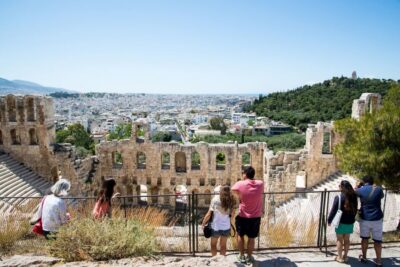
Acropolis, Parthenon & Acropolis Museum Guided Tour
Read our review →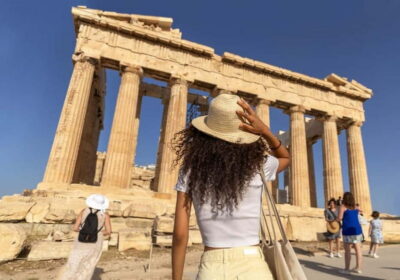
The Acropolis, Parthenon & Acropolis Museum Guided Tour
Read our review →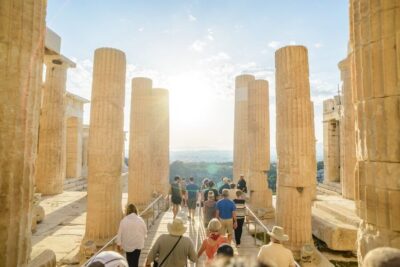
Acropolis: Premium Acropolis and Parthenon Guided Tour
Read our review →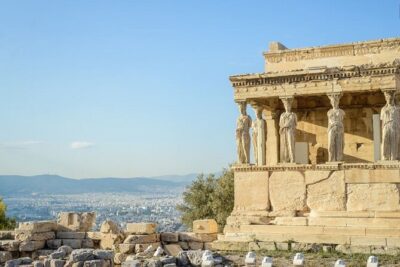
Acropolis and Parthenon Guided Walking Tour
Read our review →Acropolis, Parthenon & Acropolis Museum Guided Tour
Read our review →

Athens Scenic Electric Bike Tour with optional Acropolis visit
Read our review →Browse the lists this tour appears in