
Reviewed · ACROPOLIS HILL TOURS
Acropolis Guided Tour with Skip-the-Line Access
Sunset turns stone into a story.
This Acropolis guided tour gives you skip-the-line access and a licensed guide, so you spend less time stuck and more time seeing how the masterpieces connect. I also like the timing: doing the Sacred Rock in the evening changes the mood, and the city lights start to edge into your view. One thing to plan for, though, is walking over uneven marble and rock, plus stairs, so good grip shoes matter.
The route is tight, about 2 hours, and the group stays small (max 15), which helps you get actual explanations instead of a quick scroll of facts. You meet at Herodion Hotel, and the tour starts at 5:30 pm, then returns to the same meeting point.
In This Review
- Key highlights worth your attention
- Why the Acropolis feels different at 5:30 pm
- Skip-the-line access: what it means for your time
- What’s included, and how that affects value
- A smooth 2-hour loop across the Sacred Rock
- Stop 1: Acropolis hill, the Sacred Rock in context
- Stop 2: Propylaea, the grand gateway to Athena
- Stop 3: Temple of Athena Nike, wingless victory
- Stop 4: Parthenon, the Athens icon with real design clues
- Stop 5: Erectheion, myths, salt-water traces, and Karyatides
- Stop 6: Theatre of Dionysus, where civic drama took shape
- What to wear and expect on the hill
- Who this tour suits best
- Getting your bearings at the meeting point
- Should you book the Acropolis guided tour with skip-the-line access?
- FAQ
- What time does the Acropolis guided tour start?
- Where is the meeting point?
- How long is the tour?
- How much does the tour cost?
- Is a licensed tour guide included?
- Does it include skip-the-line access and admission?
- What group size is used?
- Is hotel pickup or drop-off included?
- What is the cancellation policy?
Key highlights worth your attention
- 5:30 pm timing for cooler air and a more dramatic feel over Athens
- Skip-the-line access so you keep moving toward the big sights
- Licensed guide who ties architecture to the Athenian story
- Small group size (max 15) for a better pace and easier questions
- All the main stops on the Acropolis, from the Propylaea to the Parthenon
Why the Acropolis feels different at 5:30 pm
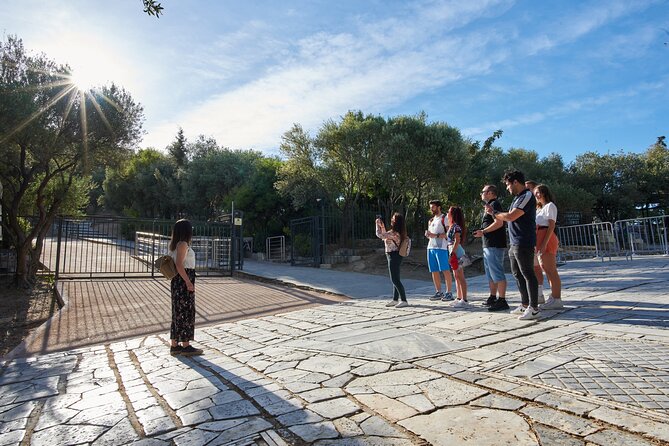
Timing is everything at the Acropolis. During the day, it can feel like a checklist. In the evening, you get softer light, longer shadows, and a sense that you’re standing in the center of Athens instead of just touring it.
At 5:30 pm, you’re in that sweet spot where the hill still feels active, but the worst heat is often fading. You’ll still be climbing, though. The Acropolis is marble, stone, and steps, and the surface can be slick or irregular. I’d treat comfortable shoes as a non-negotiable.
The other evening benefit is that the city starts to wake up below you. Even if the view isn’t the main focus, it’s there as a constant reminder that this was a living civic center, not a museum in the sky.
Other routes up the hill and around the Parthenon:
- Athens: Acropolis & up to 5 Archaeological Sites Combo Pass
★ 4.2 · 13,904 reviews - Athens: Acropolis, Parthenon & Acropolis Museum Guided Tour
★ 4.8 · 9,316 reviews - The Acropolis, Parthenon & Acropolis Museum Guided Tour
★ 4.7 · 8,493 reviews - Acropolis: Premium Acropolis and Parthenon Guided Tour
★ 4.8 · 5,208 reviews
Skip-the-line access: what it means for your time
“Skip-the-line” can mean different things on different tours, but here’s what matters: you’re not wasting your limited 2 hours fighting for entry. Since the tour includes acropolis ticket access, you’re set up to get through the main gate smoothly and then get to the monuments while the light is still working for photos and for your eyes.
Because the group is capped at 15, the flow usually feels calmer. You’ll spend time where it counts: walking the key buildings and hearing what they mean. A small group doesn’t magically erase crowds on the hill, but it keeps the experience from turning into a slow shuffle.
What’s included, and how that affects value
For $156.20 per person, you’re paying for three big things: a licensed tour guide, skip-the-line access, and your admission ticket. That combination is why this tour makes sense even though it’s only about 2 hours.
If you show up on your own, you’ll still see the same buildings, but you’ll likely miss the connections. This kind of guided visit helps you notice design choices, names, and symbols that you’d otherwise walk right past. And on the Acropolis, that is the whole game.
Also, this tour uses a mobile ticket, which is a practical win. You don’t have to juggle printed vouchers while climbing and stepping around in crowded stone paths.
A smooth 2-hour loop across the Sacred Rock
This is a “see the icons, understand what you’re looking at” format. The stops are focused, with short time windows that keep you moving. The benefit is you get a clear overview of how the site is laid out, plus a guided lens on each monument.
The pace is walk, look, listen, repeat. If you’re comfortable moving on stairs and uneven surfaces, it feels manageable. If you’re expecting a leisurely stroll with lots of sitting, you might feel a little rushed, especially at stops measured in minutes.
Below is what you can expect at each major stop, and what to watch for so the time feels worth it.
Stop 1: Acropolis hill, the Sacred Rock in context

You start with the Acropolis itself, the Sacred Rock of Athens. The hill’s name comes from acro (edge) and polis (city), and your guide will frame it as Athens’ most important reference point in ancient Greek culture.
This is where you set the mental model. The Acropolis wasn’t just about temples. It represented a high point of artistic and civic ambition in the 5th century BCE, especially during the Golden Age. The key is that the buildings you see were not scattered randomly. They were part of a program that tied power, belief, and identity together.
What I like here is that the introduction doesn’t feel like homework. It gives you a way to understand why the later sites, from entrances to altars to theatres, all fit into one big story.
Practical note: this is a hill. Even if the climb isn’t brutal, you will be on stone and marble. If you’re sensitive to stairs, keep an easy pace and plan to pause briefly when you need your breathing back under control.
A handful more Athens outings to compare
- Athens: Mythology of Delphi, Museum and Arachova Guided Tour★ 4.7 · 5,102 reviews
- Acropolis and Parthenon Guided Walking Tour★ 5.0 · 4,755 reviews
- Athens: Cape Sounio & Poseidon Temple Trip with Audio Guide★ 4.4 · 4,521 reviews
- Athens: Acropolis, Parthenon & Acropolis Museum Guided Tour★ 4.8 · 3,579 reviews
Stop 2: Propylaea, the grand gateway to Athena
Next up is the Propylaea, the monumental entrance to the sacred area dedicated to Athena. The Propylaea built by the architect Mnesicles is famous for its Pentelic marble and its avant-garde design.
This is a good stop for learning how the “approach” matters as much as the destination. The entrance is not just a door. It’s a statement that you’re crossing from everyday Athens into a space with religious and political meaning.
To the south-west, you’ll also have a view toward the rampart area where the Ionian temple of Apteros Nike, or Wingless Victory, sits. Even if you don’t fully examine it yet, your guide’s framing helps you spot it as part of the larger plan.
Stop 3: Temple of Athena Nike, wingless victory
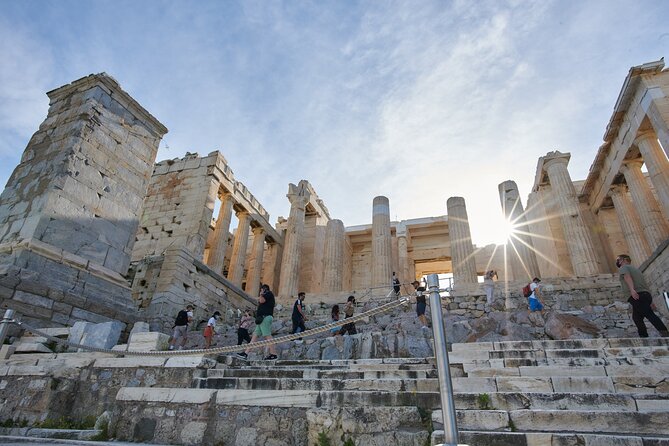
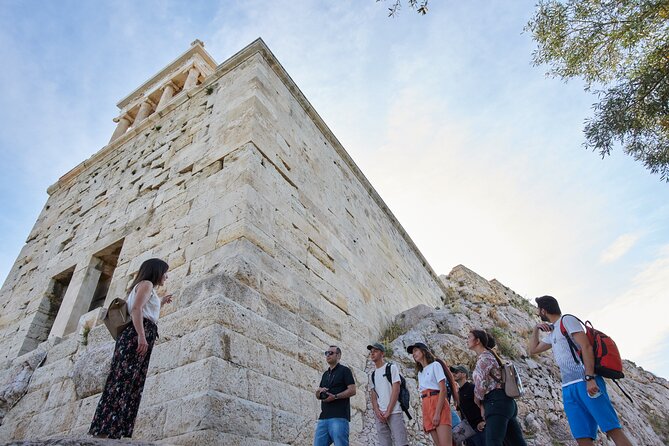
The Temple of Athena Nike is one of those places where the details become the fascination. Built between 426 and 421 BC by architect Kallikrates, it sat on a bastion on the southwestern edge of the Acropolis.
You’ll also hear how it replaced older temple remains preserved inside the bastion. That replacement matters because it shows the site evolved, even after the major works of the Golden Age.
The name Athena Nike, with the emphasis on Apteros, points to a specific choice: the statue of Athena Nike was wingless here. In most depictions, Nike usually has wings. In this case, it doesn’t, which is why the meaning shifts to wingless, Athena Apteros. It’s a small change with big symbolism, and it’s the kind of thing a guide is good at translating from architecture into meaning.
Stop 4: Parthenon, the Athens icon with real design clues
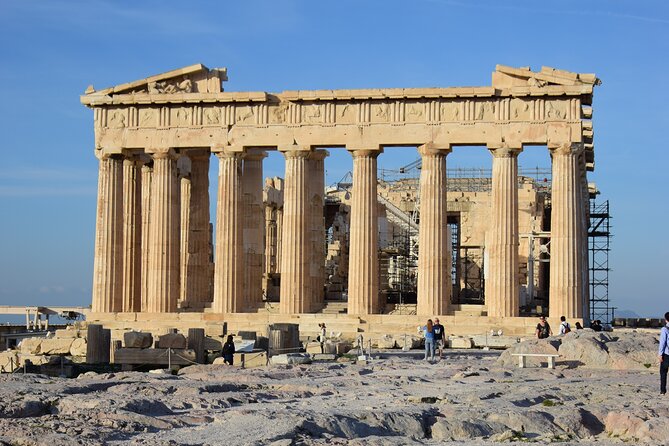
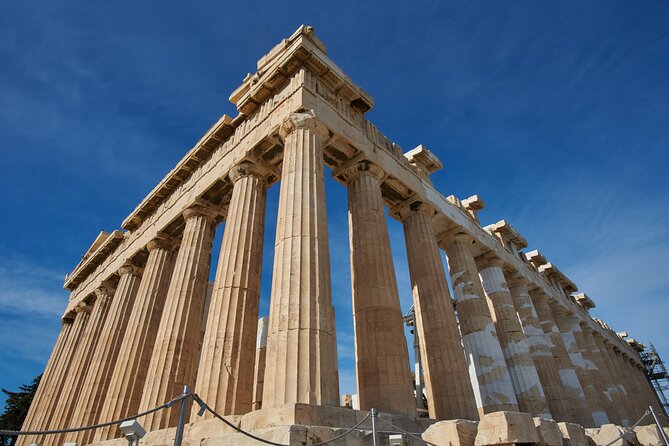
The Parthenon is the main event, and the tour gives it proper attention. You’ll spend about 30 minutes here, which is enough time to absorb the basics and then notice the design logic.
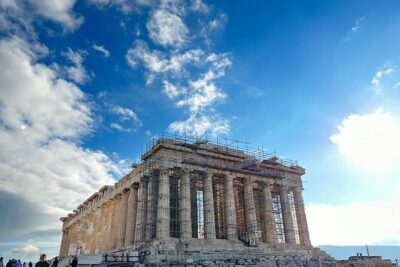
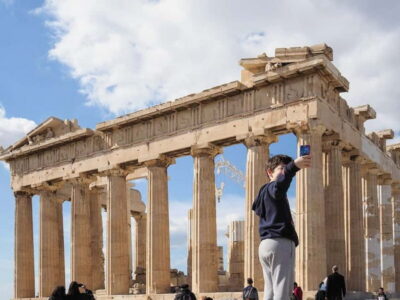
It was dedicated to Athena Parthenos, the Virgin, and built between 447 and 438 B.C.E. It’s Doric order, made almost exclusively of Pentelic marble, and it still reads like the international symbol of ancient Greek civilization.
Here are the specific design points worth clocking while you’re there:
- Doric temple layout: peripheral design with eight columns on each narrow side and seventeen columns on each long side
- Sculptural program: Doric metopes and triglyphs on the entablature, plus an Ionic frieze on the walls of the cella
- The story scenes: east has Gigantomachy, west has Amazonomachy, south has Centauromachy, north includes scenes from the Trojan War
Don’t worry if you can’t memorize all that on the first pass. What matters is that your guide helps you connect the visuals to the themes: victory, order, mythic identity, and the power of Athens to tell its own story.
If you’re short on time, focus on the scale. The Parthenon dominates the hill for a reason. It’s not just a temple, it’s the centerpiece of the whole civic program.
Stop 5: Erectheion, myths, salt-water traces, and Karyatides
The Erectheion is elegant and oddly human-feeling compared with the Parthenon. It was erected between 421 and 406 BC and built in Pentelic marble, with different stones used for elements of its frieze and foundations.
Your guide will explain the naming: Erechtheion is tied to Erechtheus, the mythical king of Athens, who was worshipped. That matters because the Erectheion is not just about aesthetics. It’s about tying place to myth.
One especially memorable detail is the stone paving of a propylon area, which people believed preserved traces made by Poseidon’s trident when it hit the ground and produced salt water. That kind of legend is exactly why this site doesn’t feel like a collection of ruins. It feels like a map of belief.
Then there’s the Karyatides. One doorway opens onto the porch of the Karyatides, a structure supported by six female statues instead of columns. You might see that the statues are represented elsewhere too, but on the building itself you’ll be looking at the right place where they belong in the story.
This stop is shorter than the Parthenon, but it’s often the one that sticks with people because it feels different. You’re used to temples with columns. Here, the architecture is literally supported by figures.
Stop 6: Theatre of Dionysus, where civic drama took shape
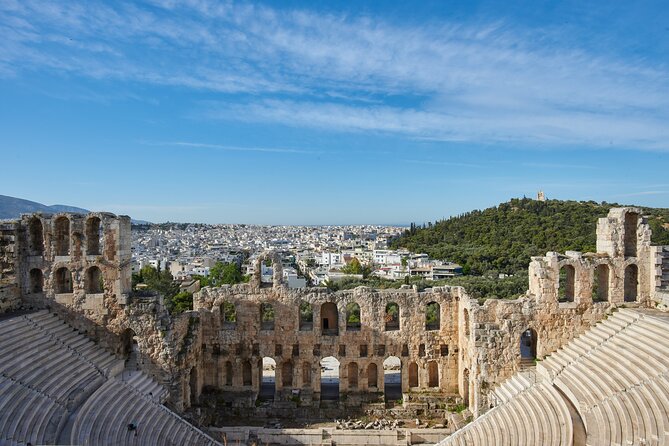
You finish with the Theatre of Dionysus, built on the south slope of the Acropolis hill. It began as part of the sanctuary of Dionysus Eleuthereus, and it hosted the City Dionysia.
You’ll learn that the first orchestra terrace was constructed around the mid- to late-sixth century BC. It’s a reminder that the Acropolis wasn’t only temples and processions. It was also a stage for public life.
What I like about ending here is the shift in energy. You started in symbolic architecture, and you end in performance space. It’s like the site gets a heartbeat when you think about how many people gathered to watch, argue, and celebrate shared stories.
What to wear and expect on the hill
The Acropolis can feel steeper than it looks because you’re walking across marble and rock with steps. One of the clearest pieces of advice is to wear comfortable shoes with good grip on the soles.
The incline and stairs are gradual, but gradual does not mean flat. Plan for steady steps and short pauses if you need them. If you’re traveling in summer, remember that it can still feel hot even in the evening, especially if the day ran long.
Also keep an eye on your footing as the light angle changes. Shadows can make edges look softer, but they can also hide where you need to step carefully.
Who this tour suits best
This tour fits best if you want:
- A guided overview of the main Acropolis buildings without a full day commitment
- Licensed commentary focused on architecture and meaning
- A schedule timed for late-day light and a cooler start compared with earlier hours
It’s especially good for first-timers. If you’ve seen Athens before and want a deeper architectural route, the time limits might feel short, but the sequence gives you a great framework.
If you have mobility concerns that make stairs tough, you might want to think twice because this is a hill visit with multiple stops and short walking segments.
Getting your bearings at the meeting point
You meet at Herodion Hotel, Rovertou Galli 4, Athina 117 42, Greece. The start time is 5:30 pm, and the tour ends back at the meeting point.
The meeting point is near public transportation, which helps if you’re coming in from elsewhere in Athens. And since hotel pickup and drop-off are not included, you’ll be responsible for getting yourself to the start.
Because the tour is mobile-ticket based, have your ticket ready on your phone when you arrive. Then you can focus on the guide and the hill rather than the scramble.
Should you book the Acropolis guided tour with skip-the-line access?
I’d book it if you want the Acropolis in the evening with a licensed guide and you care about not wasting your time waiting. The skip-the-line access plus ticket included setup makes the price feel more reasonable for a 2-hour visit, especially if you’re only in Athens for a short stretch.
I might skip it if you want a slower, more flexible pace, or if uneven marble and stairs are a major problem for you. In that case, you may prefer a self-paced option where you can linger or rest without moving on a group schedule.
If your priority is seeing the Parthenon, understanding the entrances and temples, and finishing with the Theatre of Dionysus with a guide who can tie it together, this is a strong choice.
FAQ
What time does the Acropolis guided tour start?
The tour starts at 5:30 pm.
Where is the meeting point?
You’ll meet at Herodion Hotel, Rovertou Galli 4, Athina 117 42, Greece.
How long is the tour?
The duration is about 2 hours.
How much does the tour cost?
The price is $156.20 per person.
Is a licensed tour guide included?
Yes, a licensed tour guide is included in the price.
Does it include skip-the-line access and admission?
Yes. You get skip-the-line Acropolis access, and the Acropolis ticket is included.
What group size is used?
The group has a maximum of 15 travelers.
Is hotel pickup or drop-off included?
No, hotel pickup and drop-off are not included.
What is the cancellation policy?
You can cancel for free up to 24 hours before the experience start time for a full refund. If you cancel less than 24 hours before, you won’t get a refund.
Latest from under the Acropolis




Acropolis Hill Tours, compared.
Acropolis & up to 5 Archaeological Sites Combo Pass
Read our review →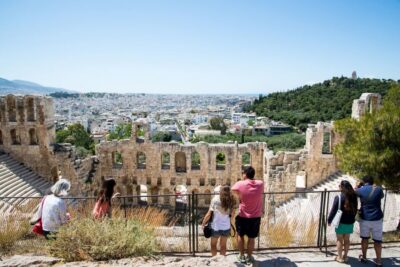
Acropolis, Parthenon & Acropolis Museum Guided Tour
Read our review →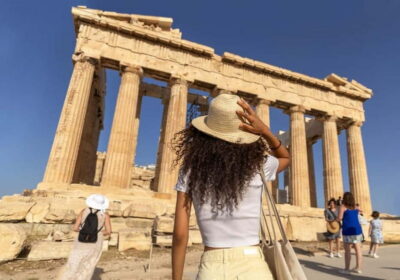
The Acropolis, Parthenon & Acropolis Museum Guided Tour
Read our review →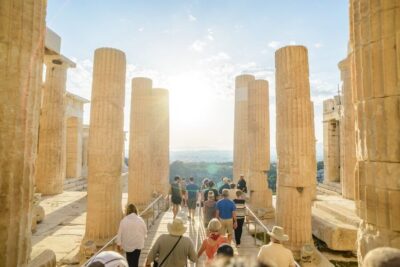
Acropolis: Premium Acropolis and Parthenon Guided Tour
Read our review →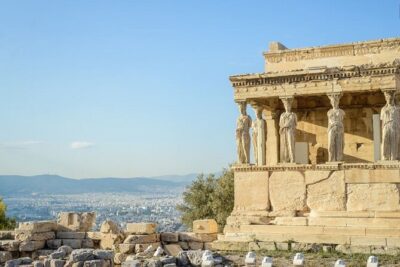
Acropolis and Parthenon Guided Walking Tour
Read our review →Acropolis, Parthenon & Acropolis Museum Guided Tour
Read our review →

Athens Scenic Electric Bike Tour with optional Acropolis visit
Read our review →Browse the lists this tour appears in