
Reviewed · ACROPOLIS HILL TOURS
Acropolis and Agora Tour: The Rise & Fall of Democracy
Athens gets way more interesting when you watch democracy at work. This Acropolis and Agora tour follows the thinkers, myths, and public life that helped shape Athenian government. You start on the big hill and then walk into the city’s civic center, seeing the sights through a democracy lens. Small-group size and expert guiding make the details easier to catch and remember.
Two things I like a lot: first, the tour connects monuments to how Athenians actually argued, voted, performed, and judged. Second, you leave with a fun ancient Athens map that helps you keep the story going after the tour ends. You’re also offered mobile tickets and an English-language guide, so the day stays smooth.
One consideration: the advertised price does not include site entry. You should plan for entry fees at about €50 per person on top of the tour cost, and tickets are non-refundable once purchased.
In This Review
- Key highlights that make this tour click
- A democracy lens for the Acropolis, not just postcard views
- Meeting point, timing, and how the small-group pace feels
- Acropolis start: Athena’s hill and the Parthenon’s meaning
- Theatre of Dionysus Eleuthereus and Temple of Athena Nike
- Erectheion and Parthenon time: you still get the key beats
- Ancient Agora: democracy as daily business
- How the guide and stories shape what you take home
- Price and entry fees: getting real value for your time
- Who should book this tour, and who might want a different fit
- Should you book the Acropolis and Agora: Rise and Fall of Democracy tour?
- FAQ
- What is the tour duration?
- What time does the tour start, and where does it end?
- Is the tour offered in English?
- How big is the group?
- Are entry fees included in the price?
- Do I need to bring an ID?
- Are bags or strollers allowed at the Acropolis?
- Is transportation included?
- What’s the cancellation and weather policy?
Key highlights that make this tour click
- Democracy lens for the Acropolis and the Ancient Agora
- Acropolis monuments in context (Parthenon, Erechtheion, Athena Nike, Dionysus Theatre)
- Small group capped at 15 for easier questions and pacing
- Expert certified guide who ties mythology and civic life together
- Ancient Athens map you can use after the tour
A democracy lens for the Acropolis, not just postcard views

If you want Athens to feel less like a checklist, this is the right format. Instead of treating the Acropolis as a pile of famous stones, you’re nudged to see it as the religious and cultural backdrop for public life. Athena is everywhere in the story, and so is the idea that citizens built a system where ideas mattered.
The tour also does something useful: it connects performance and politics. You visit the Theatre of Dionysus Eleuthereus, tied to the first performances of major playwrights, and that matters because drama was not just entertainment. In Athens, public speech and public thinking were part of daily identity. When you then reach the Agora, the message tightens. This was a city where meetings, courts, commerce, and religion overlapped in the same spaces.
That mix is the real value. You get architecture, but you also get why people showed up. It’s not random myth storytelling either, because the monuments are tied to worship, civic power, and everyday institutions.
Other walks through the ancient Agora:
- Athens: Agora and Hephaistos Temple Entrance Ticket
★ 4.0 · 449 reviews - Athens: Ancient Agora E-Ticket and Audio Tour
★ 3.9 · 413 reviews - Athens: Roman Agora & Ancient Agora E-ticket & 2 Audio Tours
★ 4.1 · 107 reviews - Acropolis & Ancient Agora Guided tour included all Entrances
★ 4.9 · 102 reviews
Meeting point, timing, and how the small-group pace feels
You meet at Dionysiou Areopagitou 45 at 9:00 am and finish at the Ancient Agora of Athens. The tour is about 3 hours, designed as a compact route that hits the main political and religious nodes without dragging you through the city all day.
The group is kept to a maximum of 15 people, which is big enough to feel lively but small enough to ask questions. This is where the small-group size really helps. You’re not lost in a crowd, and you can follow the guide’s threads as they connect monuments to Athens’ political life.
You’ll also want to know what’s not provided: entry tickets, meals, and transfer from or to the meeting point. The good news is you can pre-purchase entry tickets for you, and your ticket is handled as a mobile ticket. If you like reducing uncertainty on travel days, that’s a real win.
Acropolis start: Athena’s hill and the Parthenon’s meaning
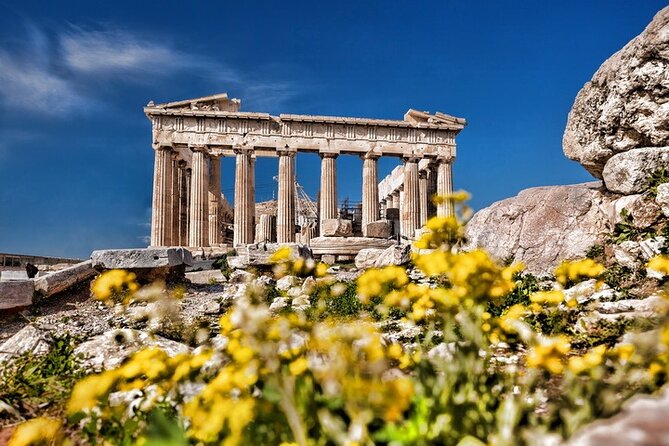
The tour begins at the Acropolis, often the first stop people rush through on their own. Here, you slow down just enough to see how the sanctuary works as a statement. The Acropolis is described as the greatest sanctuary of ancient Athens, dedicated primarily to Athena. You spend about an hour here, with a focus on major monuments that shaped how later art and culture remembered classical Greece.
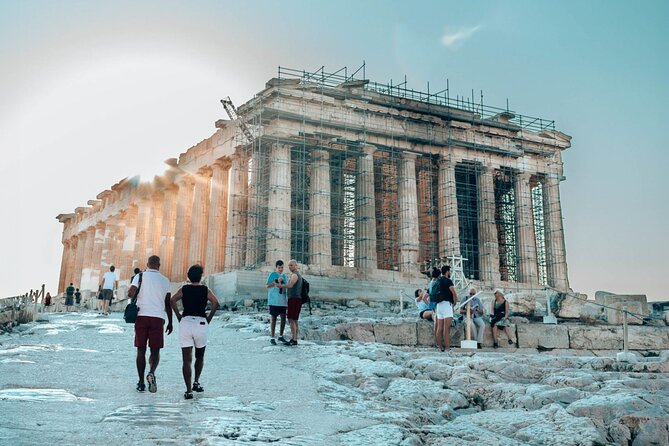
You also get a guided way of looking at the Parthenon area. Even if you’ve seen photos, you’ll likely notice how the tour keeps pointing you toward intention. The Parthenon is tied to Athena Parthenos, Athena the Virgin, and you’re told it was built in the mid-5th century BCE. You also hear about its architectural role, including how it fits into the Doric order, described as the simplest of the classical Greek architectural styles.
The Acropolis can be visually overwhelming. What makes this stop work is the structure. You’re not just looking for what’s famous. You’re learning what these spaces were for, and how they connected to the identity of the city at its height.
One practical note that affects your comfort: the Acropolis does not allow strollers, backpacks, or big bags. That rule can change how you pack your day, especially if you’re traveling with gear.
Theatre of Dionysus Eleuthereus and Temple of Athena Nike
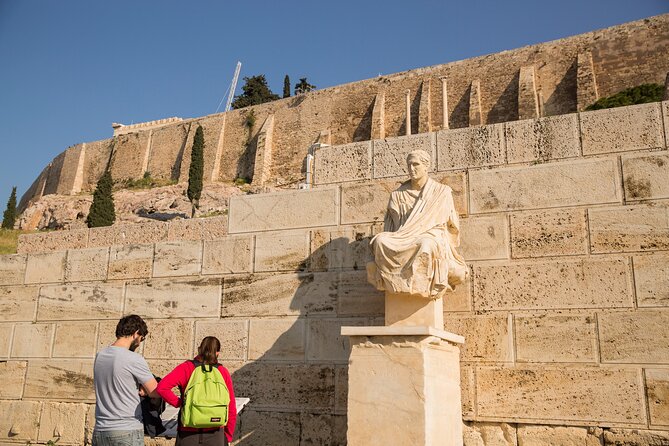
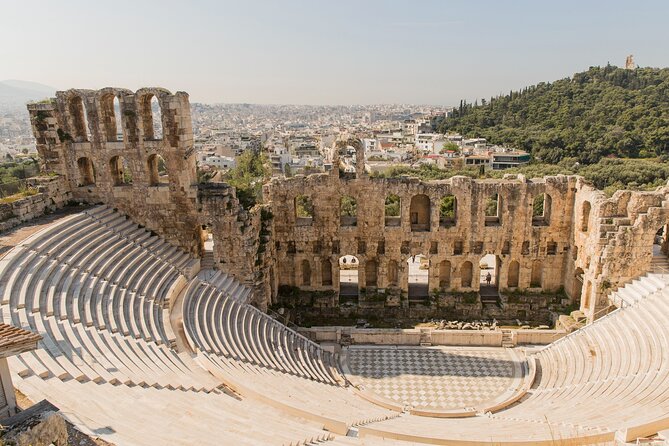
Next comes a quieter but important shift in tone. At the Theatre of Dionysus Eleuthereus, you’re reminded that Dionysus was associated with wine and grape harvest, and this theatre is linked to Athens’ oldest founding in the city. The theatre is also where the first performances of works by Aeschylus, Sophocles, Euripides, and Aristophanes are tied in the tour narrative.
This stop is more than a history lesson. It makes a point about public life and civic culture. If you’re looking at democracy as only voting, you miss half the picture. Athens also trained citizens through shared public experiences like theatre, where themes and arguments were brought to the public square in a memorable form.
Then you move to the Temple of Athena Nike. You’re told it’s dedicated to Athena and Nike, with Nike described as the goddess of victory in Greek mythology. The cult statue at the temple is said to have had no wings so victory would not leave Athens. That detail is symbolic, but it’s exactly the kind of connection that helps you read the city. The stone isn’t separate from beliefs. It’s built out of them.
Erectheion and Parthenon time: you still get the key beats

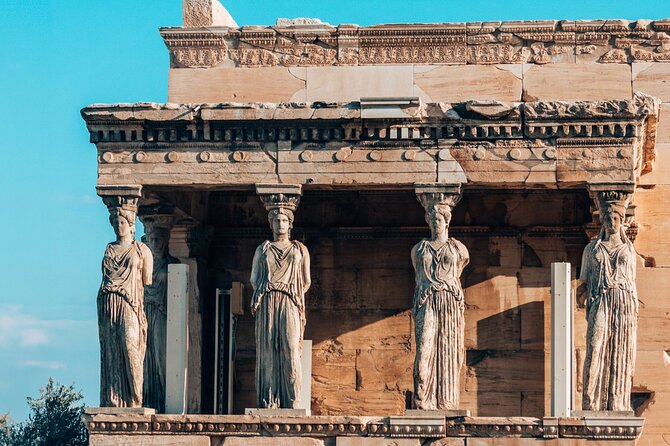
After the Nike temple, you reach the Erectheion for about 15 minutes. The tour explains it was built to house an ancient wooden cult statue of Athena. This matters because it’s a reminder that religious practice shaped architecture, even when the results were later famous for their stone beauty.
The schedule then brings you into the Parthenon stop for about 30 minutes. That timing is deliberate. You get enough time to take photos, read the guide’s points, and actually connect the dots, without needing a whole day on the Acropolis alone. If you’re used to guided tours that feel rushed, this pacing is one of the reasons it works.
That said, this is still a compact route. If you want to linger for longer at each corner, you might feel the time pressure. The upside is you’re not stuck circling the same hill. You carry what you learned into the civic heart of Athens.
Other routes up the hill and around the Parthenon:
- Athens: Acropolis & up to 5 Archaeological Sites Combo Pass★ 4.2 · 13,904 reviews
- Athens: Acropolis, Parthenon & Acropolis Museum Guided Tour★ 4.8 · 9,316 reviews
- The Acropolis, Parthenon & Acropolis Museum Guided Tour★ 4.7 · 8,493 reviews
- Acropolis: Premium Acropolis and Parthenon Guided Tour★ 4.8 · 5,208 reviews
Ancient Agora: democracy as daily business

Then you drop down into the Ancient Agora for about 30 minutes. This is where the tour title starts to make sense. The Agora is framed as the heart of ancient Athens, tied to political, commercial, administrative, and social life. It’s also described as the religious and cultural center and the seat of justice.
That one stop can reshape how you understand the whole day. The Acropolis gives you the ceremonial and symbolic side of Athens. The Agora shows you the functional side. This is where people gathered, made decisions, handled business, worshipped, and settled disputes. Democracy isn’t abstract here. It’s about where people went and what they did there.
To cap that theme, you also stop at the Temple of Hephaestus, described as one of the best-preserved ancient temples. The tour notes that it was a place of worship for Hephaestus, protector of metallurgists, and for Athena Ergani, protector of potters and cottage industries. That’s a smart choice because it broadens the idea of citizenship. It’s not just politics and speeches. It’s also work, crafts, and community roles.
When those connections click, the Ancient Agora feels like a living system rather than a set of ruins. That’s the experience’s main payoff.
How the guide and stories shape what you take home
A tour is only as good as the person guiding you through it. Here, the tour is run by an expert certified guide, and that shows in how the day is taught: clear explanations, patience, and adapting to different kinds of groups.
I especially like the way the guide role is reflected in multiple named instructors tied to this operator, including Athena of Alternative Athens, Demi, Christina, Kimon, and Vassia. The common theme is that questions get answered directly, and the pacing flexes depending on what the group wants to know. If you like conversation and follow-up, this format is built for that.
There’s also a practical piece that matters in Athens. The guide gives you context you can reuse. You can stand in front of a monument and instantly know what to notice. That turns a first-time visit into something you can actually remember later.
Finally, you get a fun ancient Athens map. It’s not just a souvenir. It helps you connect the stops in your head, and it gives you an easy way to revisit the story on your own after the tour ends at the Agora.
Price and entry fees: getting real value for your time
The tour costs $67.43 per person, and the duration is about 3 hours. On its face, that’s a fair price for a guided route through two of Athens’ top sites. The key detail is what’s not included: entry fees at about €50 per person.
So what are you really paying for? You’re paying for the guide and the structure. Admission tickets are a separate line item because each site charges independently. If you’re comparing to a DIY day, the value comes down to whether you want someone to connect myth, architecture, and civic life fast and clearly. This tour is built for that kind of guided understanding.
Also keep in mind that the Acropolis has restrictions on strollers and bags, so having a plan for what you carry can keep the day from becoming stressful. The more you can travel light, the easier it is to follow the group and enjoy the story without friction.
If you want maximum value, budget for both the tour price and the site entry fees. Then you can enjoy the full experience without that mid-day surprise.
Who should book this tour, and who might want a different fit
This tour is a great match if you’re the type of traveler who likes ideas, not just sights. You’ll likely enjoy it if you want Athens to make sense through the rise and fall of democratic life, with mythology and architecture acting as clues.
It also fits well for first-timers who want a high-impact route. You hit the Acropolis, the Theatre of Dionysus Eleuthereus, the Temple of Athena Nike, the Erectheion, the Parthenon, and then the Agora and the Hephaestus temple. In about three hours, you get the backbone of the city.
If you strongly prefer a slower pace where you can sit and linger at every monument, you might feel the schedule moves quickly. In that case, consider pairing this with extra time on your own before or after. The tour ends at the Ancient Agora, so your follow-up exploring can be right there.
Should you book the Acropolis and Agora: Rise and Fall of Democracy tour?
If you want Athens to feel like a coherent story, I think this is a smart booking. The democracy lens is the point, and the itinerary matches it by moving from Athena’s sanctuary to the spaces where public life happened. With a small group capped at 15 and expert certified guiding, it’s easier to ask questions and actually connect the monuments to ideas.
Book it if you’re excited by myth tied to civic life and you like learning while you walk. Skip or reconsider if the extra €50 entry fees would be a problem for your budget, or if you need a very slow, do-it-at-your-own-tempo tour.
If you fit the first group, this is one of the more satisfying ways to see Athens, not just once, but in a way you can keep thinking about.
FAQ
What is the tour duration?
The tour is approximately 3 hours.
What time does the tour start, and where does it end?
It starts at 9:00 am and ends at the Ancient Agora of Athens.
Is the tour offered in English?
Yes, the tour is offered in English.
How big is the group?
This tour has a maximum of 15 travelers.
Are entry fees included in the price?
No. Entry fees to the attractions are not included. The listed entry fees are €50 per person, and you can request that tickets be pre-purchased for you.
Do I need to bring an ID?
If you are under 25, you need an ID card or passport for possible discounts.
Are bags or strollers allowed at the Acropolis?
No. Strollers, backpacks, and big bags are not allowed at the Acropolis.
Is transportation included?
Meals and transfer to or from the meeting point are not included.
What’s the cancellation and weather policy?
You can cancel for a full refund if you cancel at least 24 hours before the experience starts. The experience requires good weather, and if it is canceled due to poor weather, you are offered a different date or a full refund.
Latest from under the Acropolis






Acropolis Hill Tours, compared.
Acropolis & up to 5 Archaeological Sites Combo Pass
Read our review →
Acropolis, Parthenon & Acropolis Museum Guided Tour
Read our review →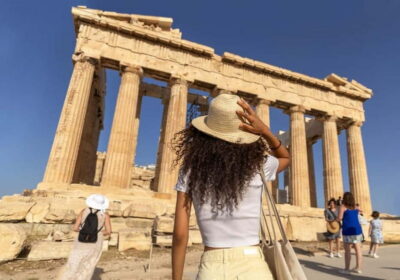
The Acropolis, Parthenon & Acropolis Museum Guided Tour
Read our review →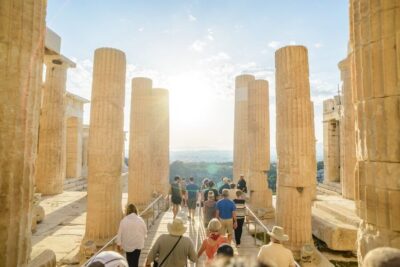
Acropolis: Premium Acropolis and Parthenon Guided Tour
Read our review →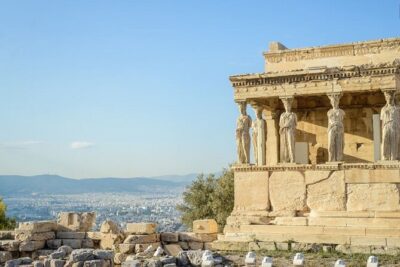
Acropolis and Parthenon Guided Walking Tour
Read our review →Acropolis, Parthenon & Acropolis Museum Guided Tour
Read our review →

Athens Scenic Electric Bike Tour with optional Acropolis visit
Read our review →Browse the lists this tour appears in