
Reviewed · 7-DAY EXPERIENCES
7 Days Dream Castles of the Peloponnese Tour
Castles and caves in one tight week. This Peloponnese tour stitches together major fortified sites, with Venetian forts and a private, English-speaking driver helping you move smoothly from one wow stop to the next.
I like how the itinerary gives you two really different kinds of highlights. First, the Diros Caves boat ride is a break from stone-and-stairs sightseeing. Second, UNESCO-listed Mystras delivers a full-on Byzantine citadel feel without needing extra guesswork. The main drawback to consider: the price is high, and while transportation and some fees are included, you still need to budget for site entrance fees and meals.
In This Review
- 7 Days of Castle Hopping, with Athens and Delphi as the bookends
- Key highlights worth planning around
- Day 1: Corinth Canal to Palamidi Fortress and Bourtzi seafood
- Day 2: Olive culture in Sparta, then Mystras’ Byzantine citadel
- Day 3: Monemvasia, the walled Gibraltar-of-the-East feeling
- Day 4: Diros Caves by boat, then Mani tower houses at Vatheia
- Day 5: Kalamata, Koroni, and Pylos Niokastro for a Messinia fortress sweep
- Day 6: Methoni and Chlemoutsi fortresses, then Nafpaktos’ Venetian harbor side
- Day 7: Nafpaktos morning and Delphi Museum, then returning to Athens
- What you’re paying for, and what you still need to budget
- Comfort and pacing for a week of stairs, boats, and long drives
- Should you book this Peloponnese castle and Delphi week?
- FAQ
- How long is the Peloponnese Dream Castles tour?
- Where does the tour start and end?
- What is the price per person?
- Is pickup offered?
- Is this a private tour?
- What transport is included?
- Are meals included?
- Are entrance fees included?
- Does it use a mobile ticket?
- What is the cancellation policy?
- Is the tour suitable for most travelers?
7 Days of Castle Hopping, with Athens and Delphi as the bookends
This is the kind of trip where you stop at places that look like they belong in a history textbook, but you still get real travel time between them. You start in Athens, then work your way through the Peloponnese’s strongest “layers of power,” from Venetian sea forts to Byzantine strongholds and Frankish defenses.
One more thing I appreciate: this isn’t just one city and a bunch of photos. You get variety baked in, including an underground natural wonder, tower-house villages in the Mani region, and a day built around Delphi on your return. If you enjoy seeing how different cultures used geography, cliffs, and coasts, this route makes sense fast.
Key highlights worth planning around
- Corinth Canal crossing early on, a quick, iconic setup before castle country
- Palamidi Fortress views over Nafplio and the Argolic Gulf, plus an old-town descent
- Mystras UNESCO citadel near Sparta, a Byzantine site that’s made for wandering
- Diros Caves subterranean lake with a boat ride, a natural contrast to forts
- Mani tower-house villages like Vatheia, where the architecture is the story
- Delphi finale that ties the whole trip back into Greece’s ancient mythology
Before you book, here is what else runs from Athens:
- Athens: Acropolis & up to 5 Archaeological Sites Combo Pass
★ 4.2 · 13,904 reviews - Athens: Acropolis, Parthenon & Acropolis Museum Guided Tour
★ 4.8 · 9,316 reviews - The Acropolis, Parthenon & Acropolis Museum Guided Tour
★ 4.7 · 8,493 reviews - Athens: Cape Sounion & Poseidon Temple Sunset Half-Day Trip
★ 4.8 · 8,241 reviews
Day 1: Corinth Canal to Palamidi Fortress and Bourtzi seafood
Your first day is built to get you out of Athens quickly, then rewarded with instant scenery. You’ll cross the Corinth Canal as a symbolic start point, and it’s listed with free admission. It’s short, but it gives you that strong first feeling of Greece as a place where geography drives history.
Next comes Palamidi Fortress in Nafplio. It’s perched above town, and you’re going for views of the Argolic Gulf, then you’ll descend into Nafplio’s older streets with neoclassical mansions. Plan on walking, and wear shoes you trust. Fortresses like this tend to mean steps and uneven surfaces, even when the stop is only about an hour.
In the afternoon you head to Bourtzi, the fortress on a small islet in the harbor. It’s Venetian-built in origin, and the day ends with the easy win of a seaside taverna meal. If you like pairing sightseeing with something simple and local, this is a good rhythm.
Day 2: Olive culture in Sparta, then Mystras’ Byzantine citadel
Day 2 starts with something you might not expect in a “castle tour,” which is exactly why it works. The Museum of the Olive and Greek Olive Oil in the Sparti area gives context for one of Greece’s biggest cultural exports. You get to connect daily life, technology, and history, not just fortifications.
Then you shift to the Acropolis of Ancient Sparta. Much of the larger city is gone, but the archaeological site still gives you a clear sense of Spartan military presence and civic life. This is a “see what remains and imagine the rest” kind of stop, with a focused time window.
The day’s main anchor is Mystras, a UNESCO-listed Byzantine citadel near Sparta. You’ll explore medieval ruins and take in the layout that once supported a whole settlement. Mystras is the kind of place where you benefit from slowing down. Even without a licensed site guide included, you can still read the walls and elevations, then let the overall picture form as you walk.
Day 3: Monemvasia, the walled Gibraltar-of-the-East feeling
On Day 3 you go south toward Monemvasia, described as the Gibraltar of the East. This is a place built for wandering because the town is fortified and entered through its only gate. Once inside, the narrow-cobbled streets and stone-built mansions keep you moving at a slower, more thoughtful pace.
Monemvasia’s main appeal here is the combination of scale and texture. It feels like you’re stepping into a compact historical world rather than passing through a normal modern town. Expect to spend your time walking and looking closely at Byzantine churches and the way the streets and buildings fit together.
If you’re the type who likes to get your bearings fast and then enjoy the slow stroll, this is one of the better days on the route. The tradeoff is that you’ll want comfortable shoes and the patience to enjoy small turns, not just big monuments.
Day 4: Diros Caves by boat, then Mani tower houses at Vatheia
Day 4 is where the itinerary becomes a two-act show: underground nature first, then rugged human architecture.
You leave Monemvasia and head to the Caves of Diros, one of Greece’s most spectacular natural wonders. You take a boat ride through a subterranean lake, then you watch stalactites and stalagmites. This is the day to shift gears mentally. Fortresses come later, and the cave experience resets your sense of place.
After that, you continue into the Mani Peninsula, known for tower houses and rugged terrain. You’ll visit the fortified village of Vatheia, where the stone architecture is the main attraction. This is the point where you start seeing how families and communities shaped themselves around defense and visibility.
The day ends with an overnight stay in the Mani region, so you get a chance to let the area sink in beyond a quick photo stop. For people who want real “time in a place,” not just checkpoints, this setup feels right.
Same hours, spent a different way in Athens:
- Acropolis: Premium Acropolis and Parthenon Guided Tour★ 4.8 · 5,208 reviews
- Athens: Mythology of Delphi, Museum and Arachova Guided Tour★ 4.7 · 5,102 reviews
- All Day Cruise -3 Islands to Agistri,Moni, Aegina with lunch and drinks included★ 5.0 · 4,958 reviews
- Athens, Piraeus, and Coastline: Blue Hop-On Hop-Off Bus★ 3.9 · 4,849 reviews
Day 5: Kalamata, Koroni, and Pylos Niokastro for a Messinia fortress sweep
Day 5 keeps the coast and fort theme going, focusing on Messinia. You start with a short stop at Kalamata Castle, dated to the 13th century. It’s brief, but you get panoramic views of the Messinian Gulf, and those views are often the payoff for quick castle moments.
Then you go to Koroni Castle, a well-preserved Venetian fortress on the southern tip of the Peloponnese. Since it’s perched on a hill, it tends to reward walking a bit and taking in the angle between sea and stone.
Next is Pylos, with emphasis on its naval story. You explore Niokastro, the “New Castle,” built by the Ottomans in the 16th century, and it now houses an archaeological museum. That museum element helps turn the stop from a pure exterior photo mission into a “connect the dots” moment. Even if the museum time feels limited, it gives you a way to interpret what you’re seeing outside.
Day 6: Methoni and Chlemoutsi fortresses, then Nafpaktos’ Venetian harbor side
This day reads like a greatest-hits collection of Peloponnesian fortification styles. You start at Methoni Castle, a Venetian-built fortress from the 13th century. The stop is about an hour, and it’s framed as a well-preserved seaside stronghold, which usually means you’ll get strong views while staying close to the water.
Then you continue north to Chlemoutsi Castle, a Frankish fortress from the 13th century. It sits on a strategic hill, and you walk massive stone walls. This is a different flavor from the Venetian sites. You’re looking at how European powers adapted their own fortress logic to this terrain.
In the afternoon you cross the Rio-Antirrio Bridge and arrive in Nafpaktos, with a Venetian harbor feel. You visit Nafpaktos Castle, noted for playing a significant role historically. It’s a fitting place to end the “forts tour mode” and switch back to a seaside town vibe.
If you enjoy mixing architecture with atmosphere, Nafpaktos is a good match for the final stretch before Delphi.
Day 7: Nafpaktos morning and Delphi Museum, then returning to Athens
Your last day is built around a transition back toward the Athens return. You start with a leisurely morning in Nafpaktos, then you head to Delphi Archaeological Museum, which is listed as about 1.5 hours.
From there, you continue to Delphi itself, home of the Oracle of Delphi, where Pythia delivered prophecies. Your route is essentially a logical storyline: end with the ruins and the mythic framework Greece is famous for, then make it back to Athens by evening.
This structure is a smart way to avoid a late-trip letdown. Instead of saving Delphi for a rushed first day when you’re still tired from travel, you experience it after a week of learning how power and geography shaped Greek lands.
What you’re paying for, and what you still need to budget
The listed price is $4,389.34 per person for this 7-day private tour. That’s not small money, so here’s how I think about value using what’s included.
On the plus side, you get air-conditioned vehicle, WiFi on board, and private transportation with an English-speaking driver. You also get “all fees and taxes” included, plus pickup is offered, and the tour uses a mobile ticket. Group discounts are also mentioned, which can help if you can travel with others.
What’s not included matters for planning:
- Entrance fees to the sites are not included (and the tour lists them that way for many stops).
- Meals and personal expenses are not included.
- Licensed tour guides on sites are not included, so you rely on the driver and your own exploration at each location.
- Hotel city tax is not included.
My practical advice: look up the likely entrance fees for the big-ticket stops you’ll care about most, then add a daily meal budget. If you do that, the total cost becomes much easier to judge.
Comfort and pacing for a week of stairs, boats, and long drives
This itinerary is active in the “moving” sense, not just the “walking museum” sense. You’re doing long drives between regions, and the castles tend to involve climbing and uneven surfaces. The Diros Caves stop includes a boat ride, which is a real change of pace and not dependent on the weather the same way open-air sites are.
Because it’s private, you’re not sharing the van with strangers. That matters on long drive days, especially if you need restroom breaks, snacks, or want to adjust timing slightly based on what you’re seeing.
One more practical note: the tour includes WiFi on board and air-conditioning, which helps a lot in hot months. Still, bring a layer. Vehicles can cool hard, and cave trips can feel cooler than you expect.
Should you book this Peloponnese castle and Delphi week?
I’d book this if you want a concentrated Peloponnese “great forts and legends” route and you like mixing architectural styles. It’s especially strong for people who care about how different powers used coastlines and heights, and it’s balanced with variety, from underground caves to tower-house villages and then Delphi’s mythic finale.
I’d pause and rethink if you dislike adding extra costs for entrance fees and meals. Also, if you want a licensed expert guiding every site inside the walls, you should plan for self-guided time since site guide fees are not included.
If you’re looking for a well-supported private drive with an English-speaking driver, plus a route that actually changes scene every day, this is a solid bet.
FAQ
How long is the Peloponnese Dream Castles tour?
It is approximately 7 days.
Where does the tour start and end?
The tour is based in Athens, Greece, and you arrive back in Athens by evening on the last day.
What is the price per person?
The price is listed as $4,389.34 per person.
Is pickup offered?
Yes, pickup is offered.
Is this a private tour?
Yes. It is a private tour, and only your group participates.
What transport is included?
You get air-conditioned vehicle transportation, with WiFi on board, and private transportation with an English-speaking driver.
Are meals included?
Meals are not included. Breakfast is optional as part of the package, and hotel city tax is also not included.
Are entrance fees included?
Entrance fees to the sites are not included.
Does it use a mobile ticket?
Yes, the tour includes a mobile ticket.
What is the cancellation policy?
You can cancel up to 6 days in advance for a full refund. For a 50% refund, cancel 2 to 6 days before the experience. If you cancel less than 2 days before, no refund is provided. Cut-off times are based on local time.
Is the tour suitable for most travelers?
The information provided says most travelers can participate.
Latest from under the Acropolis




7-Day Experiences, compared.
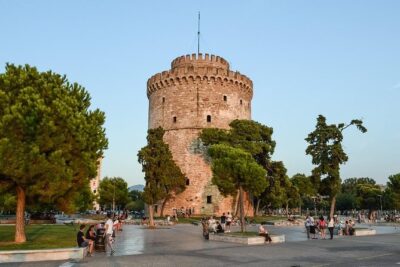
7-Day Northern Greece Tour – Meteora, Kastoria & Thessaloniki
Read our review →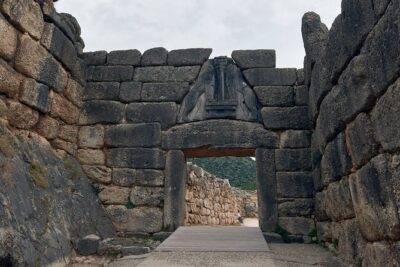
Best of Greece: 7-Day Tour to Real Greece of the Peloponnese, Delphi and Meteora
Read our review →
7-Day Grand Tour: Olympia, Delphi, Meteora, Thessaloniki
Read our review →
7 Day Tour Athens, Santorini, Mykonos, Delos & Sunset to Caldera
Read our review →
7 Days and 6 Nights in Athens Mykonos and Santorini
Read our review →Browse the lists this tour appears in