
Reviewed · 5-DAY EXPERIENCES
5-Day Peloponnese Greece Adventure
A five-day Peloponnese sprint with real payoff. I love the private driving setup and the way you get ancient sites plus cave-and-beach time without planning chaos. The main consideration is that the driver cannot go into sites, so entrance fees and optional licensed guides can add extra cost.
I also like the practical comfort package: brand new luxury vehicles with WiFi, A/C, and chilled water, plus free pickup and return from your Athens hotel or residence. On at least one recent trip, the driver was Demitrios (Dem), described as professional, knowledgeable, and easy to talk with, which makes long road days feel shorter.
In This Review
- Key highlights you will feel the most
- Why this private driving style works in the Peloponnese
- Day 1: Corinth Canal, Ancient Corinth, Olympia, plus a winery break
- Day 2: Ancient Messene, Voidokilia dunes, Pylos harbor, and Methoni Castle
- Day 3: Mystras Byzantine ruins, Mani villages, and Cape Tainaron at the southern edge
- Day 4: Diros Cave boat tour and Monemvasia, the Gibraltar of the East
- Day 5: Mycenae and Epidaurus, then the coast at Nafplion and Tolo
- Hotels, comfort, and how to pace a 5-day hit list
- Price and what makes this feel worth it
- Who this tour suits best
- Should you book this Peloponnese Greece adventure?
- FAQ
- How long is the tour, and how many nights are included?
- Where do you get picked up in Athens?
- What comfort features are included in the vehicle during travel?
- Are entrance fees included?
- Can the driver enter archaeological sites with me?
- Is this a private tour?
- What major places are visited during the 5 days?
- What is the cancellation policy?
Key highlights you will feel the most
- Private group control, so the tour feels designed around your pace instead of a bus schedule
- Ancient anchors that actually connect, from Corinth and Olympia to Mycenae and Epidaurus
- Nature curveballs, especially Diros Cave boat time and the dramatic omega-shaped dunes at Voidokilia
- Mani Peninsula flavor, with old-harbor Gerolimenas, tower-houses in Vathia, and the Cape Tainaron myths route
- Time built for pauses, including free time around Nafplion and evening transfers so you are not stranded at dusk
- Optional site guidance, since a licensed guide is available on request even though the driver stays outside
Why this private driving style works in the Peloponnese
The Peloponnese is big, slow in spots, and packed with places that deserve more than a quick photo stop. This tour’s value is that you trade guesswork for direction: you start in Athens, you get round-trip transport, and you have one professional English-speaking driver for the full day.
That matters because most of the sites on this route are not in a neat cluster. You are moving between worlds: an isthmus canal, major sanctuaries, Mycenaean strongholds, medieval towns, cave systems, and southern coastline villages. With your own vehicle, you can spend your energy where you want it, instead of timing buses and rerouting taxis.
One practical note: the driver cannot enter the sites with you. That is normal for this type of service, but it does change how you should think about your day. If you want deeper context at the big archaeological stops, ask about a licensed guide on request. Even without one, many of these places still reward a slow walk and a little reading.
Before you book, here is what else runs from Athens:
- Athens: Acropolis & up to 5 Archaeological Sites Combo Pass
★ 4.2 · 13,904 reviews - Athens: Acropolis, Parthenon & Acropolis Museum Guided Tour
★ 4.8 · 9,316 reviews - The Acropolis, Parthenon & Acropolis Museum Guided Tour
★ 4.7 · 8,493 reviews - Athens: Cape Sounion & Poseidon Temple Sunset Half-Day Trip
★ 4.8 · 8,241 reviews
Day 1: Corinth Canal, Ancient Corinth, Olympia, plus a winery break
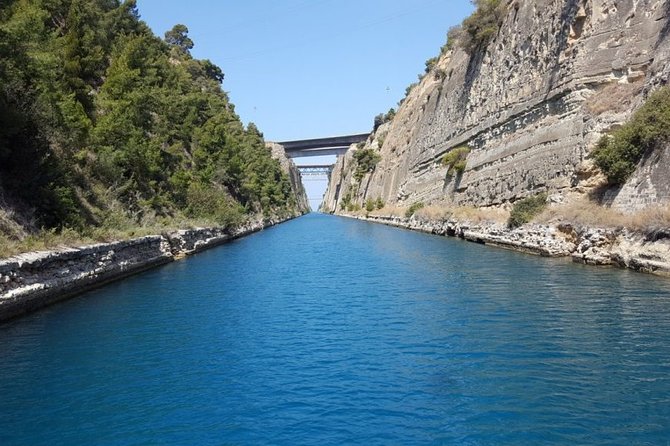
Day 1 starts with a quick taste of the region’s geography at the Corinth Canal. It is short, but it explains a lot. The canal slices the narrow Isthmus of Corinth, separating the Peloponnese from mainland Greece in the way that feels almost mythic once you see it. The canal has no locks, it runs about 6.4 kilometers long, and it is only about 21.4 meters wide at its base, which is why modern shipping mostly cannot pass through. For you, that means the “why it matters” is more about the story and the view than boat traffic.
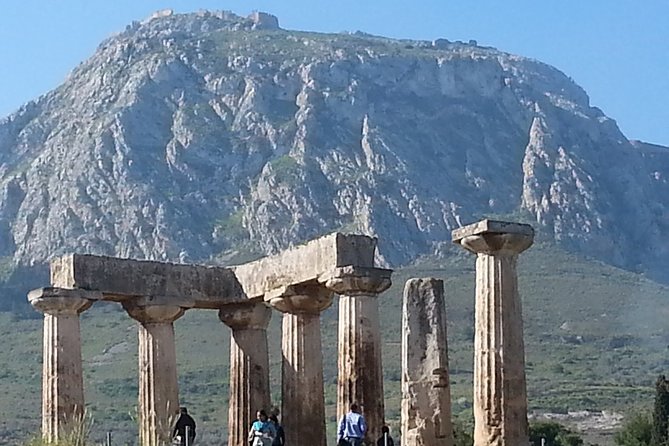
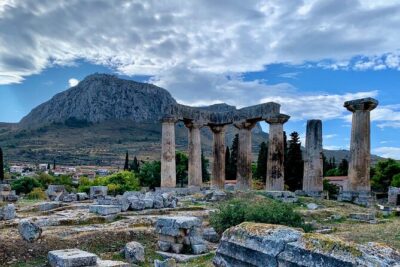
Next up is Ancient Corinth (Archaia Korinthos), a city-state on the isthmus and a key stop along any serious Greece history route. Excavations by the American School of Classical Studies at Athens have revealed major parts of the ancient city since 1896, and newer work by the Greek Ministry of Culture has been uncovering additional layers. If you connect it to Saint Paul’s letters, Acts, and the sense of Corinth as a crossroads, the place stops feeling like a stop on a checklist and starts feeling like a turning point in real history.
You then cross the Rio-Antirrio Bridge, one of those modern engineering moments that Greece does so well. It is a long multi-span cable-stayed bridge and was used around the time of the 2004 Olympics. It is not a long visit, but it gives you a “switch gears” break between ancient Corinth and the next historical focus.
After that, you have a lighter, rewarding stop at Achaia Clauss in Patras, a Greek winery founded in 1861 by Bavarian Gustav Clauss. It is especially known for fortified red wine made from Mavrodaphne. This is a useful break on a day that already includes lots of history walking. Even if you are not a wine expert, it is a chance to slow down and reset.
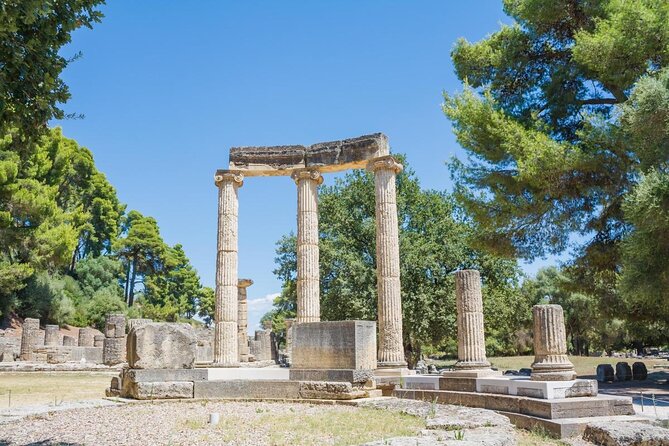
The day closes with the grand sanctuary of Olympia in the valley of the Alpheios River. Olympia is dedicated to Zeus and became the center for the Olympic Games, held every four years. The setting is part of the experience, and the site itself is easy to appreciate even when you are not obsessing over details. For me, the best Olympia moments are the simple ones: standing in a big open space, imagining the scale, then moving toward the structures where athletes and spectators would have gathered.
Consideration for Day 1: this is a long day of stops, so wear shoes you trust. The distances between locations can feel big once the day starts stacking up.
Day 2: Ancient Messene, Voidokilia dunes, Pylos harbor, and Methoni Castle
Day 2 is where the tour shifts from headline landmarks into places that feel more “you are discovering Greece” than “you are ticking boxes.”
First is Ancient Messini (Ancient Messene), a site many people miss. The big reason to care is preservation. Unlike many ancient cities, it was not disturbed by later settlements, so the remains are unusually intact. It also feels under-visited because excavation is newer compared with places like Epidaurus and Delphi. Translation for you: more calm, more breathing room, and a sense of discovery.
Then comes the visual payoff at Voidokilia Beach, famous for its omega shape formed by semicircular dunes. The beach also connects you to a larger natural system. On the land-facing side, the dunes sit near Gialova Lagoon, which is an important bird habitat, and the area is part of a Natura 2000 protected site. In practical terms, this is a great stop if you want sun time without giving up the chance to appreciate why the place is protected.
Voidokilia’s area is also linked to history through nearby features like Nestor’s Cave and the ruins connected to the Frankish period at Old Navarino (Palaiokastro). There is even a Mycenaean tomb connected to Nestor’s son, Thrasymedes. You may not be able to see everything from the main beach area, but even knowing what is around you makes the whole coastline feel layered.
After the beach, the tour heads to New Castle of Pylos (Navarino), a harbor town with Neolithic roots and a Mycenaean kingdom presence tied to the so-called Palace of Nestor. In Classical times, Pylos is linked to the Peloponnesian War and a Battle of Pylos in 425 BC. It is also tied to later history when it becomes a Frankish center in the 13th century. This stop works well if you like places where multiple eras overlap without needing to force a storyline.
Day 2 wraps with Methoni Castle, a medieval fortification in the port town of Methoni. The castle occupies the cape and the coastline up to an islet that is also fortified. You get a sense of defensive planning: a deep moat separates it from land, and communication used to be via a wooden bridge. The Venetians also added and repaired parts during their occupation. It is the kind of site where walking the perimeter gives you that “someone designed this to withstand trouble” feeling.
Consideration for Day 2: the mix of archaeological walking and beach time is great, but plan for sun. Even with chilled water in the car, you will still want basics like sunscreen and a hat.
Day 3: Mystras Byzantine ruins, Mani villages, and Cape Tainaron at the southern edge
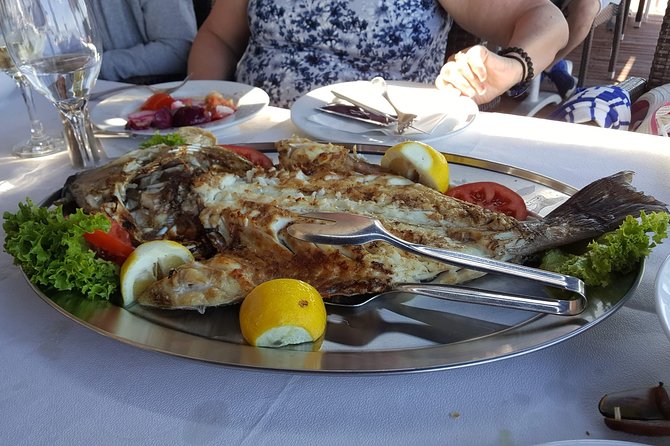
Day 3 is a two-part experience: Byzantine spectacle first, then the remote, human scale of the Mani Peninsula.
Start with Mystras, often called the wonder of the Morea. The medieval ruins sit around a fortress established in 1249, and the site changes hands between Byzantines, Turks, and Venetians before being abandoned in 1832. Today, what you see is the result of centuries of power concentrating here, including institutions like the transferred bishopric and notable churches. For you, the best reason to go is the feeling of a whole city built in tiers, then left to time, which makes the ruins feel physical rather than abstract.
One practical point: the tour description and a shared comment about the experience both highlight that Mystras involves longer climbs. If you are sensitive to hills, you might still love the visit, but build in extra time and take it at your pace. Going slower is not a failure here.
Next the route heads to Gerolimenas, a tiny coastal village at the southern end of Mani. The name even hints at its past, meaning old harbor, and historically the place was reached mainly by boat until the 1970s. It used to be a major fishing center with shipyard and fish-market infrastructure. Now it is mostly tourism, but you still get that small scale feeling, especially when you pause at the waterline.
Then you explore Vathia, known for tower-houses built on a hill and for the perichora, the “environs” of abandoned houses, towers, and chapels scattered around it. This is a place where architecture teaches you about survival and family networks. You do not need a guide to see the logic of the towers and the hill placement, even if you want one for extra context.
You then stop at Porto Kagio, described as a far-south place that few people reach. That is exactly why it is worth including. It gives you that “end of the road” mood before the final myth and viewpoint stop.
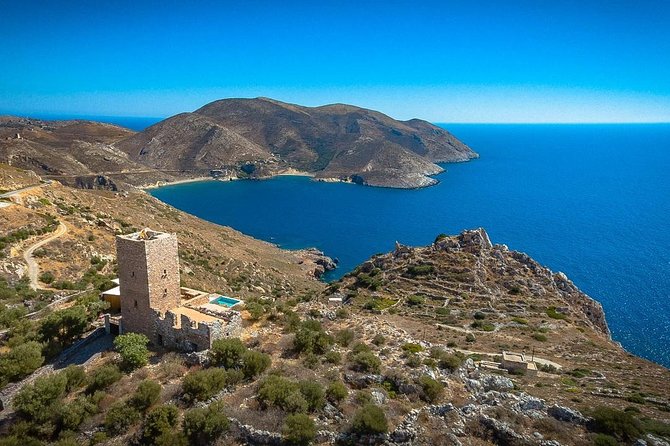
Day 3 ends at Cape Matapan, also known as Cape Tainaron or Taenarum. The Cape Matapan region is described as the southernmost point of mainland Greece and the second southernmost point in mainland Europe. You also get the famous myth trail: legends place a cave tied to Hades near the area, and ancient Spartans built temples there, including one dedicated to Poseidon with remnants visible on the hill above.
Consideration for Day 3: this is a day of viewpoints and old stone, not museum time. Bring patience. The reward is the feeling that you traveled far enough to meet a different side of Greece.
Day 4: Diros Cave boat tour and Monemvasia, the Gibraltar of the East
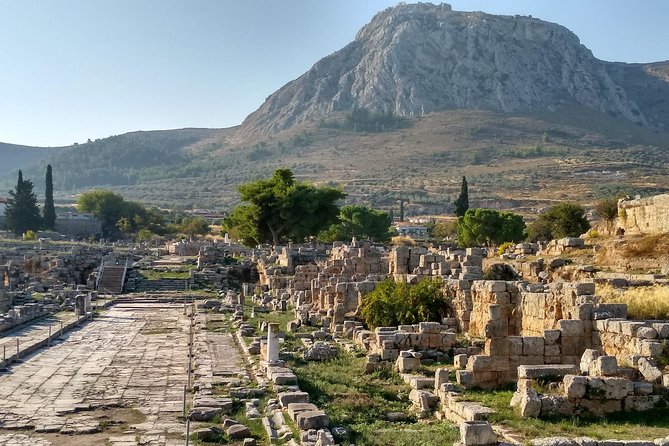
Day 4 is the most “nature then medieval town” sequence on the whole trip.
First is Caves of Diros. The cave complex is described like a nature’s underground cathedral, and the key moment is the 40-minute boat tour of Vlychada, the biggest cave of the Diros complex. You descend into cooler air, then you float through illuminated sections along a route about 1.5 kilometers long. The stalactites and stalagmites are the star of the show, and the experience is also about not knowing what is around the next bend, since you only see what the lights reveal.
Admission is listed as not included, so factor that into budgeting. Still, this is one of the few stops on this route that feels like a full reset for your senses.
After the cave, you head to Monemvasia Castle. Monemvasia is built on a small island linked by a short causeway and centered on a plateau where a powerful medieval fortress sits. The town walls and Byzantine churches remain from the medieval period, so you can walk and see layers of time in place. Even the name is part of the experience: it is tied to two Greek words meaning single entrance, which fits the feel of Monemvasia. The nickname, Gibraltar of the East (also called the Rock), also hints at the strategic position.
A shared comment about this tour notes that Monemvasia comes with some long climbs. That aligns with the reality of fortress towns on hills and causeways. If you are game for it, the payoff is the viewpoint and the medieval town texture. If you are not, you may still enjoy the main areas, but expect stairs.
Consideration for Day 4: plan footwear for uneven surfaces around castles. Also, cave time and castle time use very different muscles. Take breaks when you can.
Same hours, spent a different way in Athens:
- Acropolis: Premium Acropolis and Parthenon Guided Tour★ 4.8 · 5,208 reviews
- Athens: Mythology of Delphi, Museum and Arachova Guided Tour★ 4.7 · 5,102 reviews
- All Day Cruise -3 Islands to Agistri,Moni, Aegina with lunch and drinks included★ 5.0 · 4,958 reviews
- Athens, Piraeus, and Coastline: Blue Hop-On Hop-Off Bus★ 3.9 · 4,849 reviews
Day 5: Mycenae and Epidaurus, then the coast at Nafplion and Tolo
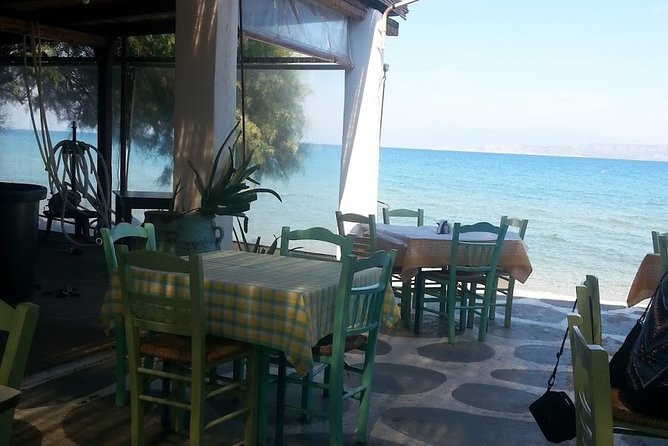
On Day 5, the tour returns to big ancient names, then finishes with coastal calm.
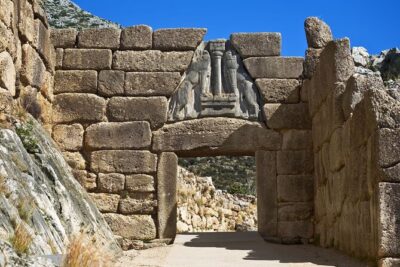
First is Mycenae, an archaeological site near Mykines in the Argolis region. It sits on a hill about 120 kilometers from Athens, rising roughly 900 feet. Mycenae was a major stronghold in the second millennium BC and gave its name to the Mycenaean period, roughly 1600 BC to 1100 BC. The site connects to the scale of power, with the citadel and lower town reaching a peak population described as about 30,000 around 1350 BC.
Mycenae is one of those places where the most impressive part is often the simple logic of the fortifications. You can look at the shape, imagine the defendable spaces, and understand why this was a regional center.
Then the tour goes to Nafplion, a seaport town that expands across hills near the Argolic Gulf. Nafplion served as a capital across major moments, including the First Hellenic Republic and the Kingdom of Greece from the start of the 1821 Greek Revolution until 1834. It is also a place with a layered political history through the de la Roche family after the Fourth Crusade, later Venetian rule, and Ottoman control. For your day, the best value is the easy walking and relaxing. You get a historic town without it being all stairs and ruins.
Nafplion is paired with Tolo, an old fishing village spread along a beach. The focus here is practical relaxation: water sports, swimming, fishing, and a “homey hospitality” vibe through small hotels and family-run businesses. Even if you do not go far into town, Tolo gives you a beach ending that feels earned after archaeology days.
Finally comes Ancient Theatre of Epidaurus, linked to the sanctuary of Asclepius, the ancient Greek god of medicine. The theatre is famous for acoustics and aesthetics and is often considered the most perfect ancient Greek theatre in that sense. The structure keeps a tripartite layout with an auditorium, orchestra, and staging building, and it is noted as unmodified during Roman times. If you like standing in places built for sound and spectacle, Epidaurus is worth slowing down for.
Consideration for Day 5: you will likely feel the walking more on this day than you expect, because Epidaurus is structured but still involves movement between viewpoints and seating areas.
Hotels, comfort, and how to pace a 5-day hit list
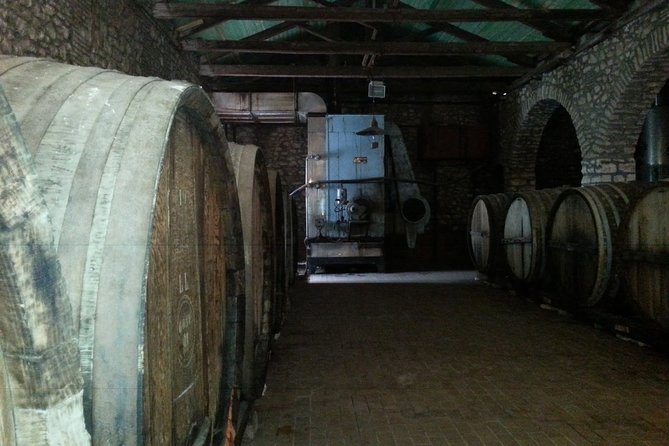
This tour includes 4 nights at 4-star or boutique hotels, plus evening transfers. That sounds small compared with the big site names, but it matters. When your base is handled, you spend your energy on the road day, not on coordinating separate plans.
Inside the car, you get WiFi, A/C, and chilled water. In summer heat, that is not a luxury feel, it is a survival tool. It also makes long drives more tolerable when you are changing regions multiple times.
Also pay attention to the timing shape of the itinerary. You get a heavy mix every day: one major historical site, then one or two additional stops, then a change of scenery to reset your mood. That means you should pack for multiple modes of travel, not just one. Comfortable shoes are more important than a fancy outfit here.
If you are the kind of person who likes to understand what you are seeing, consider requesting licensed guides at the largest archaeological sites. The driver can get you there and keep the day moving, but the driver cannot enter sites, so you want a guide if you want the deep explanations inside.
Price and what makes this feel worth it

At $2,147.15 per person for a 5-day private tour, this is not a budget trip. The value comes from what is bundled.
You are paying for:
- round-trip Athens pickup and return
- a dedicated English-speaking driver for the full day
- brand new luxury vehicles with WiFi, A/C, and chilled water
- 4 nights at 4-star or boutique hotels
- transfers included for evenings out
- a private experience that is 100 percent exclusive to your group
- mobile ticket and group discounts (if applicable to your group size)
Entrance fees, meals, and drinks are not included. That means your final trip cost depends on how many paid sites you hit and whether you add licensed guides on request. If you travel as a pair or a small group, the per-person cost can feel more reasonable because you are spreading the vehicle and driver time.
My practical take: if you want Peloponnese variety without the hassle of planning trains, buses, and taxis across multiple regions, this private format makes sense. If you are comfortable driving yourself or using public transport and you do not care about hotel bundling, then you might compare it to the cost of piecing things together.
Who this tour suits best
This itinerary is best for you if:
- you want a single plan that covers ancient icons and coastal downtime
- you prefer a private vehicle over public transport
- you like variety, from Olympia sanctuaries to Mani villages to cave boat rides
- you are willing to pay for comfort and time saved
It might not be the best match if:
- you want minimal walking on steep ground
- you hate the idea of adding entrance fees and possible guides
- you are strictly on a tight budget
The best clue is the route itself. You get Mystras and Monemvasia climbs, plus beach time and cave time. It is an active history and nature mashup.
Should you book this Peloponnese Greece adventure?
I would book it if you want a guided, private way to cover a lot of Peloponnese without turning your trip into a logistics project. The combination of major archaeological anchors, under-seen stops like Ancient Messene, dramatic nature time at Diros and Voidokilia, and the medieval fortress mood of Monemvasia is a strong mix for five days.
I would hesitate if climbs would stress you out. A heads-up on longer uphill walking at Mystras and Monemvasia is part of the reality here, and you will feel it. Also keep entrance fees and meals in your budget, since they are not included.
If you fit the sweet spot, this is the kind of trip that gives you a full Peloponnese story arc, from isthmus to southern myths, without you needing to build the route yourself.
FAQ
How long is the tour, and how many nights are included?
The tour runs for 5 days, and it includes 4 nights at 4-star or boutique hotels.
Where do you get picked up in Athens?
You can get free pickup from the airport, your residence, hotel, or port in Athens, and you also get return transportation.
What comfort features are included in the vehicle during travel?
The vehicle includes WiFi and A/C, plus chilled water during travel.
Are entrance fees included?
No. Entrance fees are not included.
Can the driver enter archaeological sites with me?
No. The professional English-speaking tour driver cannot enter the sites. A licensed guide for archaeological sites is available on request.
Is this a private tour?
Yes. It is private and 100 percent exclusive to your group.
What major places are visited during the 5 days?
The itinerary includes places such as Corinth Canal, Ancient Corinth, Olympia, Ancient Messene, Voidokilia Beach, Pylos, Methoni Castle, Mystras, Diros Caves, Monemvasia, Mycenae, Nafplion, and Epidaurus.
What is the cancellation policy?
You can cancel for a full refund up to 24 hours in advance. If you cancel less than 24 hours before the start time, the amount paid is not refunded.
Latest from under the Acropolis




5-Day Experiences, compared.
5-Day Best of Peloponnese Private Tour: Nafplio/Olympia/Mycenae/Epidaurus/more
Read our review →
5-Day Ancient Greece & Zakynthos Turtle Island Tour
Read our review →
5-Day Tour in Mykonos & Santorini Sun & Sea
Read our review →
5 Day Tour in Delphi, Meteora, Santorini, Mykonos and Delos
Read our review →
BEST 5-Day CLASSICAL GREECE Corinth Olympia Delphi Meteora & More
Read our review →
Browse the lists this tour appears in