
Reviewed · DELPHI ORACLE DAY TRIPS
3-Day Peloponnese and Delphi Private Tour from Athens
One driving question. Can you fit myth and ruins into 3 days.
This Peloponnese and Delphi trip is built for exactly that, moving you through UNESCO sites and seaside towns with private Athens pickup and a 3-day route that focuses on the big hits without feeling rushed.
What I especially like is the way the tour handles the hard parts for you: round-trip transfers (airport, hotel, or port) and stays in 4-star or boutique hotels with breakfast. And in past experiences on this style of tour, guides such as Petros, Janus, and Giannis have earned praise for bringing Greek history and mythology to life in a way you can actually use.
One consideration: most archaeological site admission fees are not included, so you will want to budget for tickets on top of the tour price.
In This Review
- Key highlights worth knowing
- From Athens to Corinth Canal, where seas and engineering meet
- Epidaurus acoustics and Mycenae Lion Gates: the wow-to-wow sequence
- Nafplio at the end of Day 1: the seaside payoff
- Olympia: the Olympic Games site, plus real museum time
- Achaia Clauss and the Rio Antirio Bridge: smart route breaks
- Delphi Museum first: where the oracle feels real
- Arachova stop and Hosios Loukas: culture beyond the headline ruins
- Price and value: what you are paying for, and what you still need to budget
- Guides matter: why driver storytelling is a real part of the experience
- Who should book this 3-day Peloponnese and Delphi tour
- Should you book this tour?
Key highlights worth knowing
- Private door-to-door transfers from Athens airport, hotels, and ports, with return drop-off included
- 4-star or boutique hotels with breakfast for two nights, in places that feel local
- Big UNESCO hits in three days, including Corinth, Epidaurus, Mycenae, Olympia, and Delphi
- Comfort on the road with brand new vehicles, WiFi, A/C, and bottled water
- Guide narration in English throughout the drive, with a licensed guide available on request
- Optional stops built in, like Achaia Clauss wine tasting and added scenery pauses
From Athens to Corinth Canal, where seas and engineering meet
The first leg of this tour sets the tone. You leave Athens early, ride toward the Peloponnese, and start with a sight that is equal parts science lesson and wow factor.
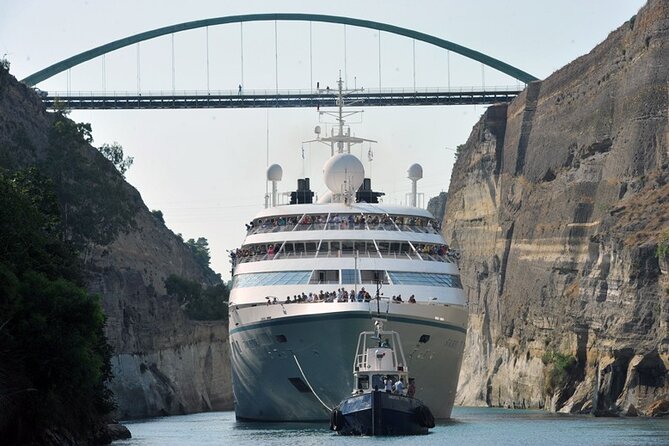
At Corinth Canal, you see how the Aegean Sea and Ionian Sea are cut apart by a narrow engineering corridor. The canal is about 6.5 km long, and the reason it still feels active is simple: only small and narrow ships can pass on a regular basis. Even if you are not an engineering nerd, it is a strong start because it gives you immediate context for why the area mattered.
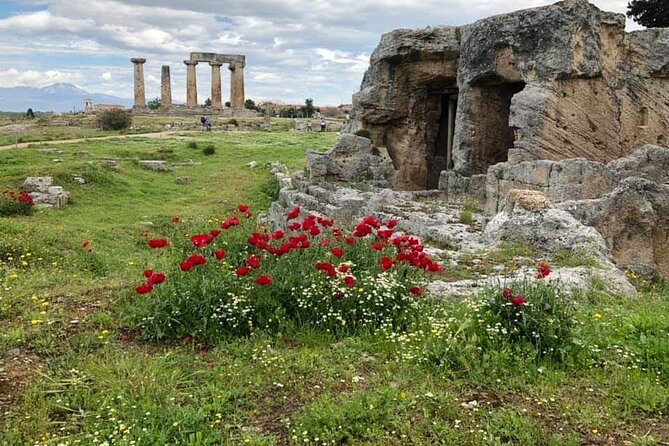
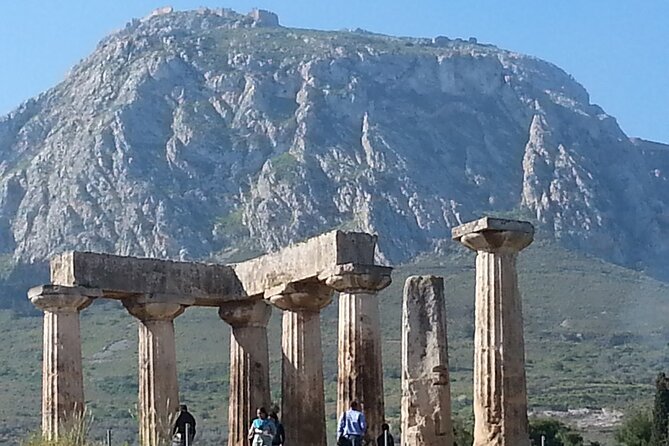
You then step into Ancient Corinth (Archaia Korinthos), close to the canal, with enough time to walk the key parts and connect the Roman era remains to the earlier Greek core. Look for the Doric peripteral Temple of Apollo, dated roughly to 550 to 530 BCE, and then shift your brain to the 1st-century Roman buildings. This is also where the Bema connects to St. Paul addressing the Corinthians, so the site works on two levels: art and architecture, plus the layered story of belief and power.
Practical tip: Corinth can involve uneven ground and some walking. Wear shoes you trust, and keep your water handy. Your driver will handle the pacing, but your legs are still the limiting factor.
More runs north to Delphi:
- Athens: Mythology of Delphi, Museum and Arachova Guided Tour
★ 4.7 · 5,102 reviews - From Athens: Delphi Full Day V.R. Audio Guided Tour
★ 4.6 · 3,028 reviews - From Athens: Small-Group Delphi, Museum & Arachova Day Trip
★ 4.8 · 2,476 reviews - Delphi English Day Trip from Athens with Official Guide
★ 4.5 · 2,199 reviews
Epidaurus acoustics and Mycenae Lion Gates: the wow-to-wow sequence
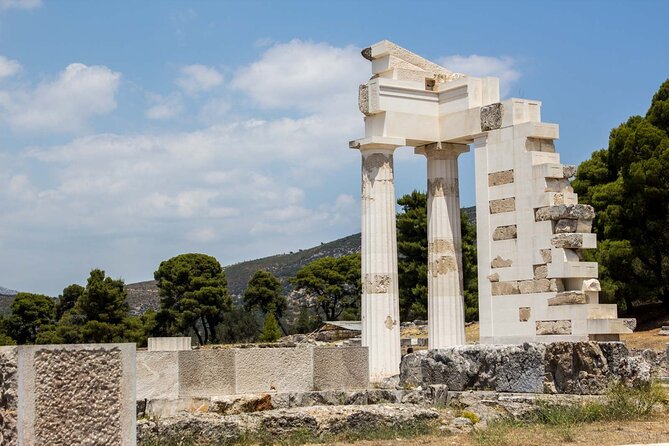
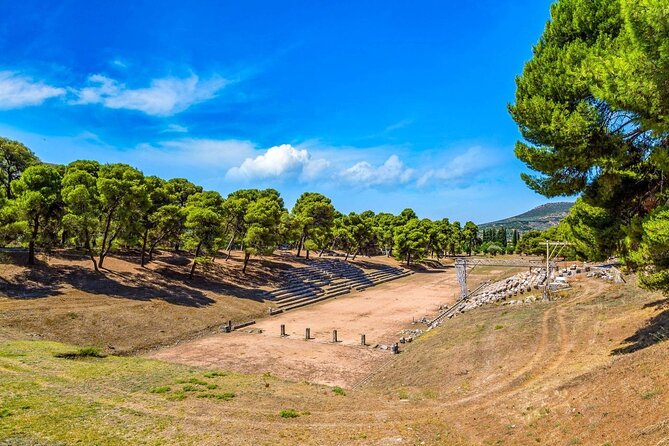
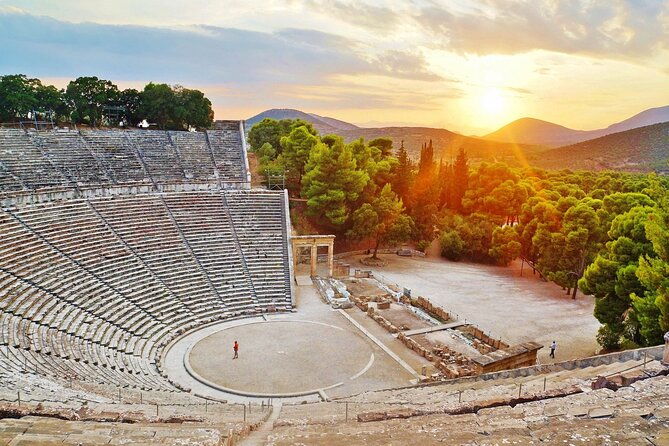
After Corinth, the route moves deeper into the peninsula to Epidaurus, the kind of place people talk about because it looks right and sounds right. At the Sanctuary of Asclepios, you visit the vast ancient theatre and get a chance to experience the famous acoustics in real life. You do not have to know how classical engineers did it to feel the magic. If you have ever watched a performance and wondered how anyone could hear from way up there, this is the answer.
You also have time for the associated structures on site, like the Tholos, the Stoa of Abaton, the stadium, and the on-site museum. That museum matters because it turns the theatre from a single highlight into a fuller picture of what a healing sanctuary meant to ancient visitors.
Then comes a hard pivot, and I like that. You go from religious healing space to political myth and military power at Mycenae. The approach to the ruins feels dramatic because you enter through the imposing Lion Gates, then walk past the scale of what would have been a royal centre. If you want the moment that feels like straight-up legend, it is around the royal graves and the Treasury of Atreus, with its cyclopean architecture. You can almost see why Agamemnon became such a magnet for storytellers.
Why this pairing works: Epidaurus helps you understand Greek religious thinking, while Mycenae gives you the political backbone behind many famous myths. Put together, the morning-to-afternoon flow helps the stories stick.
Nafplio at the end of Day 1: the seaside payoff
By the time you reach Nafplio, the tour changes gears from ruins to atmosphere. You drive through orange and olive groves, and then you hit a town that is all narrow alleys, classic façades, and sea views.
Nafplio is the former first capital of Greece, and you feel that in the layout. There is Syntagma Square as your anchor, and then you can drift toward the promenade overlooking Bourtzi castle. The town is also wrapped by three formidable castles, which is why even a simple walk can feel like you are moving around a living museum.
The stay option here is either a boutique hotel or a 4-star hotel with breakfast. The tour mentions examples such as Ippoliti in Nafplio (depending on availability). What I like about using hotels like this on a multi-day drive is that you get a real evening reset, not just a stopover.
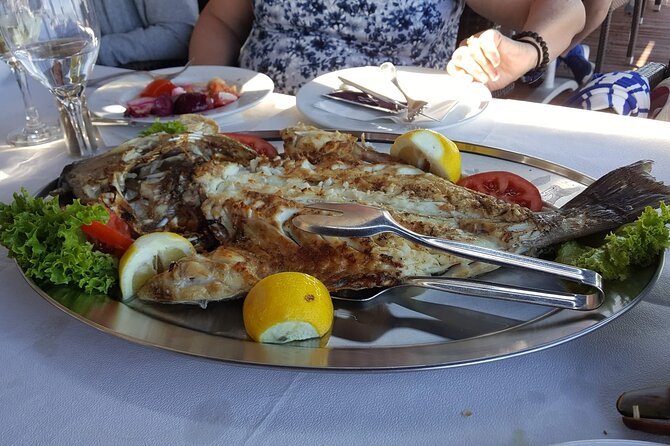
Food note: The route includes a fresh lunch stop in Tolo, a seaside village known for fish and seafood. Even if you are not a huge seafood person, the idea is right: take a break in a coastal place before you go back to archaeology.
Olympia: the Olympic Games site, plus real museum time
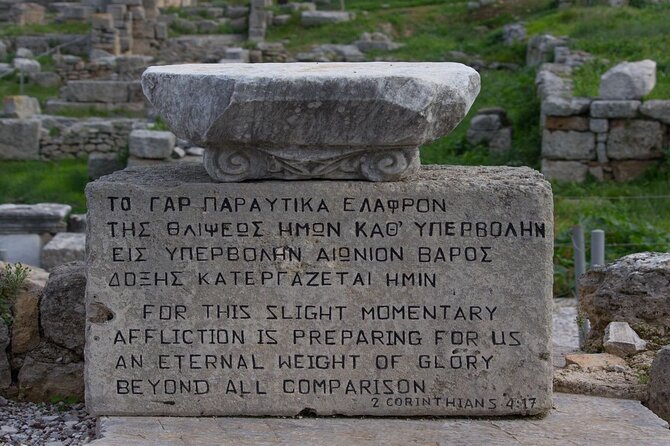
Day 2 starts with the kind of morning that helps you avoid tour fatigue: breakfast, then a drive to Ancient Olympia. It is another UNESCO site, and it is also the place where the Olympic Games story becomes physical. Not myth, not metaphor. Just stone, paths, and the scale of what people built for competition.
At Olympia, you have time for both the museum and the archaeological site. The museum includes masterpieces like the Nike of Paionios and the statue Hermes and the Infant Dionysus. If you are the kind of traveler who wants art to make the past feel real, the museum time is a big win.
On the grounds, focus on the big patterns. You walk by the Doric Temples of Zeus and Hera, then continue through buildings tied to how athletes and visitors moved through the space: the Bouleuterion, Prytaneion, stadium, gymnasium, palaestra, and the workshop of Phidias. You do not need to memorize everything. You just need to look at the relationships, like where decision-makers sat versus where training happened.
Lunch strategy: The tour mentions lunch in local traditional taverns in the modern Olympia village. Just remember lunches may not be fully included depending on your selected option, so confirm at booking.
Achaia Clauss and the Rio Antirio Bridge: smart route breaks
After Olympia, the tour adds a winemaker stop: Achaia Clauss, described as the oldest Greek winery. The tour frames it as an option, a 1-hour visit with wine tasting plus facts about Greek wine varieties and methods. If you like a short, structured break that feels grown-up rather than touristy, this is the sort of stop that keeps the day from turning into one long bus ride.
Then you hit another engineering moment: the Rio Antirio Bridge. It is completed in 2004 and was built for the Olympic Games, and you cross into the mainland toward Delphi. It is a quick photo stop in time, but it is useful as a psychological divider. You feel you are leaving the Peloponnese behind.
Right after crossing, you have a stop in Nafpaktos. This part is about scenic downtime: a Venetian port and castle area where you can stroll and grab coffee or tea. The short window is intentional. It helps you reset before the Delphi region, which is where the pacing often gets more museum-heavy.
There is also time later for Galaxidi, a seaside resort atmospheric like a Greek island and close to the Delphi area. The hotel example given is Ganimede in Galaxidi, depending on availability, with breakfast noted as especially good.
A handful more Athens outings to compare
- Best of Athens Half Day Private Tour★ 5.0 · 3,714 reviews
- Athens Full Day Private Tour★ 5.0 · 2,903 reviews
- Athens Airport Private Arrival Transfer with Meet & Greet★ 4.5 · 1,495 reviews
- Athens Airport to Athens Hotels Private Arrival Transfer★ 5.0 · 947 reviews
Delphi Museum first: where the oracle feels real
Day 3 shifts from broad regions to a single concentrated focus. You head to Delphi, UNESCO-listed and often described as the center of the ancient world. The tour explains how leaders consulted the Pythia before major decisions, and that context matters because it changes how you look at the ruins. Delphi was not built for casual tourism. It was built for authority.
You start with the Delphi Archaeological Museum. This is the right order. Seeing objects like the Charioteer, the Sphinx of the Naxians, and the statues of Kleobis and Biton helps you recognize what you later see outside. You also get museum coverage from prehistory into late antiquity, so you understand Delphi as a long-lived sanctuary, not a one-era postcard.
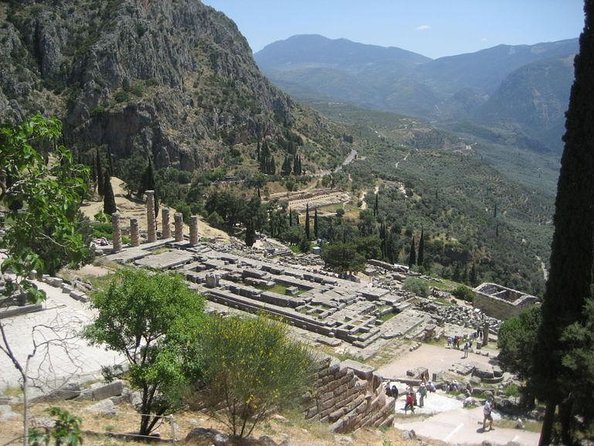
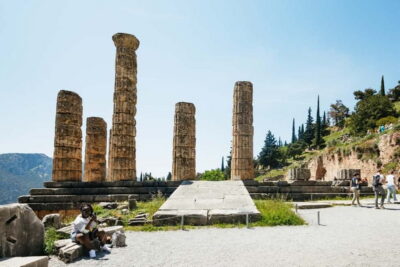
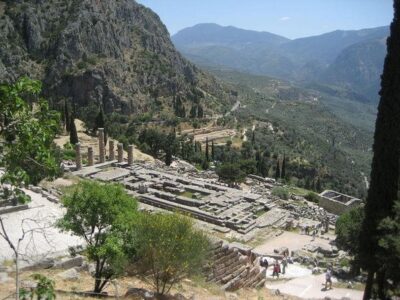
On site at Delphi, you visit key structures such as the Temple of Apollo, the Amphictyonic Council, the Siphnian Treasury, the theatre, the Tholos, the gymnasium, and the stadium. If you want a simple method, it is this: look for the buildings that show where people gathered and where power was displayed. That tells you why Delphi grew into a powerhouse.
Lunch and food: The day includes a traditional tavern stop called To Patriko mas with a view and strong emphasis on food and service. Just keep in mind the tour data also says lunches are not included unless you take the lunch option, so verify what is included for your booking.
Arachova stop and Hosios Loukas: culture beyond the headline ruins
After Delphi, the tour adds Arachova. This is a popular ski resort village, but here it is used for a cultural stop: you view local artefacts and embroideries, plus you taste formaella local cheese production and olives. Even if you do not buy anything, this stop gives you a sense of how the area earns a living now.
Then you head to Hosios Loukas monastery, another UNESCO site. It is known for mosaics and frescoes from the early 10th century, plus important Middle Byzantine architecture and art. The tour notes the frescoes of the crypt were cleaned in 1960 after being covered in plasters. That kind of detail matters because it explains why what you see took careful preservation to reach you.
The monastery stop also brings a welcome emotional shift. After the intensity of oracle stories and temple ruins, Byzantine mosaics feel quieter and more intimate. You can take a slower pace here.
Finally, you drive back to Athens for drop-off at your residence, port, or airport without extra charge.
Price and value: what you are paying for, and what you still need to budget
At $1,078.60 per person for about three days, this is not a budget tour. So the only fair question is: does the package reduce enough friction to be worth it.
Here is what you are paying for in practical terms:
- Private pickup and return transfers tied to your exact Athens location (airport, hotel, Airbnb, or port)
- Two nights in 4-star or boutique hotels with breakfast
- A comfortable vehicle with WiFi, A/C, and bottled water, which matters on longer driving days
- English live commentary from a tour driver, plus a licensed guide available on request
- A route designed around big sites: Corinth, Epidaurus, Mycenae, Olympia, and Delphi, plus supporting stops like Nafplio, Nafpaktos, and Arachova
What you should budget separately:
- Admission fees for archaeological sites and museums
- Drinks and dinners
- Lunches unless you choose a lunch option
My take: this tour becomes good value if you want a smooth, door-to-door experience and you care about guided context, not just checking sites off. If you are the type who enjoys self-navigation and you already know you will drive yourself, you might do cheaper. But if you want to relax and have the route mapped by someone who knows how these sites fit together, the price starts to make sense.
Guides matter: why driver storytelling is a real part of the experience
The strongest praise in the tour feedback is not just about the sites. It is about the guide.
In past experiences with this company and this route style, guides like Petros, Janus, and Giannis have been praised for expert storytelling on Greek history and mythology, plus being friendly and helpful. I like that emphasis because it matches how these destinations work best. Without explanation, you can end up staring at stones and wishing someone would connect them to the bigger picture.
Even with no licensed guide, the tour includes professional English speaking live commentary from the driver. That means you get context while moving between sites, not just during short stops.
Practical advice: If you care a lot about mythology versus politics versus architecture, ask your driver early. You will get more out of the narration if you set your interests from the start.
Who should book this 3-day Peloponnese and Delphi tour
I think this tour fits best if you:
- Want a high-impact route that covers multiple UNESCO sites in a short window
- Prefer private, door-to-door transfers over public transport juggling
- Enjoy guided explanations and want mythology tied to real locations
- Appreciate decent comfort, especially on longer driving days
- Want hotel evenings in Nafplio, Galaxidi, or Delphi area, not just roadside stops
It may be less ideal if you:
- Hate walking on archaeological sites or you want minimal leg time
- Would rather handle admissions and timing yourself with a rental car
- Are traveling with a strict budget for entrances and meals
Should you book this tour?
Book it if you want Greece that feels organized and guided, with Corinth, Epidaurus, Mycenae, Olympia, and Delphi all in one run. The price is high, but the value comes from reduced hassle: pickup and return, comfortable transport, hotel nights with breakfast, and storytelling that helps the sites stick.
Hold off if you want maximum freedom to wander without any scheduled stops, or if you know you will skip most paid admissions and meals anyway. Also, confirm what is included for lunches based on the option you choose, so there are no surprises.
If you want a confident, structured route from Athens into the heart of Peloponnesian and Delphi history, this is a strong match.
Latest from under the Acropolis




Delphi Oracle Day Trips, compared.
Mythology of Delphi, Museum and Arachova Guided Tour
Read our review →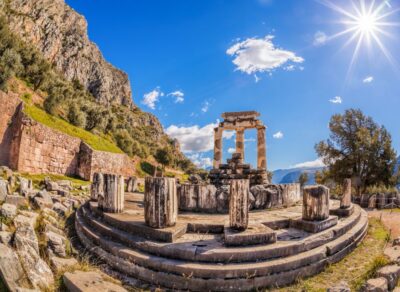
Small-Group Delphi, Museum & Arachova Day Trip
Read our review →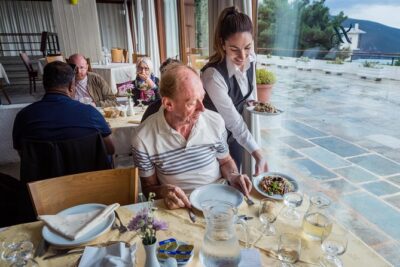
Delphi English Day Trip from Athens with Official Guide
Read our review →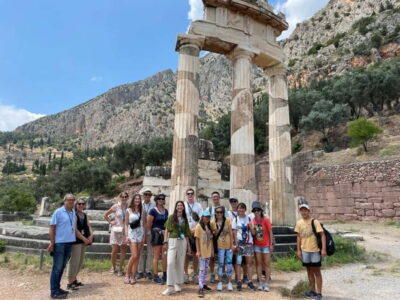
Delphi Oracle & Museum Tour with a Licensed Guide
Read our review →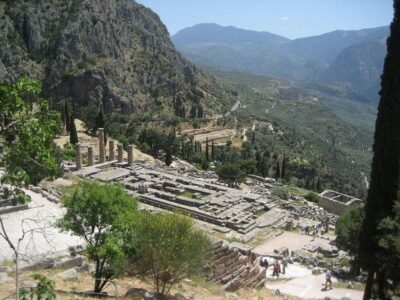
Historical Delphi One Day Tour with Arachova Stop & Expert Guide
Read our review →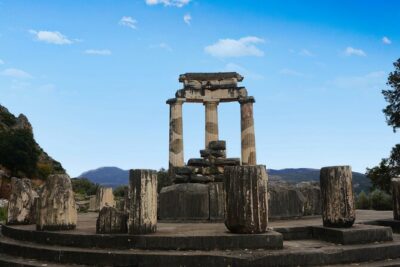
Premium Delphi Day Trip with an Expert Guide, Museum & Lunch
Read our review →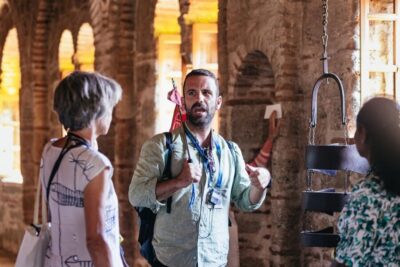
Browse the lists this tour appears in