
Reviewed · 3-DAY EXPERIENCES
3 Day Ancient Greece Tour
Ancient Greece, minus the guesswork. I love the private flow with hotel pickup, so you spend less time coordinating and more time looking closely. I also like that you get licensed guides at the key archaeological stops, which makes the sites easier to understand fast.
The one thing to plan for is the pace. This route is packed with driving time and multiple major sites, so if you like lots of downtime, you may need to choose your priorities carefully each day.
In This Review
- Key highlights you will actually feel
- Private Athens to Peloponnese Routing: What You Gain With This Format
- Corinth Canal To Epidaurus: Two Stops That Teach You How Greeks Think
- Mycenae And Nafplio: Homeric Fortunes And Modern Greek Charm
- Olympia Plus the Rion-Antirion Bridge: Games, Zeus, And the Sea Crossing
- Nafpaktos Evening Stroll: Castle Views Over the Gulf
- Delphi Archaeological Museum: The Spiritual Center in Practical Detail
- Should You Book This 3 Day Ancient Greece Tour?
- FAQ
- Is this a private tour?
- Does the tour include hotel pickup?
- What is included in the price?
- Are entrance tickets included?
- What is not included?
- Is breakfast included?
- What cancellation window gives a full refund?
- Is this tour suitable for most travelers?
Key highlights you will actually feel
- Private tour, only your group: no crowd weaving, no sharing space with strangers.
- Hotel pickup included: fewer logistics headaches on day one.
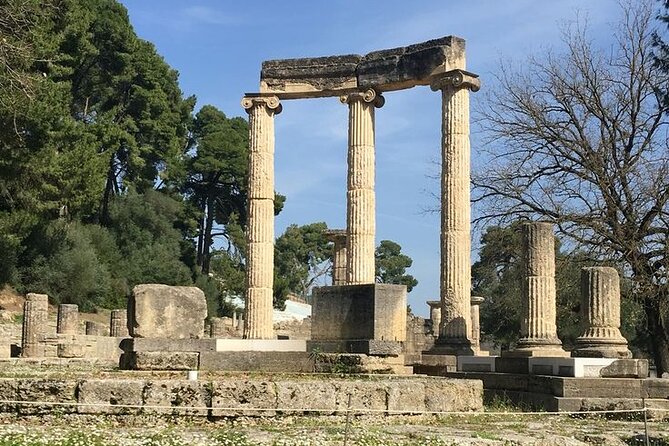
- Licensed on-site guidance: explanations where they matter, at the ruins themselves.
- Tickets and site fees included: you can budget without surprise entry costs.
- Air-conditioned transport with WiFi: a real comfort boost on longer drives.
- Corinth Canal, Epidaurus, Mycenae, Olympia, Nafpaktos, Delphi: a clean arc through Greece’s most famous anchors.
Private Athens to Peloponnese Routing: What You Gain With This Format
This is a “road-trip with purpose” style of tour. You start in Athens, then you work your way through the Peloponnese and finish with Delphi. The big win is that you are not doing these sites as separate tickets, separate guidebooks, and separate half-plans. You get one plan, delivered in a private setting.
The private part matters more than people think. You can ask quick questions while you are standing in the right place, then move on. You are not stuck waiting for a big group to decide where to stand, and you are less likely to miss the small details that make a ruin feel real.
I also like the practical add-ons: WiFi on board for maps and messages, and an air-conditioned vehicle for the hotter parts of the day. Even when the weather is pleasant, having a cool ride is nice when you have already spent time in the sun.
One more value point: the tour says the tickets to the archaeological sites are included, plus all fees and taxes. That is important because it reduces the number of extra transactions you have to handle while you are traveling. You still pay what is not included, like hotel city tax and meals, but the core site admissions are handled.
Finally, the route is designed so you get meaning, not just photos. Corinth Canal sets the stage, Epidaurus shows you how ancient Greeks understood health, Mycenae connects to epic legend, Olympia explains the games and Zeus worship, and Delphi ties it all back to the ancient world’s spiritual center. It is a logical story line across three intense days.
A handful more Athens outings to compare
- 3-Day Classical Greece Tour: Epidaurus, Mycenae, Nafplion, Olympia, Delphi
★ 4.5 · 342 reviews - From Athens: 3 Days in Meteora & Delphi with Tours & Hotel
★ 4.6 · 97 reviews - Meteora & Delphi 3 Days Semi Private Tour
★ 4.5 · 80 reviews - Athens: 3 days 2 nights Meteora with small size tours & hotel
★ 5.0 · 63 reviews
Corinth Canal To Epidaurus: Two Stops That Teach You How Greeks Think
Day one starts with a short stop at the Corinth Canal. You get about 15 minutes here, and the admission is free. This is not a long lingering viewpoint. It is a quick “see what this means” moment, then you move on. If you like photos, this is where you catch them before the day fills up.
Why this canal stop is worth it: it is a reminder that Greece is not just ruins and temples. It is also geography and engineering, and the ancient world existed in the middle of tight waterways and connected routes. Even a brief stop can give you a better sense of why different regions mattered.
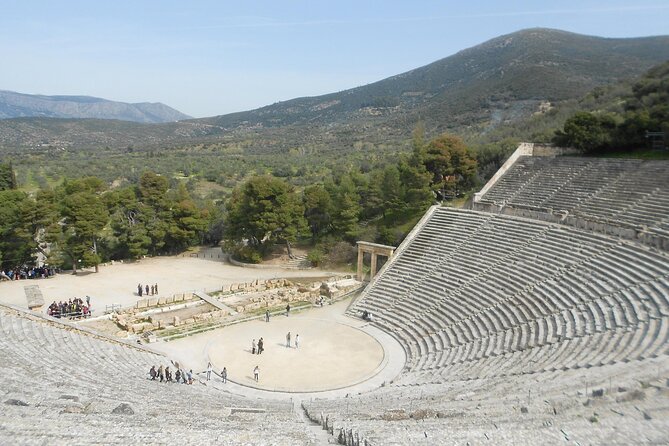
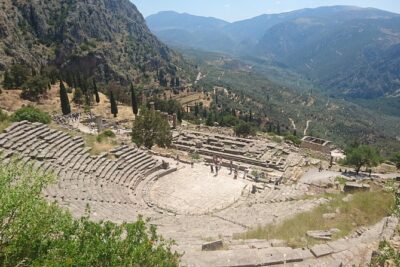
Then you shift to the Ancient Theatre of Epidaurus, and that is where the tour really earns its guide time. You get about 1 hour 15 minutes on site, with admission included. Epidaurus is famous for more than its stone seating. It was a center of healing dedicated to Asclepius, the god of medicine. You can literally feel the theme shift when you move from entertainment to healing.
Here is what to watch for: try to connect what you see to what people believed. A theater in a healing sanctuary is not random. In ancient Epidaurus, performance and ritual lived close together. With a licensed guide explaining the context, it is easier to understand why this place stayed important across generations.
Practical tip: bring something for sun and stick to your water plan. This stop is outdoors, and you are likely to walk and look up a lot. If you are sensitive to heat, this is a day to start hydrated before you leave Athens.
Mycenae And Nafplio: Homeric Fortunes And Modern Greek Charm
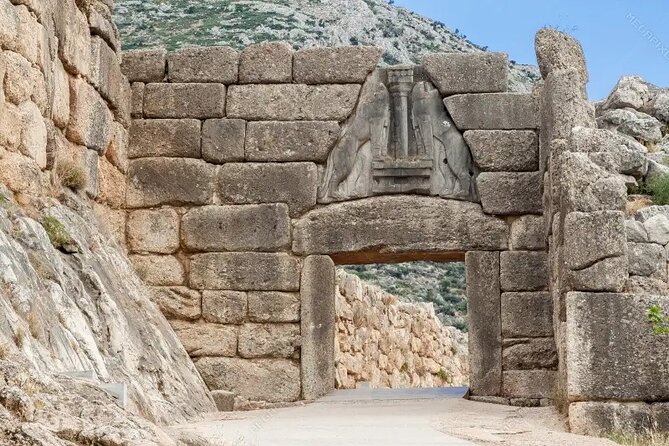
Next comes Mycenae, with about 1 hour 45 minutes. Admission is included. Mycenae matters because it sits right in the overlap between archaeology and the stories people still tell. The site is tied to the kind of power described in the Iliad, and you can see why the location captured imaginations.
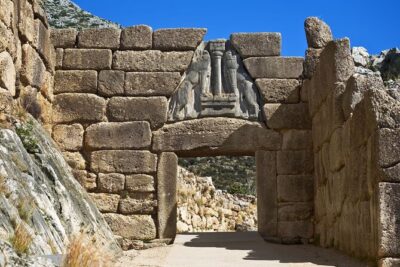
The “wow” elements you will focus on include the Lion Gate, the entrance to the citadel. Even if you have visited other major ancient sites, the Lion Gate tends to grab attention fast. It is one of those moments where you realize this was built to impress, not just to function.
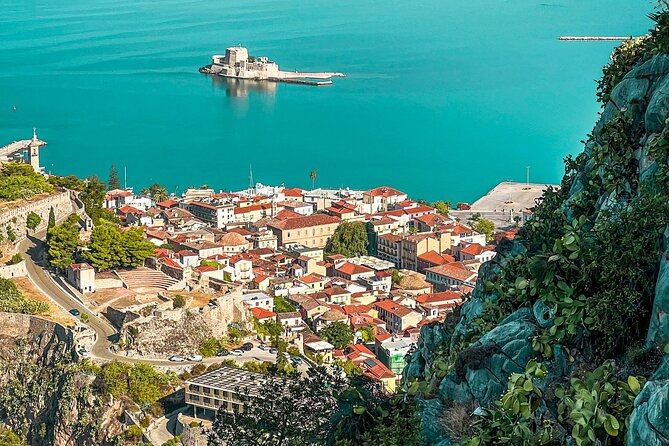
From Mycenae, the day ends in Nafplio, described as the first capital of modern Greece. This is a smart change of pace. After hours of stones and symbols, you get leisure time. Your tour notes highlight options like walking on your own and exploring views.
A named highlight is Palamidi Fortress, famous for panoramic views. You may not have all day to climb it, but even seeing the fortress area or planning your walk makes Nafplio feel connected to the wider story of Greece, past and present. Nafplio also gives you a buffer so day one does not end in straight exhaustion.
About hotels: the feedback tied to this tour route praised the overnight hotel choices as excellent. I do not expect luxury at every price point, but good hotels are not a small detail on a multi-day drive. When the rooms are comfortable and the locations work, you feel it the next morning.
Olympia Plus the Rion-Antirion Bridge: Games, Zeus, And the Sea Crossing
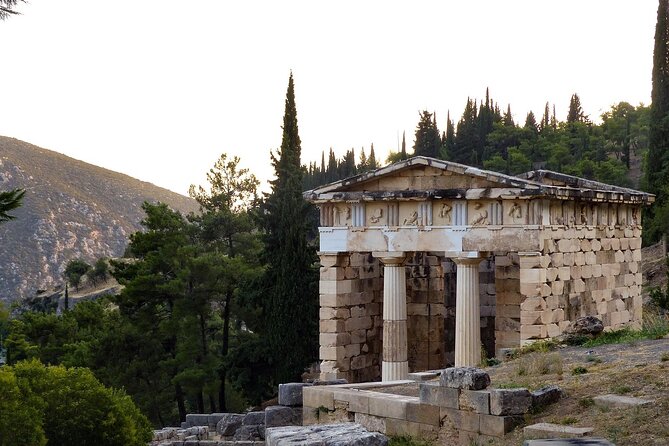
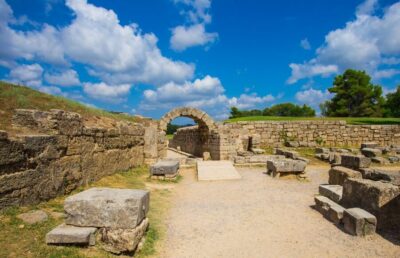
Day two targets Olympia first, with about 2 hours on site. Admission is included. Olympia is described as the birthplace of the Olympic Games, and it was also a religious center dedicated to Zeus. That combination is the key. The games were not just sports. They were part of a sanctuary and a belief system.
If you want to understand why Olympia still resonates, do not treat it as an empty stadium. Think about why people would travel to a sacred place for competition. With a guide present at the archaeological stop, you are more likely to catch the logic behind the layout and the rituals that surrounded the games.
Then the tour shifts from ancient sanctuary to modern engineering with a crossing of the Rion-Antirion Bridge, also known as the Charilaos Trikoupis Bridge. This part matters because it connects the dots between eras. You get a feeling for how Greece links regions by road, just as the ancient world linked regions by sea routes and nearby land paths.
You do not need to nerd out about bridges to enjoy the moment. But it helps you see Greece as a living place, not a museum. Even a short crossing can reset your brain after temples and relics.
After the bridge, you end up in Nafpaktos (Naupaktus). It is described as a charming coastal town on the northern shore of the Gulf of Corinth, with a medieval castle that overlooks the town. That castle detail is a good clue for your planning: this is the kind of town where viewpoints and walking routes are part of the experience.
Nafpaktos Evening Stroll: Castle Views Over the Gulf
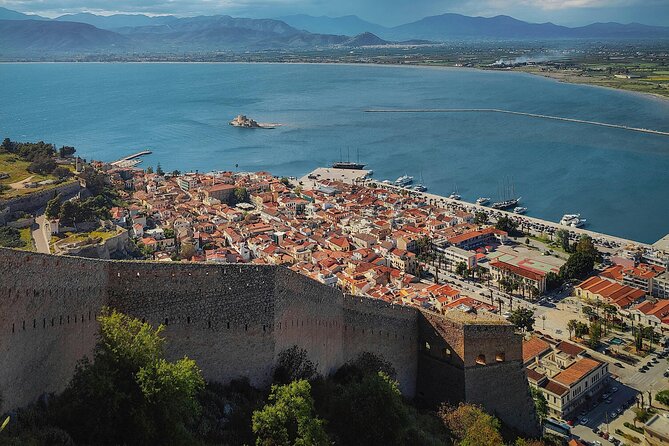
Nafpaktos is where your tour turns from “big-ticket ruins” into slower travel. The information you have points to a coastal feel and medieval framing, with the castle as the visual anchor. That is a great match for a day when you have already seen major sites in the Peloponnese.
What you should do here is simple: save your energy for a stroll. You can use the medieval castle view as your mental waypoint. Even if you do not climb far, orienting yourself toward the higher ground helps the town make sense, and the Gulf views can give you a different angle on Greek geography.
This is also a smart place to rest a bit. By day three, you will be back in another “intense archaeology” zone with Delphi, so a calm evening helps you stay sharp.
One more note to keep in mind: meals are not included. So when you arrive in Nafpaktos, you will want to plan a casual dinner strategy. If you are tired, choose something convenient near your hotel rather than chasing an ambitious mission that turns into a long walk when your legs are done.
Same hours, spent a different way in Athens:
- Athens: Acropolis & up to 5 Archaeological Sites Combo Pass★ 4.2 · 13,904 reviews
- Athens: Acropolis, Parthenon & Acropolis Museum Guided Tour★ 4.8 · 9,316 reviews
- The Acropolis, Parthenon & Acropolis Museum Guided Tour★ 4.7 · 8,493 reviews
- Athens: Cape Sounion & Poseidon Temple Sunset Half-Day Trip★ 4.8 · 8,241 reviews
Delphi Archaeological Museum: The Spiritual Center in Practical Detail
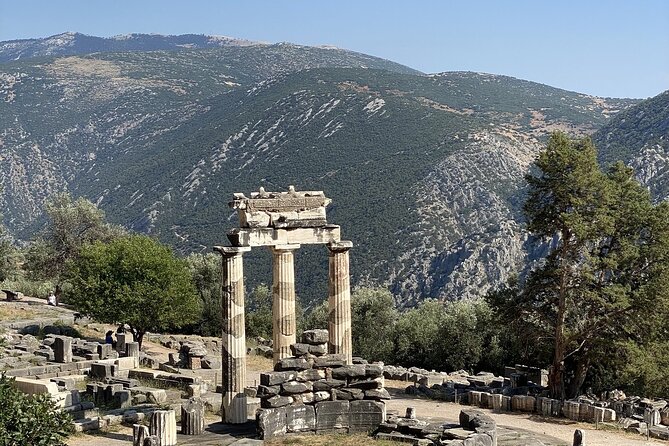
On the third day, you drive to Ancient Delphi, described as one of Greece’s most iconic archaeological sites and known as the Omphalos, or navel of the Earth. This is the kind of place that can feel abstract until you connect it to real objects and the stories built around it.
The scheduled museum time is at the Delphi Archaeological Museum, with about 2 hours and admission included. Museums often do the heavy lifting that ruin-only visits cannot. When you have a guide explaining what you are seeing, museum objects can become the key to understanding why Delphi was so important and how people experienced it.
What to focus on in a museum like this is context: look for how artifacts relate to worship, travel, and the idea that Delphi was a major spiritual center. The tour description explicitly flags Delphi’s spiritual importance. Your job is to make it concrete by paying attention to what is displayed and how it connects to the myth and ritual side of the site.
Also, do not rush this day. Delphi can be emotionally and intellectually intense. If you feel like you are “seeing a lot,” slow down just enough to absorb patterns. That is when Delphi becomes more than famous scenery.
At the end of three days, you leave with a clearer sense of how different parts of Greece functioned together, even when they were far apart. You also get a better feel for how the ancient world organized meaning through theaters, healing sanctuaries, fortresses, games, and prophetic centers.
Should You Book This 3 Day Ancient Greece Tour?
I think this is a good choice if you want structure, expert guidance at the sites, and a route that covers the big names without you having to design the plan yourself. The pricing may look steep at $2,398.84 per person, but the value logic is that you are getting a private, multi-day transportation package plus site tickets, licensed guides at stops, and all fees and taxes. That combination can be worth it if you want to remove hassle from your trip and focus on the experience.
You should also consider it if you care about pacing that still leaves breathing room at the end of day one and day two nights, like Nafplio and Nafpaktos, where you can walk and reset after archaeology.
Skip or reconsider if you are the type who hates long drive days or needs lots of free time during the daytime. This tour is built for seeing a lot of major sites. It is not a slow, lounge-by-the-water itinerary.
If you book, pack for sun, plan to keep hydrated, and use the guide time to ask the simplest question you can think of. Why was this place built the way it was? That question turns ruins into understanding fast.
FAQ
Is this a private tour?
Yes. It is listed as a private tour/activity, which means only your group participates.
Does the tour include hotel pickup?
Yes, pickup from your hotel is offered.
What is included in the price?
The tour includes an air-conditioned vehicle, WiFi on board, tickets to the mentioned archaeological sites, licensed guides at the archaeological sites, and all fees and taxes.
Are entrance tickets included?
Yes. Tickets to the archaeological sites mentioned in the tour are included.
What is not included?
Hotel city tax, meals, and personal expenses are not included.
Is breakfast included?
Breakfast is optional.
What cancellation window gives a full refund?
You can cancel up to 6 days in advance of the experience for a full refund.
Is this tour suitable for most travelers?
The tour information says that most travelers can participate.
Latest from under the Acropolis




3-Day Experiences, compared.
3-Day Classical Greece Tour: Epidaurus, Mycenae, Nafplion, Olympia, Delphi
Read our review →


3 days 2 nights Meteora with small size tours & hotel
Read our review →
3-Day Ancient Greek Archaeological Sites Tour from Athens
Read our review →
3 Day Private Tour in Santorini & Mykonos at the Best of Cyclades
Read our review →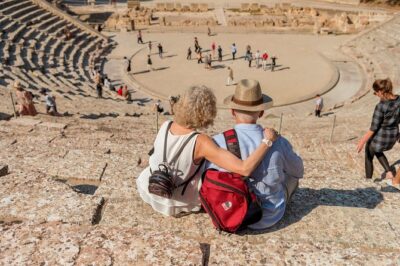
BEST 3-Day CLASSICAL GREECE: Corinth Epidaurus Olympia Delphi
Read our review →Browse the lists this tour appears in