
Reviewed · DELPHI ORACLE DAY TRIPS
2 Days Private Tour:Persian War-Thermopylae,Marathon,Delphi,Salamis&Plateaus
Persian War sites in two packed days. This private overnight trip strings together Marathon, Thermopylae, Delphi, Salamis, and Plataea with round-trip pickup from your Athens hotel, so you are not spending your vacation wrestling with buses and schedules.
I especially like that it is built for people who want structure. You start at 8:00 am, ride in a private vehicle, and move site to site with less time lost to logistics.
I also like the mix of stops that goes beyond the obvious battlefield photo. You get the feel of Thermopylae through a 3D movie at the memorial center, then you switch gears to Delphi, including the Apollo complex and the Delphi Archaeological Museum. Even one extra stop in Arachova gives you a breather in a mountain town setting.
One thing to plan around: entrance fees are not included, and the driver is not a licensed guide inside museums or sites. If you want someone fully licensed to walk you through the ruins and explain in detail, you will need to hire that separately.
In This Review
- Quick hits before you go
- A smooth Athens base for a big ancient route
- Marathon: the tumulus, the battlefield, and the museum stop
- Marathon Lake and the Pentelic marble dam moment
- Thermopylae memorial center, Leonidas monuments, and the battlefield area
- Delphi: Apollo, theater and stadium, then the museum and Arachova pause
- Day two: Plataea, then the Salamis viewing point at Perama
- Price and value: what you pay for, what you still need to budget
- What it feels like with a guide like Alex
- Practical tips for getting the most from this 2-day route
- Who should book, and who might want a different plan
- Should you book this Persian War tour?
- FAQ
- What time does the tour start?
- Is pickup from my Athens hotel included?
- How long is the tour?
- Is the tour private?
- Does the price include entrance fees?
- Is accommodation included?
- Do I get a licensed tour guide?
- Are the drivers allowed to guide inside museums or sites?
- What is included in the transport and onboard items?
- Can I cancel for a full refund?
Quick hits before you go
- Hotel pickup and drop-off from Athens, with bottled water on board
- Private vehicle plus professional drivers who share history outside the sites
- Thermopylae’s 3D movie and the Leonidas monuments at the battlefield area
- Delphi highlights: Apollo temple area, theater and stadium, plus the museum
- Marathon focus: the Tumulus of Athenians, battlefield areas, museum, and Marathon Lake
- Flexible package options: you can book with or without accommodation
A smooth Athens base for a big ancient route
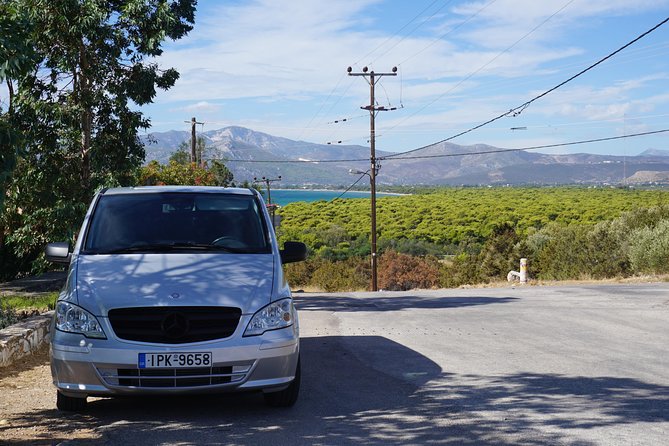
Athens is crowded with ruins, but the real test is getting out to places like Marathon and Thermopylae without turning your trip into a commute festival. This tour solves that with a private vehicle and hotel/port pickup and drop-off, so you start fresh each morning and end back where you began.
The tour runs for about two days, with the exact pacing depending on day and traffic. Start time is 8:00 am, which is great if you like cooler morning driving and fewer crowds at the first stops. If you choose the package with accommodation, you also get breakfast included, which matters on a schedule this full.
Because the drivers are not licensed to go inside with you, think of this as a guided drive and stop-by-stop orientation. You will get context on the road, then have time at each site for your own pace, photos, and on-the-spot reading. If you want a fully guided museum experience, you can add a licensed tour guide on request.
Other visits to the pass at Thermopylae:
- Delphi, Thermopylae, Corycian Cave 300 Spartans Tour
★ 5.0 · 492 reviews - Delphi & Thermopylae Full Day Private Tour from Athens
★ 5.0 · 259 reviews - Thermopylae, Meteora and Delphi Private Full Day Tour
★ 5.0 · 216 reviews - Thermopylae and Delphi Private Full-Day Tour from Athens
★ 5.0 · 114 reviews
Marathon: the tumulus, the battlefield, and the museum stop
Day one starts with Marathon, and it does not waste time with the most symbolic spots first. The morning begins at the Tumulus of Athenians, also called the Tumulus at Marathon. This memorial represents the courage and final victory of the Athenians against the Persians in 480 BCE.
Right after that, you visit the Marathon Battlefield area. Even if you have seen photos before, I like doing this early while your head is still tuned to the timeline of the Persian Wars. Marathon is one of those places where the terrain and scale help you understand how history can hinge on timing, terrain, and decisions.
Then the pace becomes more human. You move to the Archaeological Museum of Marathon, which includes the prehistoric cemetery and evidence of early settlement. After that, you drive past the city of Marathon, which helps connect the ancient site to the modern map you will remember later.
A small practical note: some stops here are listed with admission not included, so you will want to keep a realistic budget ready. Also give yourself time to look slowly inside the museum. This is where the story stops feeling like names on a textbook and starts feeling like objects and remains.
Marathon Lake and the Pentelic marble dam moment
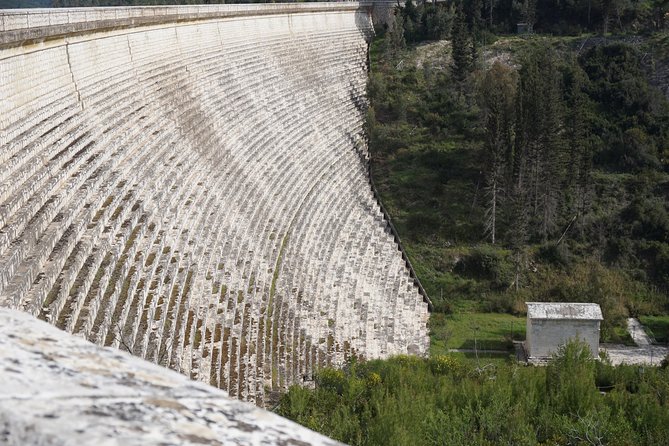
Between Marathon and Thermopylae, you make a final stop at Lake Marathon on the slopes of Mount Penteli. This is not just a scenic pause. It is described as an artificial lake still in use as a main water reservoir for Athens, so you can see how ancient resources and modern needs overlap in the same region.
You will also have a view of the Marathon Dam, described as a marvel of engineering and noted for being made entirely of Pentelic marble, the same stone used for the Parthenon on the Acropolis hill. That is a detail I really like because it ties aesthetics, materials, and the long use of local stone together in a single, quick stop.
There is another bonus at the bottom of the area: a modern replica of the Treasury of the Athenians, originally connected to Delphi. Even if you do not fully understand it at first, it sets you up for the Delphi story later, because it hints at what Delphi meant for Greek identity.
This stop is brief, around 15 minutes, and it is listed as free. It works well as a reset before the heavier emotional weight of Thermopylae.
Thermopylae memorial center, Leonidas monuments, and the battlefield area
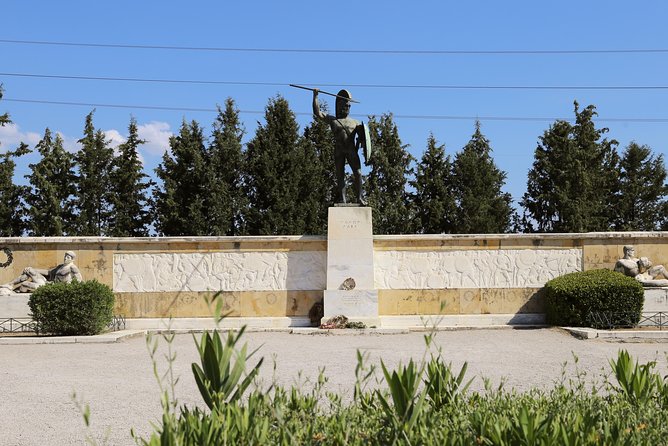
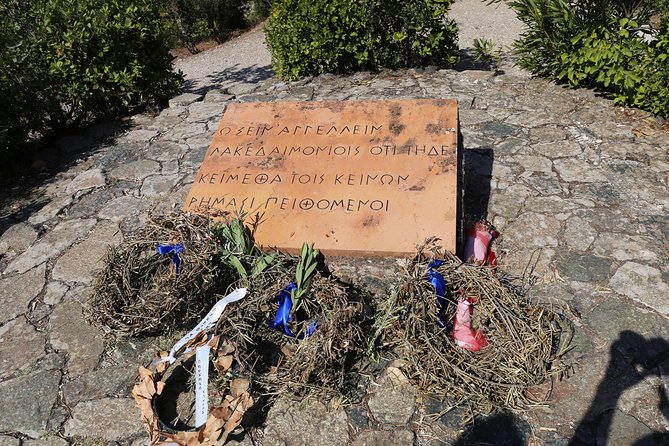
Thermopylae is where the emotional temperature rises. The tour heads to the historic area where, about ten years after Marathon, King Leonidas and the 300 Spartans faced the Persian army.
First, you visit the Kainotomiko Kentro Istorikis Enimerosis Thermopylon, the modern historical information center. The big draw here is a 3D movie that travels through time. It is designed to make the moment feel immediate, without needing you to be an expert in ancient military history before you walk in.
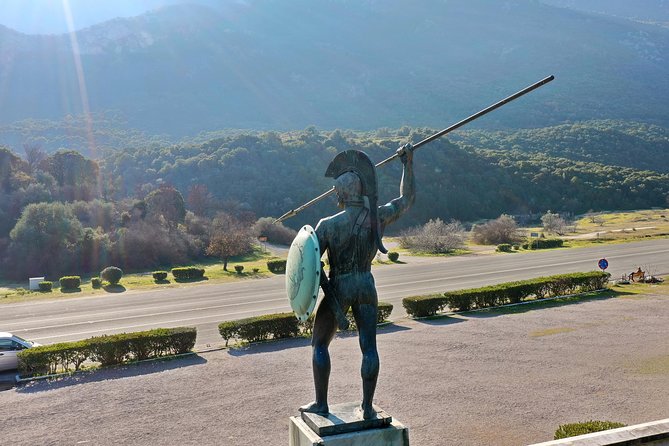
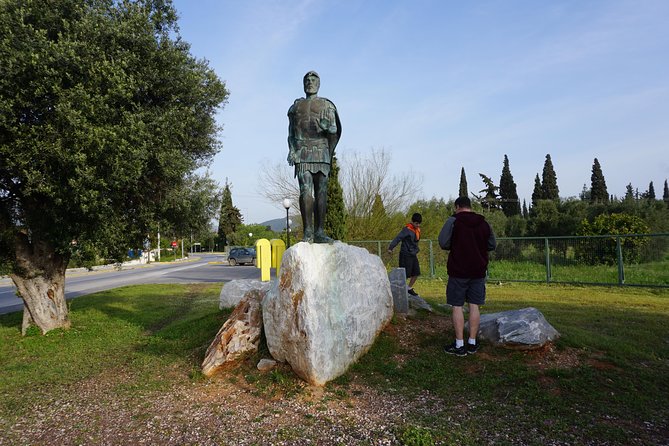
After the center, you see key landmarks that anchor the story in place. There is the Leonidas Monument across from Kolonos Hill, where the surviving Spartans were described as taking their last breath. The stop keeps the focus on geography, not just myth.
Then you go to the Battlefield of Thermopylae itself. Even when you are not sure of every name tied to the terrain, the location helps you understand why people remember it so intensely. This is one of the few places in the ancient world where the modern memorial and the historical spot sit side by side, so it is easier to track your own walking against the legend.
The time at Thermopylae is broken into short visits, with several free or admission-not-included pieces. In practice, that structure is good because Thermopylae is intense. You do not want to be stuck for hours, but you do want a chance to sit with what you just saw.
Delphi: Apollo, theater and stadium, then the museum and Arachova pause
Delphi is the kind of place that can swallow a whole day if you let it. Here, you get a strong guided framework and enough time to see the must-sees without turning the day into a marathon of steps.
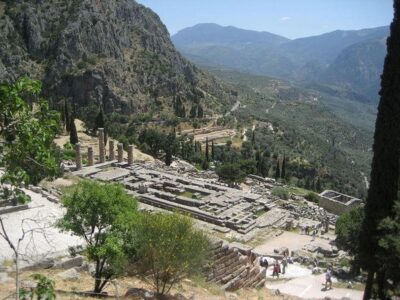
You arrive at Delphi after your Thermopylae segment. The site is described as an ancient Greek sanctuary dedicated to Apollo, with a Pan-Hellenic character, meaning it mattered to Greeks beyond a single city-state. It also functioned as an oracle, and it is framed as a symbol of Greek cultural unity.
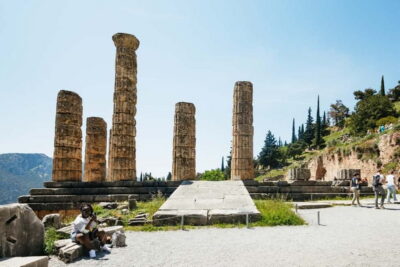
The tour then includes the Temple of Apollo area, where Pytheia spoke to the oracles. You also get the theater and the stadium, both listed as part of the Temple of Apollo visit. I like that this is not just temples and columns. You also see performance and ritual spaces, which helps Delphi feel like a living civic center, not only a holy stop.
Next comes a museum break at the Delphi Archaeological Museum. This is listed as about one hour, and it is where the famous objects are shown, including the Charioteer and Gold-Ivory statues. If you have ever wondered why certain Delphi artifacts look so iconic, this is where it clicks. You see them in a controlled setting and get a better sense of style, craftsmanship, and what the site was trying to express.
Then there is a short stop in Arachova, a mountainous village at the foot of Mount Parnassos. This stop is about 30 minutes, and it is framed as a popular winter destination with mountain tourism and nightlife. You also get the relief of being somewhere that feels like a real town rather than a museum-in-the-wild, even if it is only for a quick pause.
If you like your days balanced, this Delphi pairing works. You do the ruins first, then the museum, and your brain has a chance to connect what you just saw outside with what you are seeing inside.
More runs north to Delphi:
- Athens: Mythology of Delphi, Museum and Arachova Guided Tour★ 4.7 · 5,102 reviews
- From Athens: Delphi Full Day V.R. Audio Guided Tour★ 4.6 · 3,028 reviews
- From Athens: Small-Group Delphi, Museum & Arachova Day Trip★ 4.8 · 2,476 reviews
- Delphi English Day Trip from Athens with Official Guide★ 4.5 · 2,199 reviews
Day two: Plataea, then the Salamis viewing point at Perama
Day two starts with Plataea, reached by driving along the slopes of Mount Parnassus via the city of Leivadia. This battlefield is tied to 479 BCE, when a united set of ancient Greek cities faced a diminished Persian force.
Plataea is a smart choice right after Delphi. Delphi is about religious and cultural identity, while Plataea brings you back to real outcomes and decisive clashes. Seeing them in sequence makes the Persian War feel less like isolated battles and more like a chain of cause and effect.
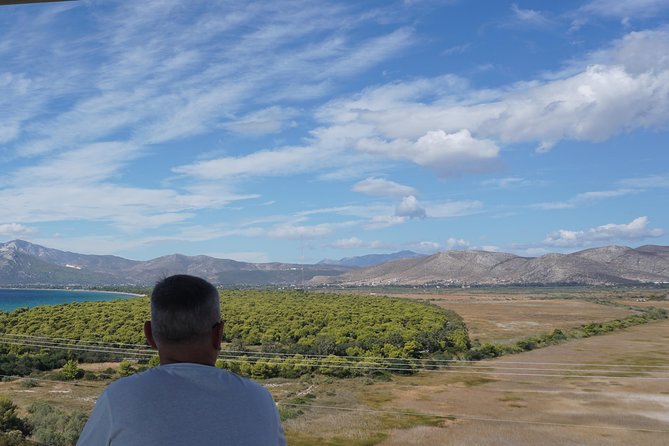
You then go to Perama, described as the place where Xerxes was watching the naval battle of Salamis. This is another “place in the story” stop. Even if you cannot picture ships from a modern viewpoint, the setting is meant to give you that anchor moment, the feeling that a ruler and his fleet were watching events unfold.
This day is shorter in terms of named stops, with the tour then driving you back to Athens. That pacing is useful. It keeps you from getting too tired on the final stretch while still packing in a meaningful second day.
Price and value: what you pay for, what you still need to budget
At $666.20 per person, this is not a bargain-basement option. But for a two-day private route out of Athens, the price is easier to justify when you look at what is included and what it saves you.
Included features are practical: private transportation, bottled water, and hotel or port pickup and drop-off. There is also mobile ticket use and group discounts available. If you book the package that includes accommodation, you also get accommodation and breakfast.
The driver piece matters too. The tour lists professional drivers with deep knowledge of history, though they are not licensed to accompany you inside sites. In plain terms, you get context on the road and at stops, but you should not expect a fully guided walkthrough inside every museum and ruin unless you add a licensed guide.
Also plan for entrance fees. Those are explicitly not included, and multiple stops include admission tickets not included. I recommend you budget for museum and site entries at Marathon and Delphi at minimum, plus any other ticketed sections you choose to enter fully.
One more value angle: the schedule is private. That means your group can move at a pace that fits you, rather than waiting on other people’s photos, slow walkers, or constant regrouping. For a route that covers multiple major historical locations, that alone can be worth real money.
What it feels like with a guide like Alex
One name comes up in connection with this kind of tour experience: Alex. The description is that Alex is friendly, accommodating, and hits a practical balance between giving you information and letting you take in the sites without feeling rushed.
That balance is exactly what you want on a Persian War route. If the guide talks nonstop, you miss the emotional weight of Thermopylae or the museum objects at Delphi. If nobody explains anything, you leave feeling like you saw a collection of stops without understanding why each one matters.
Because licensed guidance inside museums is not included, I’d treat your guide as the person who helps you connect the dots. Look for someone who can keep the story clear while still letting you ask questions at the places where it matters most.
Practical tips for getting the most from this 2-day route
A tour like this rewards preparation. Here are a few things that make the day easier without changing the experience:
- Bring comfortable walking shoes. Marathon and Delphi are not difficult in the sense of climbing mountains, but you do move around enough that decent footwear matters.
- Expect time to read. Delphi and Marathon both reward slow looking, especially if you want to match what you see to the story you heard on the drive.
- Plan for ticket decisions. Since entrance fees are not included, decide in advance what you definitely want to enter versus what you can view from the outside if you need to control costs.
- If you care a lot about museum context, ask about adding a licensed tour guide. The driver’s information helps, but inside ticketed areas you may want more formal interpretation.
Who should book, and who might want a different plan
This tour fits best if you are a history-minded visitor who wants to go beyond Athens in a short time window. If you want Marathon plus Thermopylae plus Delphi without renting a car and figuring out timing, this private format is a strong match.
It is also a good fit if you want an organized two-day loop with hotel pickup and return. The schedule is designed to keep you moving, so people who like independence might prefer a slower DIY version. But for many first-time visitors, the convenience is the point.
Where it might not fit is if you are the type who wants a fully licensed guide inside every museum and archaeological site, with no gaps in explanations. Since that is an add-on, you should either budget extra or accept that you will do part of the interpretation on your own using signs and museum displays.
Should you book this Persian War tour?
Book it if you want a well-structured private route that turns major Persian War and Greek identity sites into a coherent story, with less transportation stress than DIY. The Marathon and Thermopylae pairing is especially strong, and Delphi gives you the kind of cultural context that makes everything feel connected.
Consider another option if you are trying to keep entrance costs to the absolute minimum or if you need fully licensed explanations inside every site. In that case, pricing can shift once you add a guide and tickets.
If you are deciding right now, my rule is simple: if you have limited time, like the idea of being picked up, and want to see Delphi and Thermopylae without hassle, this is a solid choice.
FAQ
What time does the tour start?
The start time is 8:00 am.
Is pickup from my Athens hotel included?
Yes. The tour includes hotel or port pickup and drop-off.
How long is the tour?
It runs for approximately 2 days, with timing that can vary based on time of day and traffic.
Is the tour private?
Yes. It is private, meaning only your group participates.
Does the price include entrance fees?
No. Entrance fees are not included.
Is accommodation included?
It depends on the package you book. Accommodation and breakfast may be included according to your booking.
Do I get a licensed tour guide?
A licensed tour guide is not included by default, but you can request one for an additional cost.
Are the drivers allowed to guide inside museums or sites?
No. The drivers are not licensed to accompany you inside sites or museums.
What is included in the transport and onboard items?
You get transport by private vehicle, bottled water, and a professional driver.
Can I cancel for a full refund?
You can cancel up to 3 days in advance for a full refund. If you cancel less than 3 full days before the start time, the amount paid is not refunded.
Latest from under the Acropolis




Delphi Oracle Day Trips, compared.
Mythology of Delphi, Museum and Arachova Guided Tour
Read our review →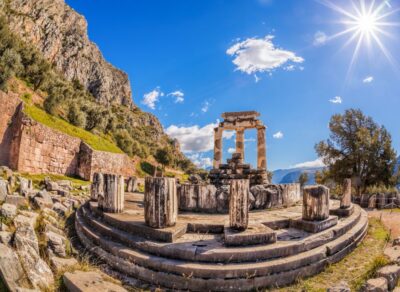
Small-Group Delphi, Museum & Arachova Day Trip
Read our review →
Delphi English Day Trip from Athens with Official Guide
Read our review →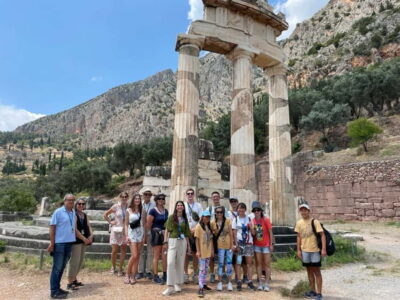
Delphi Oracle & Museum Tour with a Licensed Guide
Read our review →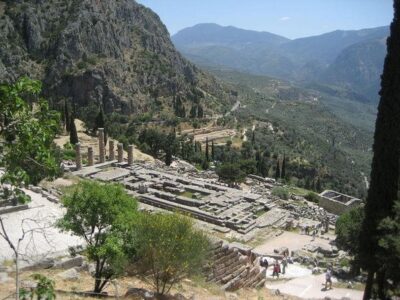
Historical Delphi One Day Tour with Arachova Stop & Expert Guide
Read our review →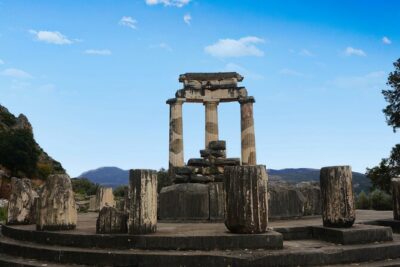
Premium Delphi Day Trip with an Expert Guide, Museum & Lunch
Read our review →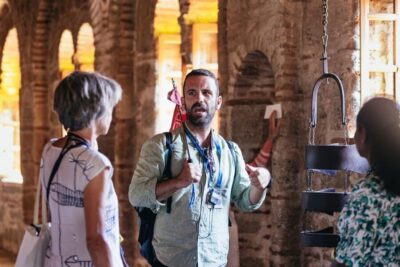
Browse the lists this tour appears in